Atrazine Found at Harmful Levels in Nearly a Quarter of US Rivers, New Study Finds
23 October 2026, Washington, D.C.: Nearly a quarter of rivers and streams across the continental United States contain the herbicide atrazine at concentrations the Environmental Protection Agency itself considers high enough to harm aquatic life, according to a new analysis from the Center for Biological Diversity reported on October 17, 2026. The group’s environmental health science director, Nathan Donley, led the study, which estimates that almost a million miles of American waterways are affected and that roughly one in five surface-water drinking intakes in the country draws from these contaminated rivers.
Atrazine is the second most widely used herbicide in the United States after glyphosate, with about 70 million pounds applied annually, primarily on corn, sorghum and sugarcane to control broadleaf and grassy weeds. The study compared river and stream monitoring data against the EPA’s own aquatic life benchmarks, the thresholds the agency uses to judge when pesticide concentrations in water pose ecological risk, and found that roughly a quarter of monitored waterways exceeded them.
The report also assessed the EPA’s existing atrazine mitigation plan, finalized under the Biden administration in December 2024, which set watershed-level concentration limits intended to reduce ecological exposure. According to the Center for Biological Diversity’s analysis, that plan would bring only about 1 percent of the most heavily contaminated waterways down to safer levels, a figure the group uses to argue that current federal mitigation measures are inadequate.
The timing of the report coincides with new legal action. On October 14, 2026, the Center for Biological Diversity and allied environmental groups filed a lawsuit alleging that the EPA has failed to adequately protect waterways and drinking water supplies from atrazine contamination. This is separate from an earlier lawsuit challenging the EPA’s 2020 reapproval of atrazine, which was issued at the end of the first Trump administration; that case remains on hold while the agency reconducts its underlying risk analysis.
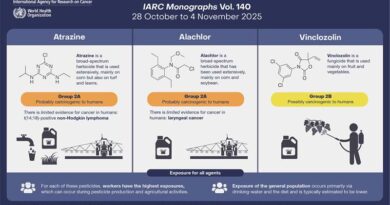
Separately, California’s Office of Environmental Health Hazard Assessment announced in early October 2026 that it plans to list atrazine as a known carcinogen under the state’s Proposition 65 program. The Center for Biological Diversity’s report links atrazine exposure to lymphomas, breast cancer, reduced fertility and birth defects, though these associations come from the advocacy group’s own research summary rather than from a new EPA risk determination, and the agency’s current registration decision does not classify atrazine this way.
Atrazine is banned in 63 countries, including every European Union member state, a point environmental groups frequently raise in arguing for tighter US restrictions. Syngenta, the primary manufacturer of atrazine-based herbicides, maintains that the product is safe when applied according to label instructions, and the broader agrochemical industry has long argued that atrazine’s economic value to corn and sorghum growers, through weed control that supports reduced tillage and lower production costs, outweighs the risks identified in advocacy-led water studies.
This dispute matters to global agribusiness readers because atrazine sits at the center of a recurring regulatory tension between US and European pesticide standards, and any tightening of US rules, whether through new EPA mitigation requirements, state-level carcinogen listings, or adverse court rulings, could affect herbicide program costs and weed management strategies for corn, sorghum and sugarcane growers across North and South America. Because the EU already bans atrazine, a shift in the US regulatory position would also narrow the gap between the world’s two largest agricultural chemical regulatory regimes, with knock-on effects for companies that register and sell atrazine-based products in multiple markets and for commodity buyers who track pesticide residue standards across export destinations.
The EPA has not yet issued a public response to the October 14 lawsuit or to the Center for Biological Diversity’s new water-contamination findings.
Also Read: Super Typhoon Champi, 2026’s Strongest Storm, Bears Down on Taiwan and East China
Global Agriculture is an independent international media platform covering agri-business, policy, technology, and sustainability. For editorial collaborations, thought leadership, and strategic communications, write to pr@global-agriculture.com