Barley Study Finds Natural Trait That Could Cut Nitrogen Losses
23 September 2026, Aberdeen, Scotland: Researchers at the University of Aberdeen, working with the James Hutton Institute’s International Barley Hub, have shown that some barley varieties naturally suppress the soil microbes responsible for turning fertilizer nitrogen into forms that leach away or escape as a greenhouse gas, a trait that plant breeders could select for in future varieties to cut fertilizer waste.
The study, published August 4, 2026 in the journal Sustainable Microbiology, was led by Jack Henderson with corresponding author Dr. Cecile Gubry-Rangin, both of the University of Aberdeen’s School of Biological Sciences, working alongside Dr. Timothy George of the James Hutton Institute’s International Barley Hub and co-authors Xiaoping Fan, Ellen Elizabeth Smith and Marcel Jaspars.
When nitrogen fertilizer or organic matter breaks down in soil, it first releases ammonium, a form that binds to soil particles and stays available for plant roots to take up over time. Soil microbes called ammonia-oxidizing archaea and ammonia-oxidizing bacteria, two distinct groups of single-celled organisms that draw energy from converting ammonia, then convert that ammonium into nitrate through a process called nitrification. Nitrate is far more mobile in soil than ammonium, meaning it readily leaches into groundwater and waterways or converts further into nitrous oxide, a greenhouse gas roughly 265 times more potent than carbon dioxide over a century. Some plants have evolved the ability to release compounds from their roots that slow this microbial conversion, a phenomenon called biological nitrification inhibition, or BNI, which keeps more nitrogen in the stable ammonium form for longer and reduces both losses.
How the trait was measured
The Aberdeen team grew ten barley cultivars in controlled conditions using agricultural soil, then used a genetic technique called quantitative PCR to count copies of the amoA gene, a gene common to both ammonia-oxidizing archaea and bacteria, as a proxy for how large each microbial population was in soil planted with each barley line versus unplanted control soil. A separate technique called amplicon sequencing, which identifies which specific microbial species are present in a sample, was used to see how the wider soil microbial community shifted under each barley line.
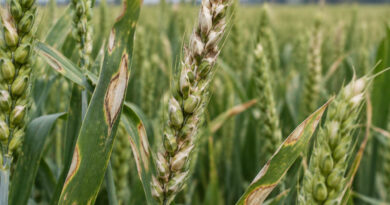
The results varied sharply by variety. The barley line Optic, classified as high-BNI, suppressed ammonia-oxidizing archaea populations by 23 percent and ammonia-oxidizing bacteria by 30 percent relative to unplanted soil. Lines Westminster and Decanter also showed substantial archaea suppression, at 23 percent and 21 percent respectively, while lines Athos and Diament showed low suppression of both microbial groups. Ammonia-oxidizing archaea outnumbered the bacterial group by 5.3 times in the soils tested and were generally suppressed more strongly overall. The sequencing data also showed the effect was not a blanket suppression: some ammonia-oxidizer types were consistently knocked back by high-BNI barley roots while others were actually more abundant in those same soils, and the researchers found a strong statistical correlation between stronger BNI activity and lower overall microbial diversity, indicating the trait acts as a selective filter on the soil community rather than suppressing nitrification uniformly.
Because BNI capacity differed so clearly between cultivars grown under identical conditions, the researchers concluded it is a heritable, breedable trait rather than a fixed feature of the barley species as a whole, opening a path for plant breeders to select and stack higher-BNI genetics into new commercial varieties.
Also Read: India Approves Pioxaniliprole, First Insecticide Active Ingredient Discovered in India
Global Agriculture is an independent international media platform covering agri-business, policy, technology, and sustainability. For editorial collaborations, thought leadership, and strategic communications, write to pr@global-agriculture.com