Carbon Robotics Opens Autonomous Tractor Platform to Implement Makers
23 September 2026, Seattle: Seattle-based agricultural robotics company Carbon Robotics has launched a program allowing outside farm equipment manufacturers to connect their implements directly to its autonomous tractor platform, with Kansas-based Great Plains Manufacturing signing on as the first partner.
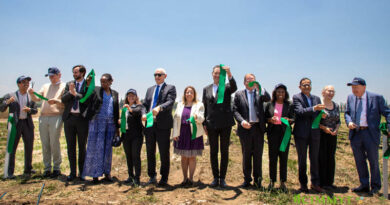
The program, called Carbon Autonomy Ready, was announced September 1, 2026 and publicly demonstrated the following week at the Farm Progress Show in Boone, Iowa. It sets out technical specifications that let implement makers build their equipment to work with Carbon’s autonomous tractors without Carbon having to engineer each integration itself, an approach the company says is meant to support a wide range of implements farmers already use rather than requiring a closed, single-vendor system.
Carbon Robotics, founded and led by chief executive Paul Mikesell, has built its business on the LaserWeeder, a machine that uses computer vision and lasers to identify and kill weeds without herbicide, and more recently on Carbon Autonomy, a kit that converts existing tractors into autonomous, driverless units. Until now, the tractor itself could operate without a driver, but implements towed or mounted behind it, such as tillage tools, planters or sprayers, generally still needed either a human in the cab to monitor and adjust their settings or pre-programmed, static settings that could not respond to changing field conditions.
How the integration works
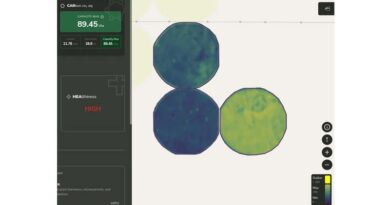
The first implement built to the Carbon Autonomy Ready specification is Great Plains’ HT1100 Terra-Max, a tillage tool, integrated using the company’s existing Implement Command system, an electronic control system that already lets the tool’s settings be adjusted electronically rather than manually. Under the new arrangement, Carbon’s autonomous tractor platform receives real-time data from sensors on the implement itself and automatically adjusts settings such as working depth, down pressure and leveling as the machine moves across the field, in principle replicating the kind of continuous, condition-based adjustments a skilled operator would make manually from the cab. Doug Jennings, senior product manager at Great Plains Manufacturing, worked with Carbon Robotics on the integration, which was shown running at the 2026 Farm Progress Show using a Great Plains HT1100 fitted with Carbon’s sensor and implement kit.
Mikesell has framed the broader Carbon Autonomy business as a response to a persistent shortage of skilled tractor operators in North American row-crop agriculture, arguing that autonomous systems can extend a farm’s effective working hours, since a driverless tractor is not limited by a single operator’s shift length, and increase how much use a farm gets out of each machine it owns. The Carbon Autonomy Ready program extends that argument to implements, on the reasoning that an autonomous tractor is only as useful as the tools it can run without supervision; a tractor that can drive itself but still needs a person watching a planter’s seed depth or a tillage tool’s working depth only solves part of the labor problem.
Carbon Robotics has not disclosed how many additional implement manufacturers it is in discussions with beyond Great Plains, nor a specific commercial rollout timeline for growers to order Autonomy Ready-compatible implements. The company said the technical specifications are designed to be extensible to other implement categories beyond tillage, including planting and spraying equipment, as additional manufacturers join the program.
Also Read: India Approves Pioxaniliprole, First Insecticide Active Ingredient Discovered in India
Global Agriculture is an independent international media platform covering agri-business, policy, technology, and sustainability. For editorial collaborations, thought leadership, and strategic communications, write to pr@global-agriculture.com