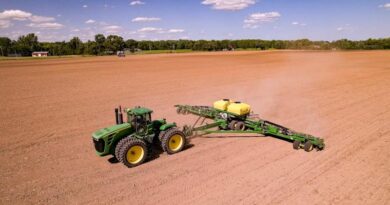
Industry stakeholders highlight artificial intelligence, technological innovation and stronger value-chain collaboration as key priorities for improving the competitiveness and sustainability of fruit production.
26 November 2026, Spain: Spain’s fruit sector is calling for greater adoption of artificial intelligence (AI) and digital technologies to address rising production costs, labour shortages, the lack of generational renewal and changing consumer preferences.
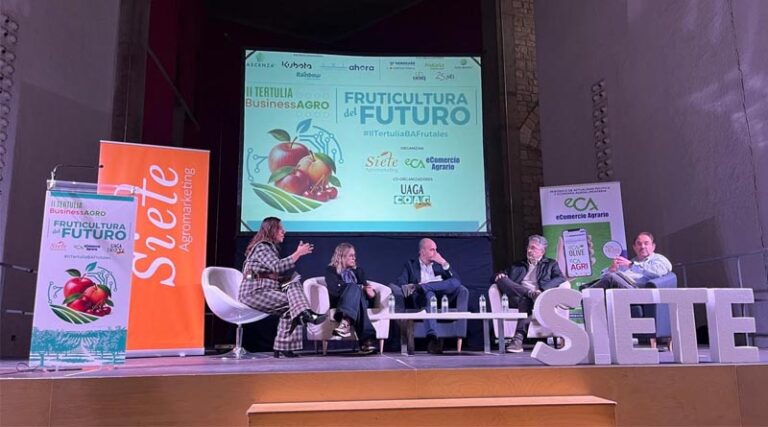
These challenges were at the centre of the 2nd BusinessAGRO Fruit Sector Roundtable, held at the Castle of Fraga in Huesca, Spain, under the theme ‘Fruit Production of the Future’. The event brought together fruit growers, marketers, industry experts and institutional representatives to discuss the future competitiveness, profitability and sustainability of the sector.
Organised by Siete Agromarketing and eComercio Agrario in collaboration with the Union of Farmers and Livestock Breeders of Aragon (UAGA-COAG), the meeting highlighted the need to strengthen the entire fruit value chain through technological innovation, improved communication and closer cooperation between producers and commercial partners.
The event was inaugurated by Fraga Mayor José Ignacio Gramún Castillo, who highlighted the importance of fruit production to the identity and economic development of the Alto Aragón region.
AI Emerges as a Tool to Improve Farm Efficiency
Artificial intelligence featured prominently in discussions, with industry representatives examining its potential to optimise farm operations, improve decision-making and reduce production costs.
Rubén Lluesma Cadalás, Project Manager at AHORA, explained how AI can help interpret and connect agricultural data to generate practical recommendations for farm managers. By analysing crop information and automating routine tasks, these technologies could support more efficient resource management and lower operating costs.
However, he emphasised that agricultural businesses must first invest in AI solutions and develop the capabilities required to provide appropriate instructions and make effective use of the technology.
The discussion also highlighted the financial and technical barriers preventing smaller producers from adopting advanced technologies. Óscar Moret Raluy, Provincial Secretary of UAGA Huesca, pointed out that many local growers currently lack the resources and expertise to invest in AI or assess the potential return on investment.
Producers are also facing higher raw material costs and increasing competition from international markets, adding further pressure on farm profitability.
Technology and Innovation Across Fruit Production
Beyond artificial intelligence, participants discussed how technological developments in agricultural machinery and crop management could improve productivity.
Ignacio Álvarez Ruiz, Sales and Network Development Delegate for Northern Spain at Kubota Spain, presented developments in agricultural mechanisation, including the company’s latest tractor models. He also shared preliminary results from the use of UV-C radiation in apple cultivation, highlighting its potential application in fruit production.
Jorge Núñez Abajo, Product Management Specialist at Ascenza, presented REGISTER® WG during a session titled ‘A New Tool to Combat Difficult-to-Control Weeds in Perennial Crops’. The product introduces a new mode of action for weed management in woody fruit crops and offers an additional approach to preventive weed control, particularly in production systems where post-emergence treatments have traditionally been widely used.
Changing Consumer Preferences Put Pressure on the Value Chain
Changing consumption patterns are creating additional challenges for fruit growers and marketers, particularly as younger consumers increasingly seek new varieties and product experiences.
Montse Baró Vilá, Manager of Baró e Hijos, observed that consumer preferences are evolving rapidly, while developing and establishing new fruit varieties requires considerable time and investment.
She cautioned that the growing expectation for constant product innovation could create difficulties for growers, who need several years to recover investments made in establishing new varieties.
Ángel Vallín Fandiño, Commercial Director of Frutaria, stressed that consumer requirements must be considered when introducing new products. He highlighted collaboration between growers and commercial partners as an important factor in ensuring that innovation responds to actual market demand.
The discussions underlined the importance of aligning production decisions with consumer expectations while ensuring that growers can maintain the economic viability of their operations.
Generational Renewal Remains a Major Challenge
The availability of a younger workforce and the future of farming businesses emerged as another major concern.
Mayor José Ignacio Gramún Castillo said fruit production was closely connected to the region’s identity, generational continuity and economic effort. He emphasised the need to move towards more sustainable production systems, incorporate artificial intelligence and support generational renewal to meet changing market requirements.
Óscar Moret Raluy also identified the lack of generational renewal as one of the sector’s most pressing challenges. He called for greater investment in technology, improved wages and stronger competitiveness to make agricultural careers more attractive to younger people.
Participants agreed that technological modernisation alone would not be sufficient unless accompanied by better economic prospects and improved working conditions across the sector.
Stronger Communication Needed to Reduce Food Waste and Build Consumer Trust
A concluding panel discussion, moderated by Gissele Falcón Haro, Director of Siete Agromarketing, examined how the fruit value chain could adapt to changing consumer expectations, international competition and food waste challenges.
The panel featured Montse Baró Vilá of Baró e Hijos, Óscar Moret Raluy of UAGA Huesca, Moisés Melero Pérez, Director of Alcampo’s Fraga area, and Ángel Vallín Fandiño of Frutaria.
A key theme was the need to improve communication between different participants in the value chain and strengthen engagement with consumers.
Montse Baró stressed the importance of explaining the costs involved in fruit production and communicating the value of Spanish-grown produce to consumers. She argued that closer engagement with buyers would help improve understanding of the economic realities faced by growers.
Moisés Melero Pérez highlighted social media as an important channel for reaching younger consumers, who are increasingly demanding and have evolving expectations regarding food products.
The discussion also emphasised the need for better coordination among producers, retailers and other stakeholders to address food waste and improve the efficiency of the supply chain.
Closing the event, Gissele Falcón Haro called for greater technological adoption and more positive communication about agriculture to improve the sector’s image, attract workers and encourage the participation of young people and women in farming.
She emphasised that presenting agriculture as a sector offering opportunities and prospects for the future would be essential to encouraging the next generation of farmers.
Industry Support and Participation
The 2nd BusinessAGRO Fruit Sector Roundtable was supported by Kubota, Rainbow Agro, SPI Technologies/AHORA and Ascenza. Kenogard, UNIQ, Certis Belchim, AEI Bajo Cinca and Frutaria participated as collaborating organisations.
The event was also streamed live on eComercio Agrario’s social media channels under the hashtag #IITertuliaBAFrutales.
The discussions highlighted a broader priority for Spain’s fruit industry: combining technological innovation with economic viability, workforce renewal and stronger collaboration across the value chain to ensure the sector remains competitive and sustainable.
Global Agriculture is an independent international media platform covering agri-business, policy, technology, and sustainability. For editorial collaborations, thought leadership, and strategic communications, write to pr@global-agriculture.com