25 November 2026, Governador Valadares, BR: Creatine, one of the most talked-about supplements in fitness and wellness, delivers reliable gains in strength, power and lean muscle, but the evidence for many of its newer selling points, from sharper thinking to stronger bones, is far thinner, according to a new review that pooled 20 years of research.
The analysis, released on November 13 in the peer-reviewed journal Nutrients, is an umbrella review, meaning a study that pools and grades earlier systematic reviews and meta-analyses rather than running new experiments. Researchers led by the Graduate Program of Physical Education at the Federal University of Juiz de Fora in Governador Valadares, Brazil, working with colleagues at universities in Brazil and Chile, assessed 45 meta-analyses covering 395 individual studies on creatine published over the past 20 years. First author is Naiara Ribeiro Almeida, and the corresponding author is Ciro José Brito.
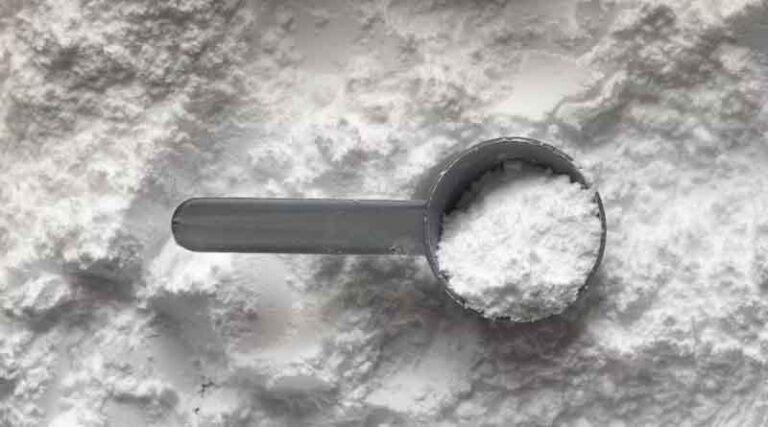
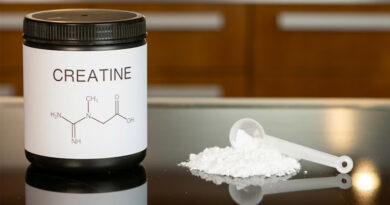
Creatine is a compound made naturally in the body and found in meat and fish. Supplement users usually take it as creatine monohydrate powder, which increases the stores of a fast energy source inside muscle cells.
What the evidence supports
The strongest case remains in the gym. Across six reviews on body composition, creatine combined with resistance training added about 1.10 kilograms of lean body mass on average, compared with 0.68 kilograms overall and just 0.03 kilograms when people took creatine without exercising. Another review of 61 trials found an average gain of 1.39 kilograms of fat-free mass. Short, explosive performance also improved: one review rated the evidence as high certainty for peak power on a sprint cycling test, and moderate certainty for squat strength in men aged 18 to 30.
The authors cautioned that some of the measured gain in lean mass may reflect extra water drawn into muscle cells rather than new muscle tissue, and that the data do not support treating creatine as a fat-loss product. Endurance performance did not improve. One review of 13 studies found no effect on endurance performance, and another found that gains in maximal oxygen uptake, a standard measure of aerobic fitness, were actually smaller in people taking creatine.
Brain claims rest on thinner evidence
The review found some support for creatine’s effects on the brain, with clear limits. Across 16 randomized trials with 492 participants, creatine produced a small improvement in memory. A subgroup of adults aged 66 to 76 showed a larger effect, but that result came from only two studies and the authors called it tentative. Creatine had no significant effect on overall cognition or executive function, the mental skills used for planning and decision-making.
For depression, one review found a small reduction in symptoms, but its certainty was rated very low, and the benefit largely disappeared when only studies at lower risk of bias were counted. In older adults with sarcopenia, the age-related loss of muscle, creatine improved strength with moderate certainty but did not significantly increase muscle mass or physical function. Two reviews found no benefit for bone mineral density.
On safety, the findings were reassuring but not final. Creatine consistently raised blood levels of creatinine, a waste product doctors use to estimate kidney function, by roughly 0.13 milligrams per decilitre in one review of 20 trials. But direct measures of kidney filtering did not change significantly, and the authors interpreted the rise as a predictable by-product of creatine metabolism rather than a sign of kidney stress. They stressed that this is not definitive proof of long-term kidney safety. A review of 29 studies covering 951 women found no increase in adverse events and no serious side effects, and creatine did not raise body temperature during exercise in the heat.
The quality of the underlying research was a recurring concern. Using a standard appraisal tool called AMSTAR-2, the team rated none of the 45 reviews as high confidence. Three were moderate, 21 were low and 21 were critically low. Many reviews also drew on the same small pool of trials, so agreement between them could not be counted as independent confirmation. Most trials were short, and fewer than one in ten reviews reported who funded the original studies.
The authors concluded that creatine offers benefits specific to particular outcomes, chiefly strength, power, lean mass and physical function, and that the evidence does not support a uniform effect across all the areas where it is now promoted. The review was registered in advance with the PROSPERO international database (CRD420261501087), and its literature search was carried out in early September 2026.
Global Agriculture is an independent international media platform covering agri-business, policy, technology, and sustainability. For editorial collaborations, thought leadership, and strategic communications, write to pr@global-agriculture.com