Scientists Identify 13 Maize Genes That Resist Aflatoxin Fungus
25 November 2026, Zhengzhou, CN: Researchers at Henan Agricultural University and the Shennong Laboratory in Zhengzhou, China, have identified 13 previously unknown genetic regions in maize that help the crop resist Aspergillus flavus, the mold that produces aflatoxin, one of the most tightly regulated food safety contaminants in global grain trade. The findings, published in the Journal of Integrative Agriculture and announced November 18, give plant breeders a new set of DNA markers they can use to screen maize lines for resistance without running slow and costly fungal exposure trials.
Aflatoxin is a toxic compound that forms when Aspergillus flavus fungus infects maize kernels, usually under hot and humid conditions either in the field or in storage. Chronic exposure is linked to liver damage and suppressed immune function, and most major importing countries, including the European Union and the United States, enforce strict limits on aflatoxin levels in traded grain. Contaminated shipments are routinely rejected or destroyed, making resistant varieties a commercial priority as well as a food safety one, particularly as warmer and more erratic weather patterns are expected to widen the conditions under which the fungus thrives.
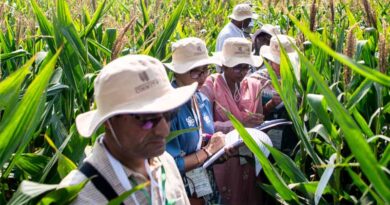
The research team, led by co-corresponding authors Jihua Tang and Xuehai Zhang, built what they describe as an enlarged genotyping panel of 311 maize inbred lines, a broader set of plant varieties than is typically used in this kind of study. They inoculated the lines with Aspergillus flavus under controlled conditions and scored how much resistance each line showed, then ran a genome-wide association study, a statistical method that scans genetic variation across many plants to find chromosome regions linked to a measurable trait. Zhang said the larger panel and higher density of genetic markers “improved the statistical power” to detect resistance genes that smaller studies had missed. Resistance across the panel followed a roughly normal distribution, and lines bred for temperate climates showed stronger resistance on average than tropical and subtropical material.
A gene with an outsized effect
The analysis turned up 13 new quantitative trait loci, chromosome regions containing genes that influence a measurable trait, together covering 47 genes with high activity levels. Individually, each locus accounted for between 8.22 percent and 27.71 percent of the variation in resistance observed across the panel. One region, located on a chromosome segment labeled ZmAFR16, stood out for containing a single gene called ZmFUC1, which on its own explained an average of 10.21 percent of the variation, an unusually large effect for one gene in a trait this complex.
ZmFUC1 codes for an enzyme with alpha-L-fucosidase activity, meaning it removes a specific sugar molecule called fucose from larger molecules in the plant. The research team’s broader analysis of the genes in these resistance regions pointed to roles in fatty acid synthesis, sugar breakdown and root growth, suggesting the plant’s resistance to the fungus is tied to several basic metabolic pathways rather than a single specialized defense mechanism. Using a technique called selective sweep analysis, which detects whether a gene variant has been favored by past selection by looking for unusually low genetic diversity around it, the team found evidence that ZmFUC1 was selected for twice in maize’s history: once during its domestication from the wild grass teosinte, and again as the crop spread from tropical and subtropical regions into temperate ones. That suggests breeders and farmers may have been unknowingly selecting for this resistance gene for thousands of years before its role was understood.
The team also found that maize lines carrying favorable versions, known as haplotypes, of both ZmFUC1 and a second gene called elo1 showed stronger resistance than lines with only one favorable haplotype, indicating the two genes work together. Based on this, Tang and Zhang’s group developed molecular markers, short DNA sequence tags that let a breeder check in the laboratory whether a plant carries the beneficial version of a gene, specifically in the promoter region of ZmFUC1, the stretch of DNA that controls when and how strongly the gene is switched on. Zhang said the markers are intended so that “maize germplasm with beneficial haplotypes for resistance to A. flavus” can be identified efficiently across large breeding populations, rather than through repeated rounds of fungal inoculation trials.
The work was funded by the National Natural Science Foundation of China, the China Postdoctoral Science Foundation, and several Henan provincial science and technology programs, reflecting the priority Chinese agricultural policy has placed on reducing aflatoxin risk in the country’s maize supply, which feeds both human food products and a large livestock feed industry.
Also Read: ADAMA Shuts Brazil Plant as Pesticide Import Tariff Fight Grows
Global Agriculture is an independent international media platform covering agri-business, policy, technology, and sustainability. For editorial collaborations, thought leadership, and strategic communications, write to pr@global-agriculture.com