Canada and China Extend Canola Tariff Relief to 2028 After Two-Year Trade Dispute
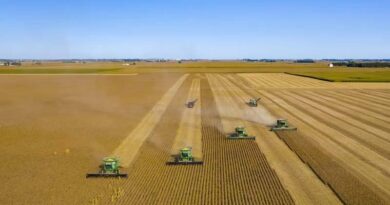
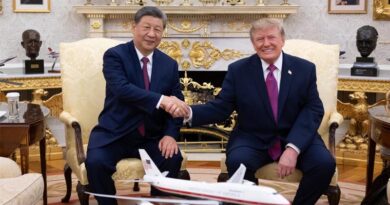
25 November 2026, Ottawa, CA: Canada’s canola industry has welcomed an agreement reached at a Canada-China Joint Economic and Trade Commission meeting to extend duty-free access for Canadian canola meal to the Chinese market by two more years, through the end of 2028, closing out the most acute phase of a dispute that has weighed on Canadian farm exports since 2024.
China’s Ministry of Commerce opened an anti-dumping investigation into Canadian canola seed in September 2024. In August 2025, it imposed a preliminary anti-dumping duty of 75.8 percent on Canadian canola seed, which took effect that month. A separate 100 percent tariff was also applied to Canadian canola meal, canola oil and related products starting in March 2025, part of a wider set of measures China described as countering discrimination against its own exporters. In February 2026, the Ministry of Commerce issued its final ruling, cutting the anti-dumping duty on canola seed to 5.9 percent, effective March 1, 2026, for a five-year period. Combined with China’s standard 9 percent import tariff, canola seed has since faced a total effective duty of about 14.9 percent, a rate Prime Minister Mark Carney said broadly matched what he had anticipated following a January 2026 visit to Beijing. Alongside the final ruling, China suspended its 100 percent tariff on canola meal under a preliminary arrangement originally due to run through the end of 2026.
Trade rebounds as relief extended
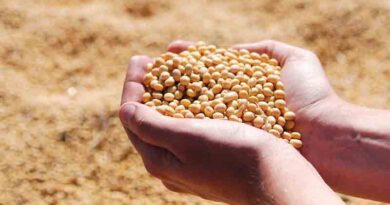
The newly agreed extension pushes that canola meal relief, along with similar treatment for Canadian peas, lobster and crab, out to December 2028. Canadian canola seed exports to China between March and August 2026 totaled 1.74 billion dollars, up 43 percent, or about 524 million dollars, from the same period in 2025, as the lower 15 percent combined tariff on seed took hold. Canola meal imports into China over the same March-to-August window reached 327.5 million dollars. Across all canola products, Canadian exports to China in the first eight months of 2026 reached 2.4 billion dollars, up 28 percent year on year and already close to half of the full 2024 export total, before the trade dispute began weighing on shipments. Canola seed alone had been worth about 4 billion dollars a year to Canadian exporters in 2024, with canola meal worth roughly 1 billion dollars annually.
Chris Davison, president and chief executive officer of the Canola Council of Canada, said the extension provides a much-needed measure of predictability and stability in Canada’s trade relationship with China. Andre Harpe, chair of the Canadian Canola Growers Association, said the move removes one source of uncertainty as canola farmers make decisions that affect their bottom line, noting that many farm input costs remain at record highs as the harvest wraps up.
The broader arrangement reached at the trade commission meeting also addresses other sectors. China will remove its 25 percent tariffs on certain frozen pork cuts, Greenland halibut, specified shrimp and prawns, certain molluscs including geoduck, and sea cucumber, effective from January 1, 2027, through the end of 2028. Steel and aluminum remission measures between the two countries have also been extended to the end of 2028, and the two governments have committed to finalizing a pet food trade arrangement and a wild aquatic products arrangement by the end of 2026. Overall bilateral goods and services trade between Canada and China totaled 113.9 billion dollars in 2025, and Canada has set a target of raising its exports to China by 50 percent by 2030.
Also Read: ADAMA Shuts Brazil Plant as Pesticide Import Tariff Fight Grows
Global Agriculture is an independent international media platform covering agri-business, policy, technology, and sustainability. For editorial collaborations, thought leadership, and strategic communications, write to pr@global-agriculture.com