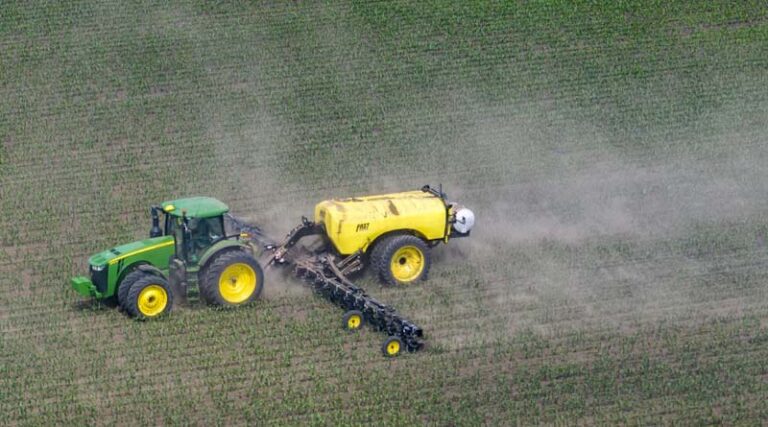
Peru Suspends Glyphosate and Four Other Pesticides in Food Crops
19 October 2026, Peru: Peru’s agricultural health agency has suspended the sale, distribution and use of five pesticide active ingredients, including glyphosate, in crops grown for domestic food consumption, and as of mid-October a leading trade body is warning that the government’s rollout of the measure leaves key questions unanswered.
The Servicio Nacional de Sanidad Agraria (SENASA), under the Ministry of Agrarian Development and Irrigation (MIDAGRI), issued Directorate Resolution No. D000015-2026-MIDAGRI-SENASA-DIAIA, signed September 9, 2026, and published in the official gazette El Peruano on September 30, 2026.
The measure suspends products containing chlorpyrifos, methomyl, glyphosate, imidacloprid and clothianidin when those products are intended for growing plant-based food for the domestic market. It does not cancel the underlying product registrations, and it does not apply to export crops or to other uses outside food production for the home market.
The resolution implements an order from the Constitutional Court’s Second Chamber, in Sentencia 1111/2026 on case file 03269-2023-PA/TC, reported to have been decided around July 21, 2026. The court found an “estado de cosas inconstitucional,” meaning the state’s oversight of pesticide risk had fallen so short that it amounted to a systemic constitutional failure. Beyond the suspension itself, the ruling ordered SENASA to complete a technical-scientific reevaluation of the five substances within 90 business days, and ordered the executive branch to draft an interagency food-safety plan within 180 business days, alongside stronger laboratory capacity and a traceability system capable of pulling products from the market when residue limits are exceeded.
Under the resolution, the suspension can only be lifted once two conditions are both met: the technical-scientific reevaluation is finished, and adequate control, traceability and sanitary-response mechanisms are in place. SENASA’s Subdirección de Insumos Agrícolas is to publish and keep updating a list of registered products containing the five substances, drawn from its SIGIA database, while regional offices step up inspections with powers to seize or confiscate noncompliant stock, coordinating with specialized crime-prevention prosecutors.
On October 7, Comex Perú, the Sociedad de Comercio Exterior del Perú, said the SENASA resolution only partially fulfills what the Constitutional Court ordered. The trade body argued the measure does not name which SENASA unit will lead the reevaluation, sets no deadline for finishing it, and does not spell out how the traceability and control mechanisms needed to eventually lift the suspension will actually be built or verified.
Comex also noted that the resolution leaves farmers without any officially sanctioned alternative products for pest control in the interim. The group pointed out that none of Bolivia, Ecuador, Chile or Colombia has banned glyphosate, imidacloprid or clothianidin, and warned that a supply gap in Peru could invite illegal imports that would be harder to trace than the regulated products they replace.
Comex urged SENASA to convene government agencies, academia, industry and producer groups around a roadmap built on good agricultural practice and integrated pest management, with extra technical support for small producers given the heightened pest pressure expected from El Niño conditions.
As of October 15, international coverage of the suspension was still citing the same scope, five active ingredients restricted in food crops for the domestic market, pending the reevaluation, with no sign yet of the SENASA-led review timeline or the interagency plan the court demanded. Peruvian coverage has also linked the case to a broader health debate over glyphosate, including a study from Arizona State University researcher Ramón Velázquez, published in the journal Neuroinflammation, describing brain inflammation effects in exposed laboratory animals; that research speaks to the public-health rationale cited around the ruling but is separate from the SENASA resolution itself.
Also Read: USDA Reports Record Soybean Yield, Bigger Corn Crop in October Forecast
Global Agriculture is an independent international media platform covering agri-business, policy, technology, and sustainability. For editorial collaborations, thought leadership, and strategic communications, write to pr@global-agriculture.com