Peru’s Suspension of Five Pesticides Draws Industry Criticism Over Incomplete Compliance
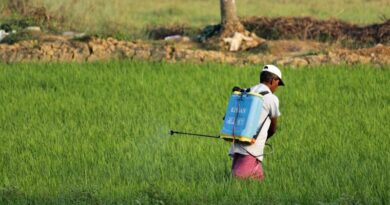
12 October 2026, Peru: ComexPerú, Peru’s foreign trade association, said October 7 that a government resolution suspending the sale and use of five pesticide active ingredients only partially complies with a Constitutional Court order, leaving key implementation questions unresolved for farmers and exporters, according to a report from agricultural news outlet Agraria.pe.
The underlying case traces back to a ruling by the Second Chamber of Peru’s Constitutional Court (Expediente No. 03269-2023-PA/TC), announced July 24, 2026. The court upheld a constitutional claim brought by the Asociación Apurimeña de Consumidores y Usuarios and other groups, finding that insufficient state oversight of pesticide residues in domestically consumed food violated rights to health, life, personal integrity, a healthy environment and consumer protection. It declared an “unconstitutional state of affairs,” meaning it found the government’s regulatory response structurally inadequate, and ordered Peru’s agricultural health agency, SENASA, to temporarily suspend the sale, distribution and use of phytosanitary products containing chlorpyrifos, methomyl, glyphosate, imidacloprid or clothianidin, when those products are destined for food crops grown for the domestic market. The court separately ordered a technical-scientific reevaluation of the five substances within 90 business days, and an interagency food safety plan, covering monitoring, laboratory capacity and traceability, within 180 business days.
SENASA implemented the suspension through Resolución Directoral No. D000015-2026-MIDAGRI-SENASA-DIAIA, signed September 9, 2026, by the agency’s Director General of Agricultural Inputs and Food Safety, Josue Alfonso Carrasco Valiente, and published in the official gazette El Peruano on September 30. The resolution describes the measure as precautionary, temporary and reviewable, and states it does not cancel existing product registrations. It directs SENASA’s agricultural inputs division to publish and keep updated a list of registered products containing the five substances, drawn from the agency’s SIGIA database, and instructs regional SENASA offices to step up inspections of warehouses, farms, shops and transport to trace products, confirm intended crops and buyers, and immobilise or seize non-compliant stock in coordination with specialised provincial prosecutors. Under the resolution, the suspension lifts only once both the technical reevaluation is complete and a traceability and sanitary control system is in place, after which the health ministry must report to the court overseeing enforcement, which will decide whether to continue, adjust or end the measure.
ComexPerú’s October 7 statement argued the resolution addresses only part of the court’s order. It said the measure does not specify which SENASA unit will lead the technical reevaluation, nor how the agency will track its own compliance with the court’s 90- and 180-business-day deadlines, and offers growers no alternative products in the interim. The association estimated that the five suspended ingredients are used against roughly 80 pests across 52 crops, including rice, maize, potato and tomato, though this figure comes from ComexPerú’s own estimate rather than an official count. The group also noted that, by its account, neighbouring Bolivia has not restricted any of the five substances, and that Ecuador, Chile and Colombia have not banned glyphosate, imidacloprid or clothianidin, and it warned that an anticipated El Niño pattern could increase pest pressure on affected crops this season.
Also Read: Syngenta Launches New Fungicide Kadexa SC in Canada
Global Agriculture is an independent international media platform covering agri-business, policy, technology, and sustainability. For editorial collaborations, thought leadership, and strategic communications, write to pr@global-agriculture.com