U.S. Department of Agriculture Proposes Eliminating the Roadless Rule
08 October 2026, Washington: Blake Busse works on The Pew Charitable Trusts’ U.S. conservation project.
On Aug. 24, 2026, the U.S. Department of Agriculture (USDA) proposed rescinding the U.S. Forest Service’s 2001 Roadless Area Conservation Rule, commonly known as the Roadless Rule, which generally limits new road building and timber harvest activities on specified National Forest System lands.
However, the findings from the USDA’s own draft environmental impact statement (DEIS) indicate that repealing the rule is likely to cause economic and environmental harm to undeveloped backcountry forests, wildlife, water resources, and communities, while delivering little or no wildfire risk reduction and potentially increasing federal road maintenance costs.
To avoid these consequences, the department should reconsider its proposed repeal of the Roadless Rule and instead develop a balanced and lasting approach that conserves the important qualities of roadless areas while addressing evolving management needs.
Roadless Rule conserves forests and protects public safety
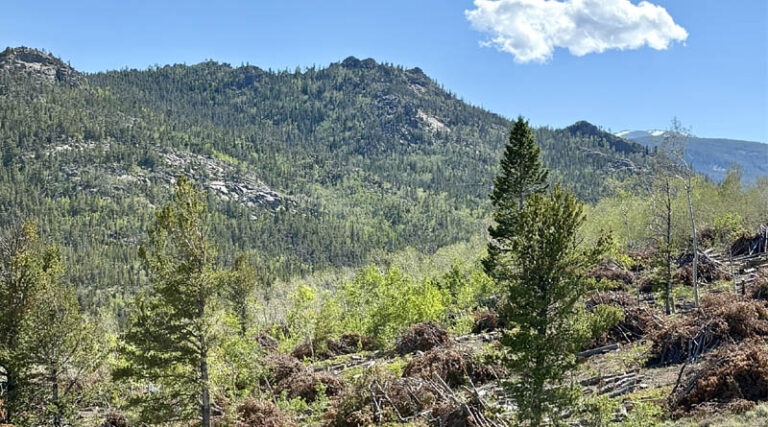
The Forest Service manages the 193 million acres that comprise the National Forest System, and it first adopted the Roadless Rule in 2001 to ease fiscal strain associated with road construction in national forests and retain the benefits of undeveloped forests for people and nature. The rule initially covered 58.5 million acres of public lands in 38 states and Puerto Rico, but the Forest Service later adopted state-specific rules for Idaho and Colorado, leaving 44.7 million acres covered under the original 2001 Roadless Rule, which is the subject of the USDA’s proposal.
Before the rule, about 386,000 miles of roads had been built on National Forest System lands, largely funded with federal timber subsidies intended to support production, leading to habitat loss and degrading water quality for hundreds of downstream communities. Since 2001, however, the rule has helped stem the loss of intact backcountry forests in inventoried roadless areas (IRAs) without hindering actions to protect critical habitat or public health and safety—particularly wildfire mitigation efforts.
The DEIS shows that since the rule took effect, IRAs have been treated to reduce wildfire risk—including through tree cutting, pile burning, chipping, and low-intensity burning—at similar rates as other National Forest System lands, demonstrating that the rule supports conservation alongside active management. Further, the DEIS acknowledges that road building within forests can actually lead to more human-caused fires.
Roadless Rule has broad support
Americans from across the political spectrum have consistently demonstrated support for the Roadless Rule. After the USDA announced in 2025 that it was considering eliminating the rule, the Forest Service received more than 625,000 public and stakeholder comments, 99% of which opposed repeal, and public opinion polling released early this year found strong bipartisan support for conserving intact backcountry forests and, specifically, for retaining the rule. Previous polls showed similarly high levels of public support for the rule.
Additionally, many Tribal Nations have repeatedly weighed in through resolutions opposing repeal, including those passed by the National Congress of American Indians, Affiliated Tribes of Northwest Indians, Rocky Mountain Tribal Leaders Council, and Coalition of Large Tribes. And 12 Southeast Alaska Tribes submitted a joint letter against repeal in the Tongass National Forest, the largest national forest.
Further, in early September, a bipartisan group of 164 U.S. senators and representatives urged the USDA to halt the repeal effort and focus instead on implementing the rule effectively.
What’s happening now
The DEIS, which the USDA issued alongside its repeal proposal, examined three options: retaining the rule as is, repealing it, or removing 31.7 million acres—71% of the covered acreage—including all IRAs in Alaska’s Tongass National Forest, from the rule.
Yet despite the rule’s flexible management approach, the broad support for it, and the DEIS findings indicating a wide range of potentially harmful effects from repeal—including that it would do little to reduce wildfire risk—the USDA favors eliminating the rule.
Also Read: John Deere’s GUSS Robots Gain Color Lidar to Navigate Orchards Without GPS
Global Agriculture is an independent international media platform covering agri-business, policy, technology, and sustainability. For editorial collaborations, thought leadership, and strategic communications, write to pr@global-agriculture.com