Cornell-Led Trial Names Top Cover Crop Varieties From 13 US Sites
28 September 2026, New York, USA: Cornell University’s New York Soil Health Program has released new results from a National Cover Crop Variety Testing Program, comparing how dozens of commercial cover crop varieties perform at 13 sites across the United States. The findings, published August 25, 2026 by program director and senior extension associate Joseph Amsili, give farmers and seed companies location-specific data on which named varieties establish fastest, survive winter best and build the most biomass, rather than relying on broad, species-level assumptions.
Cover crops are grown in the gap between two cash-crop seasons, not for direct sale, but to protect bare soil from erosion, suppress weeds, add organic matter, and, in the case of legumes, add nitrogen to the soil ahead of the next planting. Interest in cover cropping has grown steadily among row-crop farmers, seed companies and sustainability-linked payment programs, but growers have historically had limited independent data comparing specific commercial varieties within the same cover crop species, making it hard to know whether one branded cereal rye or clover variety will actually outperform another under real field conditions.
Testing Six Species at 13 Sites
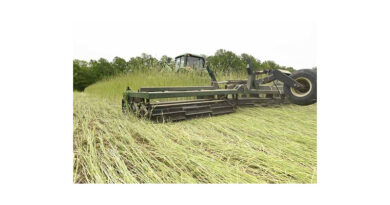
The program evaluated six fall-planted cover crop species, cereal rye, crimson clover, hairy vetch, winter pea, winter canola and radish, at sites spanning a range of US climates, including Cornell’s own research farm in Freeville, New York. Fall-planted cover crops are seeded after a main crop is harvested in autumn and are typically terminated the following spring before the next cash crop goes in the ground. At each site, researchers measured how well each variety established after planting, how well it survived winter cold, how much plant material, or biomass, it produced by spring, when it reached maturity, its height, and how effectively it suppressed weeds compared with bare soil.
Spring biomass is one of the most closely watched measurements in this kind of trial because it is a practical stand-in for how much organic matter a cover crop will return to the soil and how well it will physically smother emerging weeds before the next crop is planted. At the New York site, a cereal rye variety called ND Gardner produced the greatest spring biomass in 2026, while a winter pea variety called Survivor produced the greatest spring biomass for two consecutive years running. Among the crimson clover varieties tested, one called Heusers Ostaat achieved the greatest two-year average spring biomass in that group. Taken together, the results reinforce a pattern the program has flagged in earlier seasons: performance differences between named varieties of the same cover crop species can be as significant as the differences between species themselves.
For a farmer choosing seed, the practical implication is that recommending “plant cereal rye” or “plant crimson clover” is no longer precise enough advice on its own. A grower selecting the wrong variety for local winter conditions could see poor establishment or weak spring growth even while doing everything else correctly, undermining the erosion control, weed suppression or nitrogen benefits the practice is meant to deliver. Multi-year, multi-site data of this kind lets extension agronomists and seed retailers point growers toward varieties with a demonstrated track record for their specific region and goal, whether that goal is maximum biomass, the fastest possible fall establishment, or the strongest winter survival in a harsh climate.
For seed companies and plant breeders, the trial network offers a form of independent, third-party performance data that is otherwise expensive and slow for any single company to generate on its own across many geographies. As government conservation payments, carbon-market programs and retailer sustainability commitments increasingly tie financial incentives to cover crop adoption, having credible, university-generated variety data becomes a competitive marketing tool, helping suppliers differentiate a named variety from generic, unbranded cover crop seed sold purely on species and price.
Also Read: New US Tariffs on Chinese Drones Raise Costs for Spray-Drone Farmers
Global Agriculture is an independent international media platform covering agri-business, policy, technology, and sustainability. For editorial collaborations, thought leadership, and strategic communications, write to pr@global-agriculture.com