CIMMYT Showcases 2,286 Maize Germplasm Entries for South and Southeast Asia
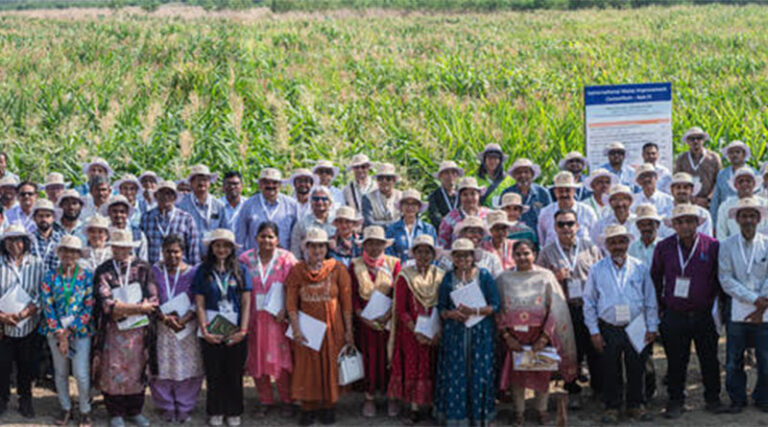
16 April 2026, Hyderabad: As maize takes on an increasingly important role in food, feed, and fodder, and in industry across South and Southeast Asia, innovation and collaboration have never been more critical. Against this backdrop, the International Maize and Wheat Improvement Centre (CIMMYT) hosted an inspiring one-day Maize Germplasm Field Day in Hyderabad, India, on 24 March 2026, bringing together the region’s leading maize scientists, breeders, and seed-sector innovators.
The biannual event drew over 150 participants from public and private organizations across Bangladesh, India, Nepal, Lao PDR, Malaysia, Myanmar, and Sri Lanka, creating a vibrant platform for regional exchange. Set in the climate‑vulnerable lowland tropics, the gathering underscored a shared urgency: how to future‑proof maize systems amid rising demand, volatile markets, and intensifying climate stress.
A Living Library of Global Maize Diversity
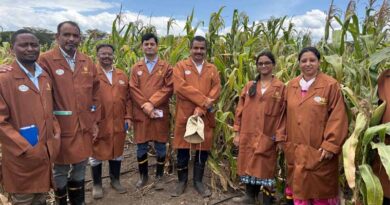
Welcoming participants, Dr. P.H. Zaidi, Principal Scientist in CIMMYT’s Global Maize Program (GMP), introduced the field demonstrations and explained how the plots were organized, mapped, and documented through a detailed field book provided to each participant. What awaited visitors was nothing short of a living library of maize diversity.
The demonstration fields featured an exceptional collection of 2,286 maize germplasm entries, ranging from early- and advanced‑generation lines to materials with tropical, subtropical, temperate, and temperate × tropical backgrounds. Participants explored specialty maize types, such as sweet corn and brown midrib maize, for fodder, alongside trait donors targeting major abiotic stresses (such as drought, waterlogging, and heat stress) and a range of biotic threats.
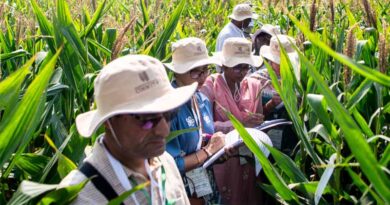
For much of the forenoon, attendees moved plot to plot—observing, debating, and identifying germplasm aligned with their breeding goals and market needs. Selections were formally submitted to CIMMYT, transforming the field day from a showcase into a hands-on, decision-making exercise that directly feeds into real-world breeding programs.
From One Product to Many: Rethinking Maize for the Global South
Across the Global South, farmers and value chains face rising feed and fodder shortages, volatile food prices, and increasing weather shocks. At the same time, maize demand continues to surge—not only for food, but also for dairy, poultry, fodder, and a range of industrial uses.
The germplasm on display reflected a strategic shift within CIMMYT’s maize portfolio: a move from a single focus on high-yielding, stress-resilient varieties to a diversified, market-aligned set of maize products. This expanded portfolio supports defined quality and trait benchmarks tailored to food, feed, fodder, and industrial markets—opening new income pathways for smallholder farmers and strengthening resilience across maize value chains.
Strategic Conversations on the Future of Maize in Asia
The afternoon featured a General Body Meeting (GBM), co‑chaired by Dr. Ashish Saxena, Director of CIMMYT’s Global Maize Program, and Dr. H.S. Jat, Director of the ICAR–Indian Institute of Maize Research. The session offered space for strategic reflection on where maize systems are heading—and how research must evolve to match that pace.
Dr. Jat highlighted the rapidly changing maize landscape in India and the wider region, while Dr. Saxena shared perspectives on global maize trends and emerging challenges. Participants consistently praised the depth, diversity, and accessibility of CIMMYT’s germplasm and its critical role in connecting global genetic resources with national programs and seed companies.
“It felt like a shopping mall for maize germplasm—offering outstanding choices for our breeding program,” said Ms. Chayanika Lahkar, a maize scientist from Assam attending the field day for the first time.
From Southeast Asia, Dr. Chua Kim Aik of Green World Genetics, Malaysia, emphasized the need to expand CIMMYT’s engagement in the region, where many small and medium seed enterprises still lack access to diverse germplasm and advanced technical expertise.
Participants also called for stronger capacity-building efforts, particularly for early-career scientists, to sharpen technical skills and promote market-responsive breeding. A dedicated side meeting with international participants further explored country‑specific challenges, helping identify targeted opportunities where CIMMYT can provide tailored support.
A Platform for Shared Solutions
More than a field visit, CIMMYT’s Maize Germplasm Field Day emerged as a powerful platform for sharing solutions, strengthening partnerships, and aligning innovation with market realities. As maize continues to anchor food and feed security across Asia, such collaborative spaces will be vital in turning genetic diversity into impact—field by field, farmer by farmer.
Also Read: Corteva Names Executive Leadership Team for Future Crop Protection Company
Global Agriculture is an independent international media platform covering agri-business, policy, technology, and sustainability. For editorial collaborations, thought leadership, and strategic communications, write to pr@global-agriculture.com