Putting Pastoral Communities First In Information Systems
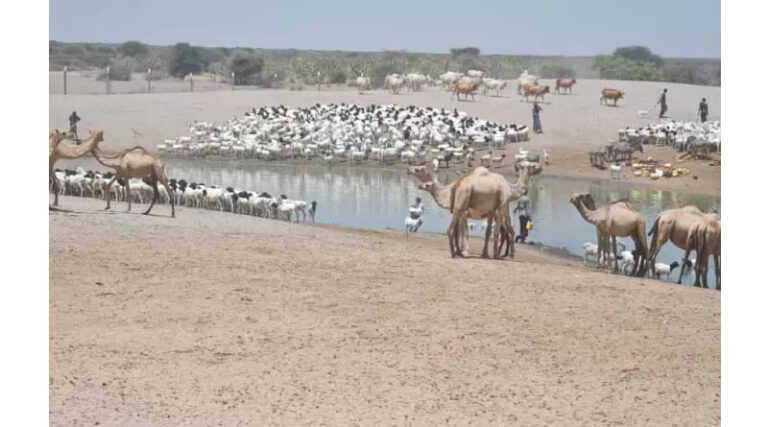
21 July 2026, Kenya: Before dawn breaks over Kenya’s drylands, pastoralists have already made the day’s most weighty decision: where to take their livestock. During normal times, this is usually an easy decision, however when dry periods approach, it stops being so straightforward. A familiar grazing area may have dried up. Water points may already be overcrowded with livestock. Livestock disease could be spreading in neighbouring communities.
For generations, experience and local knowledge guided pastoralists decisions. Elders read changes in vegetation and livestock biology while herders observed animal behaviour. Communities exchanged this digested information through trusted social networks, helping families respond to shifting conditions long before they appear on a weather map. Today, however, the risks facing pastoral communities are becoming more complex. In these environments, information has become just as valuable as water or pasture. Information systems, from climate advisory services and early warning systems to livestock market platforms and rangeland monitoring technologies, are increasingly helping communities anticipate risks. However, technology alone cannot strengthen resilience. It must be combined with local observation, traditional knowledge, and wisdom. The other challenge is ensuring these digital innovations and information systems are designed ethically, inclusively and in ways that genuinely serve the people who depend on them.
Listening to the community
One of the biggest lessons emerging from the International Livestock Research Institute, ILRI and its work under CGIAR’s Science Programs Climate Action and Food Frontiers and Security across Africa’s drylands is that effective inclusive information systems and de-risking solutions begin by listening. Pastoralists do not lack knowledge. They possess generations of experience interpreting weather patterns, grazing conditions, and livestock health. Therefore, information systems are most useful when they complement this knowledge rather than attempt to replace it. Developers and researchers are increasingly adopting human-centred approaches that involve communities from the beginning. Herders, livestock traders, elders, women, and local leaders help identify the information they need most, shape how platforms operate and validate the information they receive.
Therefore, ethical digital innovation is about more than data. It is about two-way exchange with communities, connecting existing systems and giving communities the knowledge they need to make tomorrow’s decisions with greater confidence.
“Digital innovation and information systems succeed when communities become partners in their design rather than simply users of the technology. Building on existing knowledge creates trust, strengthens local ownership, and makes information far more useful in everyday decision-making,” says Meshack Baraza, a researcher from ILRI.
Information should flow both ways.
For many years, information systems operated in one direction. Communities supplied data while institutions analyzed it elsewhere.
That model is changing.
Increasingly, ethical digital information systems recognize that people contributing information should also receive timely and meaningful benefits in return. Through platforms like ILRI’s KAZNET, farmers and pastoralists who report livestock conditions, grazing availability or disease outbreaks can receive localized weather forecasts, market prices, animal health alerts, and grazing recommendations that help them make better decisions.
This two-way exchange creates stronger incentives for participation while ensuring communities benefit directly from the information they help generate. Equally important is responsible data governance. As digital platforms expand across Africa’s drylands, questions about who owns community data, who can access it and how it will be used have become increasingly important. Communities deserve transparency. Responsible information systems must be built around informed consent, privacy protection, accountability, and clear governance frameworks that safeguard vulnerable populations while strengthening confidence in digital innovation.
Inclusion also remains central. Women, young people, persons with disabilities, remote communities and displaced populations often face the greatest barriers to accessing information. Relying solely on smartphone applications risks excluding many of the people who need information most. Effective systems therefore combine multiple communication channels, including SMS, community radio, voice services, extension networks, local meetings, and mobile applications, to ensure information reaches diverse audiences in formats they can easily understand.
Connecting what already exists
The greatest opportunity lies not in building new digital platforms but in connecting the many systems that already exist and are operating independently. Bringing these systems together could dramatically improve decision-making. Climate forecasts can be strengthened with locally generated observations from pastoral communities. Early warning systems can incorporate real-time information on grazing conditions, water availability, and livestock health. Market intelligence can be linked directly to advisory services that help producers decide when and where to sell their animals.
In Kenya for example, climate predictions produced by Kenya Meteorological Department (KMD) and ICPAC-Husika can be enhanced with high-frequency validation from KAZNET. Early warning systems for drought administered by National Drought Management Authority (NDMA) can be enhanced by real-time data regarding animal body condition, grazing pressure, water availability, and household livelihoods. Information from the livestock market produced by KAZNET and KLMC may enhance platforms like LivestockEx, while we can convert animal health and grazing data can be into actionable warnings via InfoRange and distributed widely through platforms like iShamba.
Such integrated information ecosystems would allow institutions to work together while providing communities with localized advice that reflects the realities on the ground. More importantly, they would support faster anticipatory action before crises escalate into humanitarian emergencies.
Also Read: Beyond Pesticides: Understanding the Real Causes of India’s Agricultural Export Rejections
Global Agriculture is an independent international media platform covering agri-business, policy, technology, and sustainability. For editorial collaborations, thought leadership, and strategic communications, write to pr@global-agriculture.com