Scaling Mechanized Solutions To Optimize Rice-Wheat Systems In Eastern Uttar Pradesh
22 July 2026, Uttar Pradesh: Experts and local stakeholders are driving practical solutions to accelerate adoption of climate-smart mechanized solutions for rice-wheat production systems in Uttar Pradesh.
Rice-wheat production systems cover nearly 2.6 million hectares in eastern Uttar Pradesh, but they remain constrained by delayed crop establishment, labor shortages, rising production costs, water scarcity, and climate pressures. Delayed rice harvesting continues to push the planting schedule of more than 60 percent of wheat, missing their optimum planting window and resulting in significant yield losses.
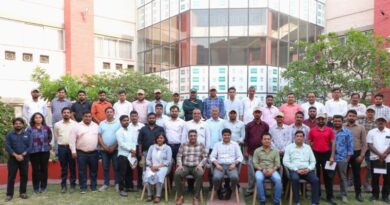
To assess and strengthen the scaling potential of climate-smart innovations in Eastern Uttar Pradesh, the International Rice Research Institute (IRRI), through the CGIAR Scaling for Impact (S4I) program, organized an Innovation Package and Scaling Readiness (IPSR) Workshop on “Climate-Smart Mechanized Innovations to Optimize Rice-Wheat Systems” at the IRRI South Asia Regional Centre (ISARC), Varanasi.
The workshop convened experts from government agencies, national and state research and extension systems, development partners, private sector stakeholders, mechanization service providers, machinery manufacturers, and farmer representatives.
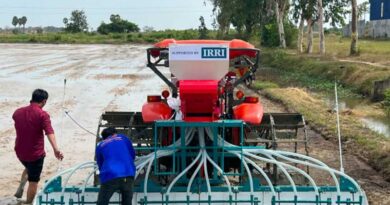
As a part of CGIAR S4I program, the workshop explored opportunities to leverage the IRRI-led bilateral scaling projects such as Uttar Pradesh Agriculture Growth and Rural Enterprise Ecosystem Strengthening (UPAGREES) project and its existing farmer and institutional networks to accelerate the adoption of climate-smart mechanized technologies, such as mechanized direct-seeded rice (mDSR) and zero-till wheat (ZTW) technologies.
A key focus of the workshop is the convergence of CGIAR’s S4I program and UPAGREES’ activities as a promising diffusion-of-innovation approach to expand the reach and sustainability of climate-smart agricultural solutions among smallholder farmers.
Dr. Vikas Kumar Singh, ISARC Interim Director, emphasized the importance of multi-stakeholder collaboration in advancing climate-smart agriculture during the workshop. “Responsible scaling is key to ensuring that proven innovations reach more farmers and generate sustainable, long-term impacts,” he said.
Using the IPSR tool, workshop participants assessed the readiness and use level of available technologies and key support needed for success such as supportive policies, mechanization service delivery systems, gender and social inclusion, financing, market linkages, capacity building, and institutional partnerships.
Dr. Rica Flor, IRRI Scientist for Innovation Systems, facilitated the workshop’s technical sessions, guiding participants through the assessment of technology readiness and use levels. Complementing this, Dr. Vikram Patil, IRRI Scientist and IRRI-UPAGREES Project Lead, presented the strategic innovation package designed to scale mDSR and ZTW solutions to optimize farming systems across Eastern Uttar Pradesh.
A major focus of the event was the validation of a climate-smart innovation package, which integrates mDSR and ZTW, along with timely sowing, best management practices and strengthened mechanization service delivery systems.
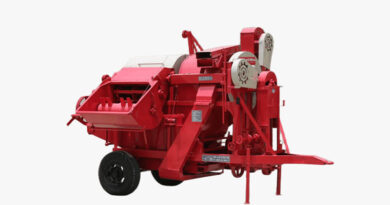
These interventions demonstrated significant potential to reduce production costs, save water, lower greenhouse gas emissions, address labor shortages, and enhance farm productivity and profitability in rice-wheat systems. To support sustainable adoption, the package also includes capacity building, entrepreneurship development, and local repair networks.
Through interactive discussions and group exercises, practical interventions were also identified to enhance farmer awareness, improve access to mechanization services, and create an enabling environment for large-scale adoption of sustainable rice-wheat production technologies.
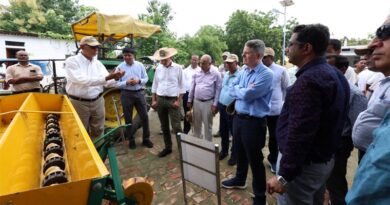
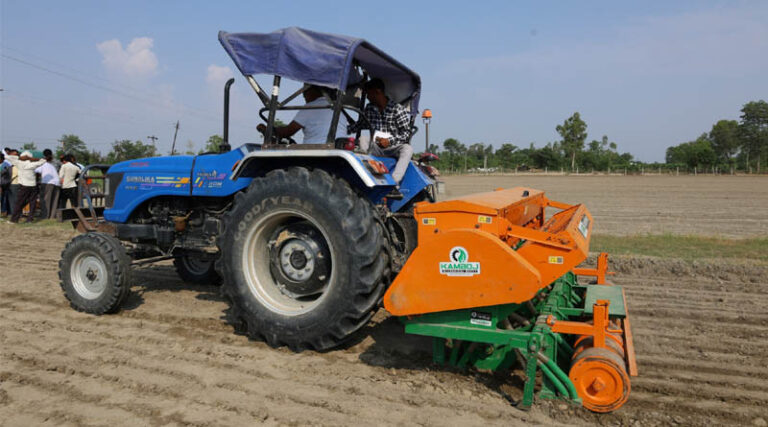
To complement the discussions, as a part of the coaching meeting, the S4I team also visited demonstration fields in Barahani village, Chandauli district, where they observed mechanized direct-seeded rice in practice and engaged directly with farmers, mechanization service providers, and machinery dealers.
Farmers shared that DSR reduced labor and water requirements, lowered production costs, and enabled harvesting 10–15 days earlier than conventional transplanting, allowing timely wheat planting while maintaining comparable yields.
They also highlighted the precision of modern direct-seeding equipment in improving crop establishment and weed management, while emphasizing that wider access to mechanization services and continued government support would be critical for broader adoption.
An action roadmap was developed as the workshop’s major output, outlining priority interventions, institutional responsibilities, and next steps for scaling mechanized rice-wheat innovations across Eastern Uttar Pradesh. These recommendations will help guide future investments, strengthen partnerships, and align scaling efforts with the ongoing UPAGREES activities.
Key participating organizations included the Department of Agriculture (DoA), National Bank for Agriculture and Rural Development (NABARD), Bayer, ITC, CIMMYT, KVKs, Mahayogi Gorakhnath University Gorakhpur (MGUG), FAARD (Foundation for Agriculture and Rural Resource Development) Foundation, UPDASP, Savannah Seeds, Gramin Development Society Bahraich, Umang Sunera Samiti, Private Service providers (PSPs), Women Self Groups (WSHGs), farmers, and internal project teams, fostering rich dialogue and collaboration for scaling sustainable and mechanized rice-wheat production systems.c
Also Read: Beyond Pesticides: Understanding the Real Causes of India’s Agricultural Export Rejections
Global Agriculture is an independent international media platform covering agri-business, policy, technology, and sustainability. For editorial collaborations, thought leadership, and strategic communications, write to pr@global-agriculture.com