Study: Regenerative Farms Store More Carbon Than Planned Capture Tech
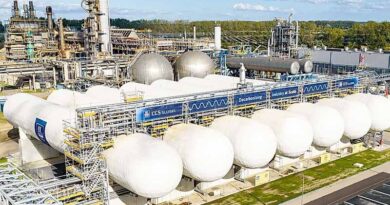
25 September 2026, South Dakota, USA: The Ecdysis Foundation, an agricultural research nonprofit based in Estelline, South Dakota, released findings on September 17, 2026 from what it describes as the first large-scale systemic comparison of soil carbon storage on regenerative farms against the projected output of planned technology-based carbon capture projects, such as mechanical or chemical systems designed to pull carbon dioxide from the air and store it underground.
The findings come from the foundation’s long-running 1000 Farms Initiative, a research program led by founder and director Dr. Jonathan Lundgren that studies farms as whole operating systems rather than testing individual practices, such as cover cropping or reduced tillage, in isolation. For this analysis, researchers drew on data from more than 2,000 farms across North America, collecting roughly 500 data points per farm and scoring each operation on a one-to-eight scale running from fully conventional to fully regenerative across seven outcome categories. Soil carbon storage was assessed by measuring soil organism activity and plant biomass, which are closely linked to how much carbon a farm is actively drawing down from the atmosphere and holding in the soil as stable organic matter.
What the numbers show
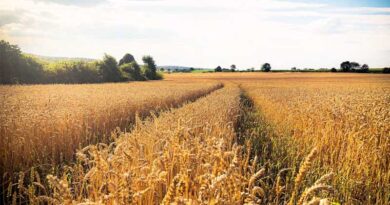
Farms that scored highest on the regenerative scale stored 39% more soil carbon on average than the most conventional operations in the dataset, at 38.3 metric tons per acre compared with 27.5 metric tons per acre. Crucially for a comparison that often pits environmental outcomes against farm economics, yields on the most regenerative farms matched national averages for wheat, corn and soybeans, and net profit per acre was statistically equivalent between the two groups. Biodiversity measures, including insect and plant diversity, were also markedly higher on the regenerative operations.
Extrapolated nationally, the researchers estimate that if all United States field-crop acreage adopted regenerative practices, the resulting increase in soil carbon storage could offset one and a half to two years of the country’s current greenhouse gas emissions, a larger climate impact than the combined 2050 projections of every technology-based carbon capture and storage project currently proposed in the US. The foundation’s release also pointed to a policy gap: current federal crop insurance and subsidy structures, it argues, tend to penalize farms during the multi-year transition into regenerative management, even though the long-run data suggests yields and profitability recover to conventional levels.
It is worth noting that these figures come from Ecdysis’s own ongoing research program and September 17 press materials rather than a paper that has yet cleared peer review in an academic journal, so the findings should be read as a substantial, data-rich industry study rather than a peer-reviewed publication at this stage. The scale of the underlying dataset, more than 2,000 farms tracked over multiple years, nonetheless makes it one of the larger systemic comparisons of its kind attempted in North American row-crop agriculture.
Also Read: India Approves Pioxaniliprole, First Insecticide Active Ingredient Discovered in India
Global Agriculture is an independent international media platform covering agri-business, policy, technology, and sustainability. For editorial collaborations, thought leadership, and strategic communications, write to pr@global-agriculture.com