When The Soil Moves, So Must We!
06 October 2026, Malawi: Where did all the soil go? How do we protect the landscapes that must keep feeding families long after today’s projects have ended? What does it take for a promising practice seen on a demonstration plot to become something farmers can confidently use season after season? Most importantly, how do researchers, governments, communities and development partners work together so that their combined effort makes a tangible difference in farmers’ everyday lives? These questions followed participants from the field into the meeting room during the Water and Soil Accelerator (WASA) Pause and Reflect workshop held in Salima, Malawi, from 15–17 September 2026. It was deliberately designed as three days of reflection, from taking time to step away from workplans and targets, look closely at what is happening on the ground, confront what is not working and agree on what needs to change.
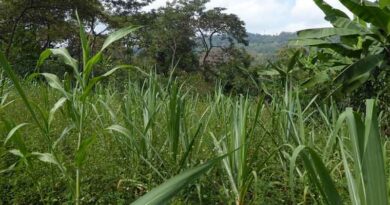
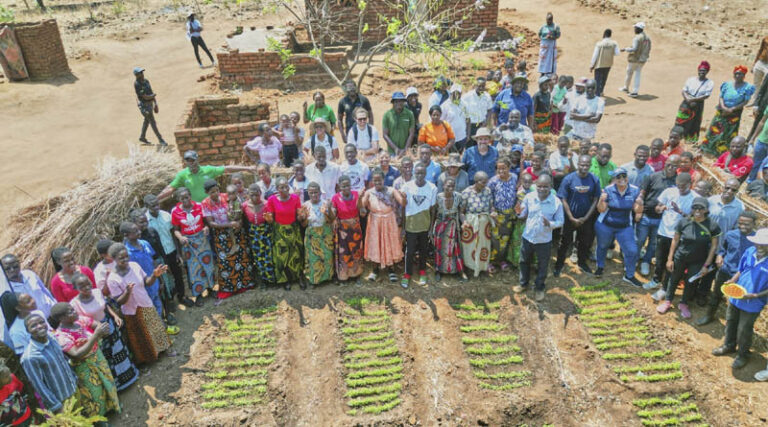
The first day brought those conversations directly to the field. Farmers, researchers and implementing partners walked through sites where soil and water management practices are being put to the test. The experience gave numbers and technical discussions a human face. Across the program, demonstrations, farmer learning and landscape restoration are already underway, but the workshop challenged partners to look beyond activities toward a more coherent journey from evidence to implementation, learning, and ultimately responsible scaling.
“The real route to sustainability is to integrate what we are doing into government programming. Partnerships with the Ministry of Agriculture and Water are really important for us, as is working closely with extension services. For these interventions to be sustainable, farmers need market access, strong market linkages, and a clear economic case. The key message from the field visit is the importance of being farmer-led. No amount of technical interventions will be sustainable if communities don’t own and don’t buy into these interventions. What we are seeing in Salima today is very much that communities and farmers designing interventions based on the challenges that they share,” remarked Inga Mata-Jacobs, Strategic Program Director – Water, Growth and Inclusion at IWMI.
That connection between evidence and practice sits at the heart of CIMMYT’s contribution to WASA. In Zambia, CIMMYT provides cross-cutting technical support through the Conservation Farming Unit and Total LandCare consortia, working alongside organizations whose strengths range from farmer mobilization and extension to digital advisory services, markets and landscape management. Through the CFU partnership, that technical contribution is already visible in farmers’ fields. Between October 2025 and August 2026, activities included the establishment of 45 demonstrations, promotion of five drought-tolerant varieties and 45 mechanization promotions. The project also supported nine field staff and 15 service providers with basin diggers, alongside mechanization training, field visits, and knowledge exchange.
“A good technology alone rarely transforms a farming system. A drought-tolerant seed still needs the right agronomy, a mechanized planter needs an accessible service provider, and climate information has little value if it reaches a farmer too late to influence a decision. Beyond demonstrating technologies, we need to help farmers understand them, adapt them and decide whether they make sense for their own farms. Bringing together conservation agriculture, improved varieties, mechanization, agronomy and climate information is important, but these practices are more likely to endure when farmers, communities, extension services and local institutions understand and own them.” stated Christian Thierfelder, Principal Crop Agronomist at CIMMYT
Through the same partnership, 405 lead farmers and 38,505 farmers were trained in climate-smart agriculture, while 90 field days were conducted and more than 52,000 farmers accessed climate-smart agriculture e-messages. A clear message set the tone that partnerships are not an addition to delivery; they are part of the technology of delivery itself.
The presentations repeatedly returned to this point. Collaboration with ministries, extension services, traditional leadership, private-sector actors and farmer organizations creates the connections needed for innovations to move beyond isolated demonstrations. Implementation experience also showed that practical farmer training, demonstration plots, and farmer participation in crop evaluation strengthen understanding and adoption, while close collaboration with communities is critical to sustaining landscape restoration.
Across the wider programme, communities in Salima are working on gully reclamation and tree planting, with five villages involved in raising 50,000 tree seedlings. Demonstration plots have provided spaces where farmers can see technologies for themselves, while field days have brought thousands of people together to learn, question and exchange experiences.
The Pause and Reflect was equally important for discussing where progress has been slower. Zambia, for example, has recorded strong overall participation, but performance remains uneven across individual activities. Rather than hiding such gaps behind aggregate numbers, the workshop created room for partners to ask why they exist and what needs to be adjusted. Scaling is not simply doing more of everything, but it means understanding what works, where it works, for whom, and what supporting systems need to be in place.
For CIMMYT, the next phase sharpens that pathway, from reach, demonstrate, adopt, verify and scale. Farmer training, field days, mechanization campaigns and digital advisory services can expand awareness, but the next test is whether that reach translates into sustained adoption. Mother-and-baby trials, demonstrations and follow-up with farmers will help generate evidence around conservation agriculture, rotations, legumes, residue retention, manure and agroforestry, while trial and farmer-level data will strengthen understanding of yields, adoption and impact. The ambition is therefore not to arrive in a community carrying a single answer. It is to bring together science, farmers’ knowledge, delivery experience, government systems and market actors, and allow each to strengthen the other.
After three days in Salima, each partner had to reflect on what we can do together to keep soil where it belongs and make that soil productive enough to support the next generation. The answer will not come from CIMMYT, a farmer, an extension officer, government or any one partner acting alone. It will come from partnerships willing to walk the field together, examine the evidence together, acknowledge what is not working and adapt together. That may ultimately be WASA’s most important investment: not only better practices for water and soil, but stronger relationships capable of carrying those practices from promising science to lasting change in farmers’ fields.
Global Agriculture is an independent international media platform covering agri-business, policy, technology, and sustainability. For editorial collaborations, thought leadership, and strategic communications, write to pr@global-agriculture.com