India Moves to Modernise Agricultural Higher Education Through National Reform Agenda
26 August 2026, New Delhi: India has begun a broad review of its agricultural higher education system, with policymakers and agricultural universities focusing on technology-driven learning, industry partnerships, demand-led research and stronger links between universities and farmers.
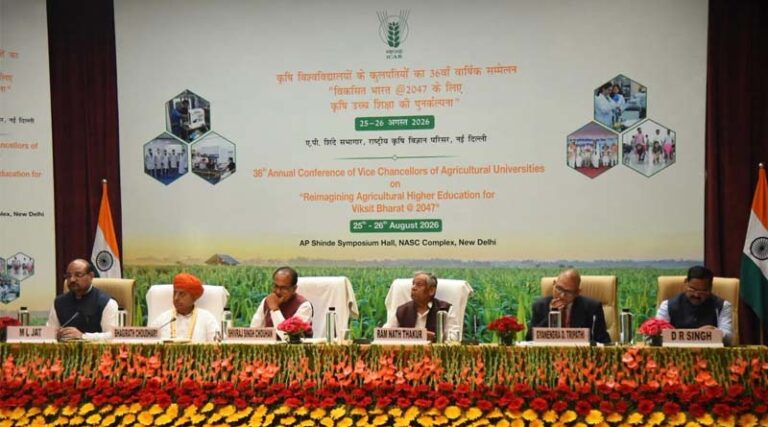
The priorities emerged at the 36th Annual Conference of Vice Chancellors of Agricultural Universities, held in New Delhi on August 25–26 under the theme “Reimagining Agricultural Higher Education for Viksit Bharat@2047.” The conference brought together Vice Chancellors of agricultural universities, senior officials from the Department of Agricultural Research and Education (DARE) and the Indian Council of Agricultural Research (ICAR), scientists and other stakeholders.
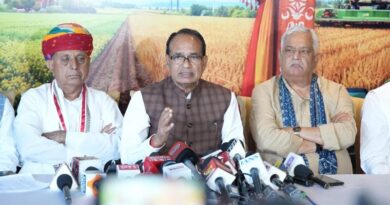
Union Agriculture and Farmers’ Welfare Minister Shivraj Singh Chouhan said the performance of agricultural education should be judged not simply by the number of degrees awarded, but by the skills and knowledge created and their impact on farmers.
He called for agricultural education to become more practical, technology-driven and responsive to farmers’ needs. He also emphasised stronger collaboration between agricultural universities, ICAR, Krishi Vigyan Kendras (KVKs), Farmer Producer Organisations (FPOs), industry and farmers to move research from laboratories into the field.
Focus on technology, skills and employability
The conference highlighted the need to make agricultural education more relevant to emerging technologies, entrepreneurship and agribusiness.
Minister of State for Agriculture and Farmers’ Welfare Bhagirath Choudhary stressed the importance of attracting young people to agriculture by creating opportunities in modern technologies, research, entrepreneurship and agribusiness.
The discussions also examined stronger industry–academia partnerships, apprenticeships and internships, curriculum revision, and dual, twinning and joint-degree programmes. The proposed introduction of Professors of Practice in agricultural universities was also discussed to bring professional and industry expertise into academic institutions.
Research to be aligned with farmers and national priorities
A major theme of the conference was the need to strengthen the connection between agricultural research and field-level requirements.
DARE Secretary and ICAR Director General Dr M. L. Jat called for a shift towards a skill-driven and innovation-led agricultural education ecosystem. He highlighted industry–academia partnerships, demand-driven research, accreditation, data-based decision-making and closer integration of education, research and extension.
The conference also discussed aligning Junior Research Fellowship (JRF) and Senior Research Fellowship (SRF)research with national priorities and promoting Technology Readiness Levels (TRLs) among State Agricultural Universities to accelerate the conversion of research into usable technologies and innovations.
Changes proposed across admissions and academic systems
The two-day conference covered 14 agenda items across five sessions, spanning student-centric reforms, higher education, faculty development, institutional strengthening, quality enhancement, academic reforms, research, innovation and institutional excellence.
Among the issues discussed were:
- Timely ICAR All India Quota counselling and verification
- Separate Ph.D. counselling for Veterinary Sciences
- Undergraduate eligibility for agriculture-qualified and Hindi-medium students
- Research fellowships and admission systems
- Accreditation and quality assurance
- Financial management and performance-based funding
- Equivalency of degrees in agriculture and allied sciences
- Faculty training and domain mapping
- Uniform implementation of UGC Ph.D. Regulations, 2016
- Development of academic exchange and joint-degree programmes
The conference also reviewed the state/category-wise 40% restriction in seat allotment and the Action Taken Report from the previous Vice Chancellors’ Conference.
Data and rural engagement to gain greater importance
Agricultural universities are also being encouraged to strengthen their use of data for planning, monitoring and decision-making.
Participants discussed developing a comprehensive agricultural education data ecosystem, along with stronger Monitoring, Evaluation, Learning and Impact Assessment (MELIA) systems.
The conference also highlighted the Rural Agricultural Work Experience (RAWE) programme as an important mechanism for exposing students to rural realities and strengthening the connection between agricultural education and rural transformation.
Push for globally competitive agricultural universities
The discussions also covered the NIRF ranking parameters for Agriculture and Allied sectors, common agenda items of the Indian Agricultural Universities Association (IAUA), institutional excellence and mechanisms for sharing expertise through Professors of Practice.
The overall focus was on transforming agricultural universities into technology-enabled, innovation-oriented and outcome-driven institutions that integrate education, research, extension, industry engagement and rural development.
The conference concluded its opening day with a clear emphasis on ensuring that agricultural education delivers practical outcomes for farmers while developing a skilled workforce capable of supporting India’s transition towards a more productive, resilient and sustainable agriculture sector.
Also Read: Jefferies Maintains Buy Rating on UPL, Sees 14% EBITDA Growth in FY27
Global Agriculture is an independent international media platform covering agri-business, policy, technology, and sustainability. For editorial collaborations, thought leadership, and strategic communications, write to pr@global-agriculture.com