Advancing Low-methane Sheep And Goat Production In India
13 June 2026, New Delhi: ICARDA and partners are working with herding communities in India to integrate methane-reduction traits into sheep and goat breeding programs, supporting more productive, efficient, and climate-smart livestock systems.
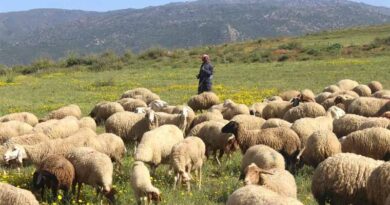
Across India, efforts to reduce methane emissions from livestock are gaining momentum through community-based breeding programs that connect scientific innovation with the realities of smallholder farming.
In the state of Maharashtra, ICARDA, the Nimbkar Agricultural Research Institute (NARI), and AbacusBio are working together under the “Low-Methane Genetics Expansion to Small Ruminants in Africa and Asia” project, funded and facilitated by the Global Methane Hub.
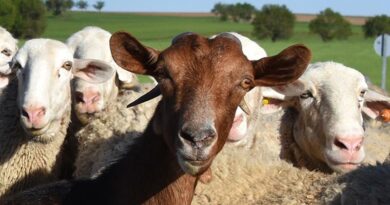
The project seeks to identify sheep and goats that are productive, feed-efficient, and lower-methane-emitting, and use them to drive sustainable genetic improvement in smallholder livestock production systems.
Early work has focused on building the foundations for long-term impact. Historic performance and pedigree data from NARI’s FecB, a gene associated with increased ovulation rates and litter size in sheep, from the carrier “NARI Suwarna” nucleus sheep flock are being integrated into the DTREO platform, enabling structured data capture and future genetic evaluation.
At the same time, ICARDA, NARI, and AbacusBio are developing methane measurement systems suited to local conditions, including laser methane detectors (LMDs), portable accumulation chambers (PACs), and standardized protocols for recording animal performance and emissions.
Community Engagement
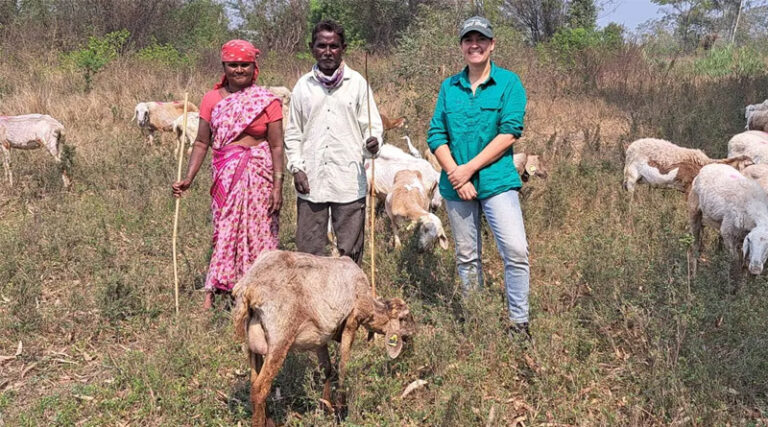
Earlier this year, NARI hosted a field meeting in the Morochi village of Solapur district, bringing together technical teams with goat keepers participating in the local CBBP to introduce methane measurement and explain its purpose.
This CBBP operates under the Indian Council of Agricultural Research (ICAR)’s “All India Coordinated Research Project on Goat Improvement” and currently records more than 1,000 adult female goats and their offspring from approximately 200 goat keepers across five districts in Maharashtra.
During the meeting, the goat keepers were introduced to methane measurement techniques and shown how the resulting data would support breeding decisions. Discussions focused on practical benefits at the farm level, including the potential to select animals that grow well, use feed more efficiently, and emit less methane.
The level of community engagement and willingness to participate in this project will be critical to the long-term adoption of the proposed climate-smart breeding approaches.
From Global Science to Local Solutions
Field visits and technical exchanges between project partners have further supported the adaptation of global measurement approaches to local production systems and farming realities.
India is one of four countries participating in this innovative initiative, alongside Tunisia, Ethiopia, and Mongolia. The experiences of these countries are helping generate data and insights that have rarely been collected at scale in smallholder sheep and goat systems.
While efforts continue to strengthen infrastructure, secure equipment, and build local capacity, the project’s goal is to integrate methane traits into CBBPs, which have the potential to deliver both environmental and productivity gains. In the longer term, these advances could also support certification processes, strengthen supply chains, and create additional opportunities for smallholders.
The India experience highlights a broader lesson for climate-smart livestock systems: progress depends on combining science, practical delivery, and meaningful community engagement. As implementation advances, insights from India and the other countries involved in this project will contribute to a growing global effort to reduce emissions from small ruminants while supporting resilient livelihoods.
Also Read: UPL Recognized as Top Innovator in AgriBusiness at Clarivate South Asia Innovation Awards 2026
Global Agriculture is an independent international media platform covering agri-business, policy, technology, and sustainability. For editorial collaborations, thought leadership, and strategic communications, write to pr@global-agriculture.com