Celebrating 3 Decades of WA DPIRD and GRDC Collaboration
13 August 2026, AU: With a history that dates back to the early 1990s, GRDC and WA DPIRD’s enduring partnership has seen many shared research priorities turn into grower solutions, significantly improving crop production on WA soils.
For more than 30 years, GRDC and the Western Australian Department of Primary Industries and Regional Development (WA DPIRD) have shared a journey of collaboration that has led to growers overcoming numerous production challenges, including those relating to WA’s unique sandy soils.
The 2 organisations say the key ingredients for partnership success are having a shared vision and finding ways to partner on grower priorities while still meeting their own separate goals.
The partnership between the organisations is centred around delivering for WA grain growers. Investment between GRDC and WA DPIRD is currently more than $168 million in projects that enable a collaborative partnership to continue to grow.
Live Newsroom
Grains Research Updates
Collaboration between WA DPIRD and GRDC dates back to the early 1990s, but it wasn’t until 1996 – when the GRDC-supported Crop Updates were established – that one of many long-lasting collaborations was set in motion.
WA DPIRD Senior Research Scientist Greg Shea was there when Crop Updates were established, and he was also a convenor in following years. He has seen this extension platform stand the test of time and continue to deliver important industry research.
Of the Updates, he says, “It was just an atmosphere of collaboration, with a positive sort of vibe, designed with plenty of breakout time so you could get to the bottom of certain topics.”
“And in those days, it was just a simple overhead projector and data printed on acetate sheets, but that was all that was needed to get the information across.”
Mr Shea says the Crop Updates were set up by the Department of Agriculture WA (as WA DPIRD was then known) to respond to an industry need for rapid results.
“It was a bit of a boom time, with more agronomists within the private sector than ever before, and they were wanting results that were fresh from the previous season’s trials,” he says.
“In response to this demand, the researchers began presenting their results in summer. And so, the Updates became a way to get results out quicker, and hence the industry could make the most of the information.”
Peter Bird, GRDC Senior Regional Manager – West, says it is the interaction between people that makes the Updates so popular, along with being one of the main avenues to bring research outcomes to growers and helping advisers tailor new information for their clients.
In the age of video conferencing, podcasts and online information, I find it quite intriguing that the Updates continue to grow, highlighting the value people place on face-to-face connection.
“And for all the years it has been around, WA DPIRD has been a key organisation delivering at Updates, with excellent capability across many sciences: entomology, pathology, genetics, weed management, soils research…which is always in high demand.”
Soils collaboration
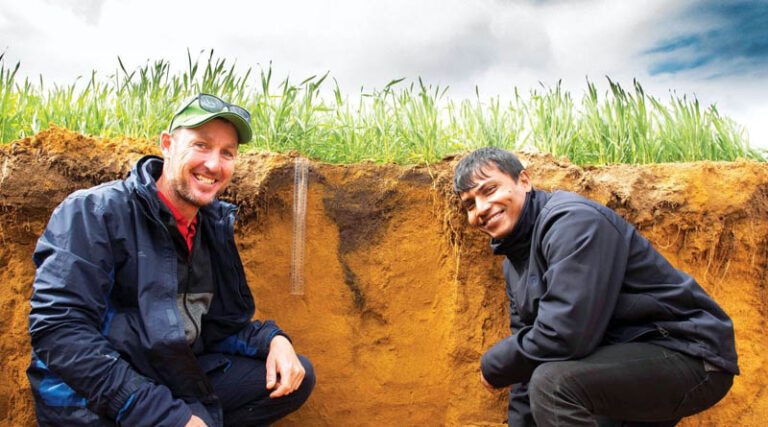
Further to the Updates, WA DPIRD and GRDC have a strong history in liming and soil amelioration research, which has seen high adoption of soil management techniques across the state. Land once considered marginal for cropping is now producing much more profitable crops.
Dr Kaara Klepper, WA DPIRD Broadacre Systems Executive Director, says while this extensive collaboration in soils has led to incredible achievements for growers, WA DPIRD and GRDC have taken the partnership a step further with the launch of the Soil Water and Nutrition (SWAN) collaboration.
“SWAN is a success because soils are a common priority for both GRDC and WA DPIRD, as we know our sandy soils are the linchpin for productivity,” Dr Klepper says.
“So we said to GRDC, this is the outcome we want for this focus area. How do you want to design a research program to achieve that? And so that was a true co-design process, and that, I think, is when you get a real sense of partnership.”
Mr Bird says the success in soil research collaboration is based on both sides recognising that soil is one of the key resources and a key productivity driver for WA growers, so there is an agreed vision.
“The long-term nature of our partnership in soils is from GRDC recognising that WA DPIRD provides an excellent avenue for applied research in this area, along with connections with growers and capability, which has led to research that has had high impact over the years,” he says.
Canola agronomy
The success story of canola cannot be told without the essential role GRDC and WA DPIRD played in integrating the new crop within the grains industry – and the timeline of the crop’s growth is strongly aligned with the Updates.
In the early 1990s, new break crops were entering the industry, but due to disease and other agronomic factors, few growers were adopting them.
Fast forward to today and canola dominates as the main break crop in most rotations.
The reason canola is the very productive and stable crop it is today owes a lot to GRDC and WA DPIRD’s many collaborative projects looking at plant density, sowing times, pest and disease management, nutrition and more.
Mr Shea says when canola was first grown in WA some 30 years ago, it started as a crop for the medium and high-rainfall areas with many challenges.
“Thirty years ago, if you said canola’s going to be 50% of the rotation in some areas, and grown in low-rainfall areas, we wouldn’t have believed it,” he says.
“So it’s the technology, but it’s also the way the technology’s been integrated, and that’s how WA DPIRD has helped, by working with growers to solve problems and make it work in their systems.”
Also Read: Paraquat and the Future of Pesticide Regulation in India
Global Agriculture is an independent international media platform covering agri-business, policy, technology, and sustainability. For editorial collaborations, thought leadership, and strategic communications, write to pr@global-agriculture.com