Shared Machinery Could Unlock Growth For Scotland’s Small‑Scale Grain Sector
19 May 2026, UK: New research from the Seed Sovereignty Programme, highlights the potential of machinery co-operatives, sometimes known as machinery rings, to support growers, cut costs and strengthen local food systems. The research was commissioned by The James Hutton Institute, the internationally renowned scientific research centre that aims to provide scientific solutions to the challenges faced by the agriculture industry.
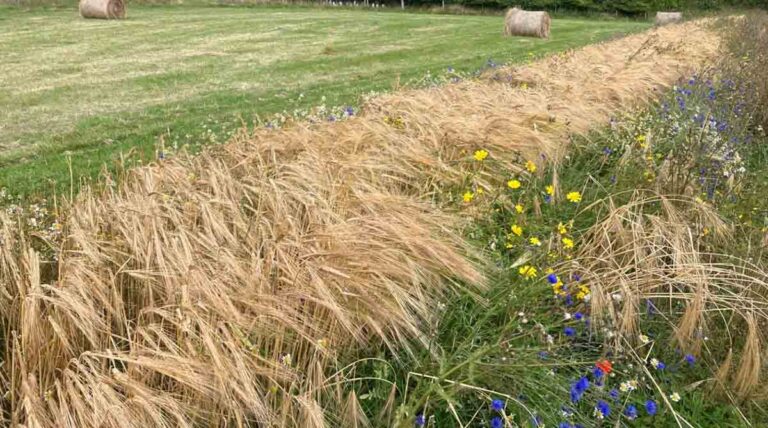
Interest in small‑scale grain production is growing rapidly across Scotland, particularly for food‑grade cereals such as wheat, barley and rye. From crofters and community growers to estates experimenting with heritage varieties, more people are producing grain for baking, malting and local food markets. However, a lack of access to appropriately scaled machinery is emerging as a major barrier to the sector’s viability.
Professor Tim George is Director of the International Barley Hub (IBH), the Hutton’s innovation centre dedicated to promoting scientific discovery to future-proof barley and funded as part of a £62m investment through the Tay Cities Region Deal (TCRD) a partnership between local, Scottish and UK governments and the private, academic and voluntary sectors. Professor George said of the initiative, “Producers growing between one and twenty hectares find that manual methods are no longer viable, yet modern commercial machinery is too large, expensive, or unavailable for small contracts.
“A survey of Scottish grain producers, undertaken by the Seed Sovereignty Programme in 2025, found strong demand for machinery sharing, with 67% of respondents identifying harvesting machinery as their top need. There was also high demand for grain drying, cleaning and drilling equipment. Most growers wanted to improve efficiency and viability, rather than expand production.”
In response to these findings, the IBH passed on three of its old stock small threshers to farmers in distinct regions of Scotland with different scales and intended uses to test their practical value and act as catalysts for machinery-sharing hubs in these regions.
Professor George explained the next step: “We’re now mapping existing small- and medium-scale grain equipment to pinpoint where we might be able to support the formation of machinery rings and to identify gaps in equipment necessary for production and processing of grain in Scotland.
“If you’re currently growing grain and have machinery that you would be happy, in theory, to include in a machinery sharing ring please fill out this form (https://forms.gle/nNU7s28uDA317Z6D8). This will populate a map that will show the current network.”
International examples show the potential of this approach. In France, Coopératives d’Utilisation de Matériel Agricole (CUMAs) have been operating since the 1940s. These groups share equipment, infrastructure, best practices, ideas and knowledge and sometimes staff. Today there are around 10,000 CUMAs, with nearly half of all French farms participating. On average, members reduce overall operating costs by around 20%.
This research, funded through the EU’s RADIANT project funding and Scottish Government’s RESAS research programme, concludes that machinery co‑operatives could offer a viable and cost‑effective solution, if supported by the right policy and organisational frameworks. Targeted funding from future rounds of the Scottish Government’s Small Producers Fund, which has already committed £1.5 million, alongside advisory support and international knowledge exchange, could help establish regional co-operatives and unlock growth in the sector, delivering economic, social and environmental benefits for Scotland’s rural communities and strengthening Scotland’s local and regional food systems.
“Producers growing between one and twenty hectares find that manual methods are no longer viable, yet modern commercial machinery is too large, expensive, or unavailable for small contracts.” – Professor Tim George, Director of the International Barley Hub (IBH)
Also Read: Insecticides (India) Limited Launches New Paddy Insecticide ‘Granuvia’
Global Agriculture is an independent international media platform covering agri-business, policy, technology, and sustainability. For editorial collaborations, thought leadership, and strategic communications, write to pr@global-agriculture.com