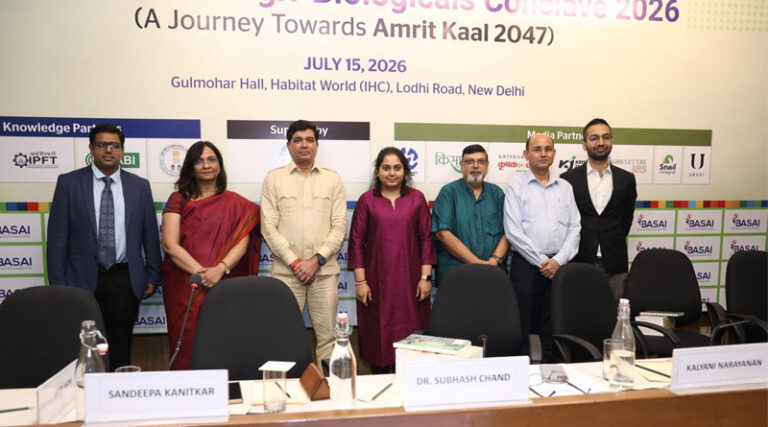
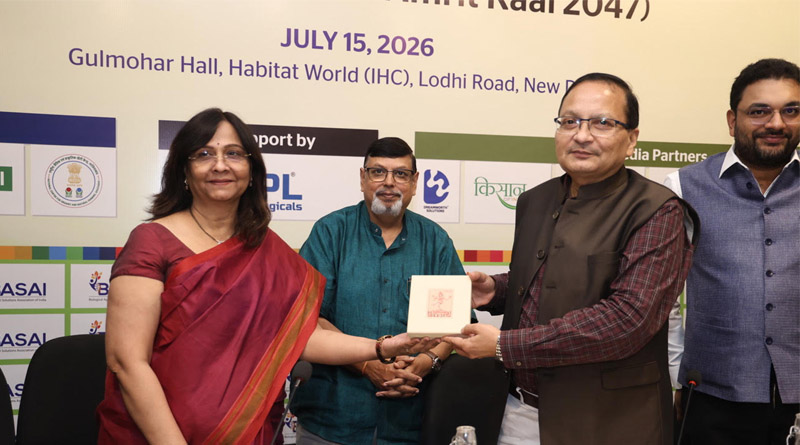
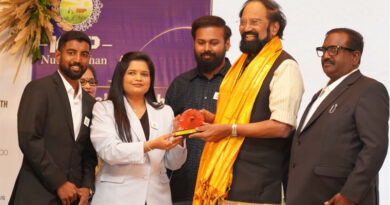
16 July 2026, New Delhi: India must accelerate the adoption of integrated farming systems, strengthen quality standards for biological agri-inputs, and build a globally competitive bio-based agricultural ecosystem to support sustainable food production, speakers said at the Bharat Agri-Biologicals Conclave 2026.
Organized by the Biological Agri Solutions Association of India (BASAI), the conclave convened senior government officials, agricultural scientists and biological agri-input companies to discuss how India can accelerate the adoption of biological agriculture through stronger regulation, innovation and market development.
Integrated farming key to sustainable agriculture
Delivering the keynote address, Dr. P.K. Singh, Agriculture Commissioner, Government of India, described integrated farming as the most sustainable pathway for Indian agriculture.
He said integrated approaches would enable the country to reduce chemical input use while maintaining agricultural productivity to meet national food requirements. He also noted that large-scale farmer adoption of biofertilizers would create substantial future demand for biological products.
According to Dr. Singh, wider adoption of biological agri-inputs can improve soil health, reduce excessive dependence on chemical fertilizers and pesticides, and contribute to producing safe, nutritious and globally competitive agricultural produce.
While speakers highlighted the market’s growth potential, they repeatedly stressed that product quality remains the sector’s most pressing challenge.
Dr. Subash Chand, Secretary, Central Insecticides Board & Registration Committee (CIB&RC), said the long-term success of the biological sector would depend on quality assurance and farmer awareness regarding proper application methods.
He observed that while some companies source microbial strains, they invest insufficiently in research and technology development, resulting in inconsistent product performance. Greater investment in research and development, he said, would improve product quality and farmer outcomes.
Industry seeks stronger collaboration
Vipin Saini, CEO of BASAI, said biological solutions offer opportunities beyond nutrient management by improving water-use efficiency, conserving soil health and supporting sustainable production systems such as Direct Seeded Rice.
He highlighted BASAI’s S.H.E. (Sustainability, Health and Economy) initiative, which aims to promote science-based, farmer-centric biological technologies.
BASAI President Sandeepa Kanitkar said recent geopolitical uncertainties and supply chain disruptions have reinforced the importance of developing a self-reliant domestic biological agri-input industry.
She said indigenous biofertilizers, biopesticides and biostimulants could reduce dependence on imported chemical inputs while enhancing soil biodiversity, crop resilience and nutritional security. Achieving this, she added, would require closer collaboration between government, academia, research institutions and industry.
Technology, skills and regulation in focus
The conclave concluded with a call for stronger policy support, harmonized regulations, increased investment in research and development, and closer collaboration among government, scientific institutions and industry to position India as a global leader in sustainable agricultural technologies while advancing the country’s long-term vision for developed India.
Global Agriculture is an independent international media platform covering agri-business, policy, technology, and sustainability. For editorial collaborations, thought leadership, and strategic communications, write to pr@global-agriculture.com