25 March 2026, New Delhi: India is sharpening its focus on farmer protection, crop loss assessment, and insurance efficiency as climate volatility continues to disrupt agricultural production across multiple states.
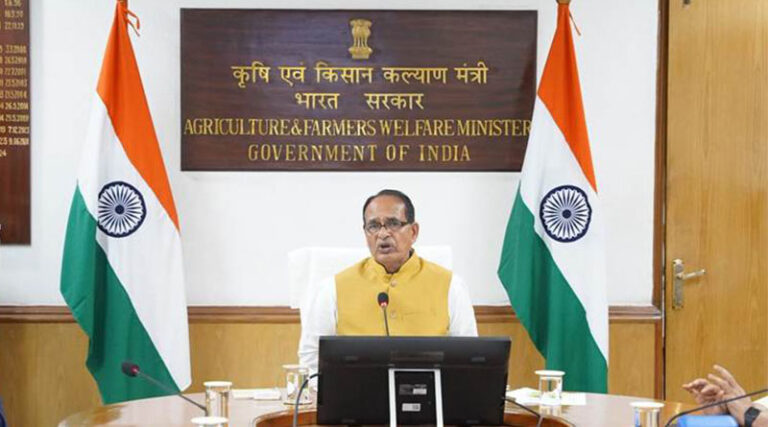
Union Minister for Agriculture & Farmers’ Welfare and Rural Development, Shivraj Singh Chouhan, chaired a high-level review at Krishi Bhavan to assess the current status of the agriculture sector, with particular emphasis on weather-induced crop damage, insurance claim mechanisms, and timely relief delivery.
The review comes at a critical time when excessive rainfall, hailstorms, and erratic weather patterns have raised concerns over crop losses and farmer vulnerability across key agricultural regions.
From Production to Protection: Expanding the Policy Lens
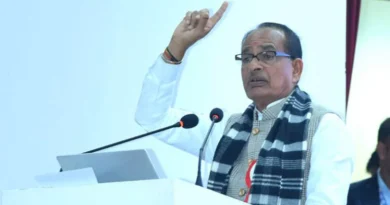
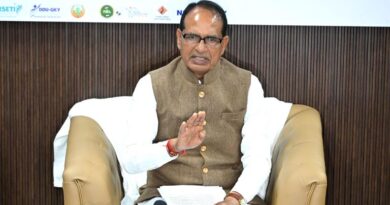
Speaking after the meeting, the Minister underscored a strategic shift in policy thinking—moving beyond production-centric metrics to a broader framework that integrates farmer security, income stability, and risk mitigation.
He highlighted that scientific crop damage assessment, efficient insurance claim settlement, and rapid relief deployment are now central to the government’s agricultural response architecture.
Scientific Crop Loss Assessment and Faster Insurance Settlements
A major focus of the review was strengthening the accuracy and speed of crop loss evaluation. Officials were directed to ensure that crop cutting experiments are conducted promptly and aligned with scientific protocols to enable precise loss estimation.
The Minister called for tighter coordination between central and state governments to accelerate claim processing under crop insurance schemes. He stressed that delays in assessment and documentation often translate into delayed financial relief for farmers—something the government is seeking to eliminate through time-bound field-level action.
Insurance claims, he noted, must be “prepared properly and scientifically” to ensure that affected farmers receive adequate and timely compensation.
Weather Volatility and Preparedness Measures
With the India Meteorological Department forecasting additional western disturbances in the coming days, the review also examined preparedness strategies.
Discussions focused on issuing timely advisories, strengthening early warning systems, and aligning field-level interventions with evolving weather risks. The government is working to integrate meteorological insights with crop management strategies to minimise damage and improve resilience.
Pulses Push: Procurement Expansion and Self-Reliance
Alongside risk management, the government is reinforcing its push toward pulses self-sufficiency. While procurement of wheat and paddy is set to begin following a strong rabi harvest, the Minister signalled a clear policy emphasis on pulses.
Farmers will be able to sell tur, urad, and masur without quantity restrictions, with procurement operations supported by agencies such as NAFED and NCCF.
The initiative is part of a broader Pulses Self-Reliance Mission aimed at expanding acreage, boosting domestic production, reducing import dependence, and ensuring remunerative prices through Minimum Support Price (MSP) mechanisms.
Quality as the Next Growth Frontier
In a notable shift, the Minister emphasised that India’s agricultural growth strategy will increasingly prioritise quality alongside quantity.
Citing premium wheat varieties such as Sharbati from Madhya Pradesh—which commands significantly higher market prices—he called for wider adoption of improved, bio-fortified, and high-value crop varieties.
The government plans to promote quality-linked value realisation through targeted campaigns, encouraging farmers to focus on varietal selection and post-harvest value enhancement.
Regional Planning and Crop-Specific Roadmaps
The review also covered preparations for the upcoming Viksit Krishi Sankalp Abhiyan, a national campaign aimed at delivering scientific, region-specific agricultural guidance to farmers ahead of sowing seasons.
In a shift from centralised planning, the government will now organise regional agricultural conferences across five zones—North, South, East, West, and Hill states—to develop tailored strategies.
These forums will bring together policymakers, scientists from Indian Council of Agricultural Research, farmer organisations, and private sector stakeholders to design crop-specific and state-specific roadmaps.
Initial focus areas include soybean, maize, and coconut, with discussions centred on productivity enhancement, disease management, and access to quality planting material.
A Value Chain Approach to Agricultural Growth
The government is working toward a comprehensive “seed-to-market” strategy that integrates production, risk management, procurement, and market access.
Reaffirming the Centre’s commitment, the Minister stated that the objective is not only to increase output but to build a resilient, farmer-centric agricultural ecosystem capable of withstanding climate and market shocks.
India’s evolving approach reflects a broader global trend—where agricultural policy is increasingly shaped by climate risk, supply chain stability, and farmer income security, rather than production alone.
Global Agriculture is an independent international media platform covering agri-business, policy, technology, and sustainability. For editorial collaborations, thought leadership, and strategic communications, write to pr@global-agriculture.com