A New Guide Supports Native Tree Regeneration In The Sahel
18 May 2026, Africa: A new practical guide developed by the Centre National de Semences Forestières (CNSF) in partnership with CGIAR Multifunctional Landscapes (MFL) has been released to support native tree regeneration in the Sahel and Sudanian zones of West Africa. The guide compiles over four decades of research on breaking seed dormancy and improving germination of indigenous tree species, providing practical pretreatment methods such as soaking, scarification, and boiling water treatment.
Restoration begins with seeds – A new practical guide supports native tree regeneration in the Sahel
Across the Sudanian and Sahelian zone of West Africa, restoring degraded landscapes is becoming increasingly urgent. Climate change, land degradation, biodiversity loss and growing pressure on natural resources continue to threaten ecosystems and livelihoods across the region. Yet while large-scale restoration and reforestation initiatives continue to expand, one fundamental challenge often receives less attention: producing healthy, viable seedlings from native tree species.
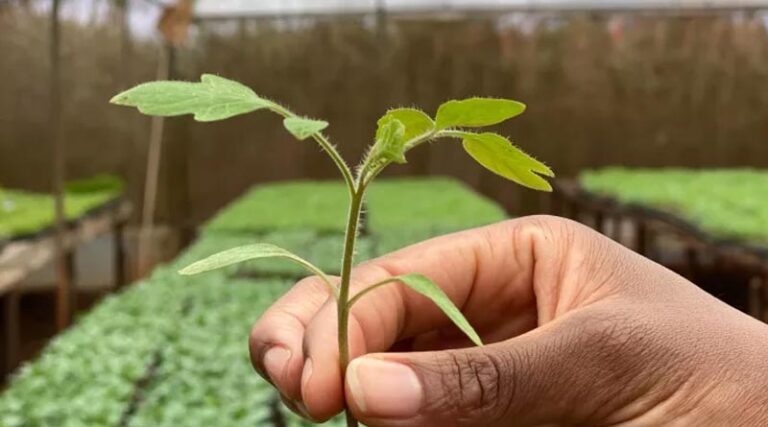
In Burkina Faso, where millions of trees are planted annually as part of restoration and reforestation efforts, restoration success rates often remain low. One important reason is the limited technical knowledge available on how to successfully germinate and propagate many indigenous tree species. For several native species, seeds can remain dormant for weeks or even months without appropriate pretreatment, making nursery production slow, unpredictable, and costly.
To help address this challenge, the Centre National de Semences Forestières (CNSF), in partnership with CGIAR Multifunctional Landscapes (MFL), has released a new practical guide on breaking physical seed dormancy in Sudanian and Sahelian tree species. The guide brings together more than four decades of scientific research, experimentation and field experience on seed germination and pretreatment techniques for native and widely used tree species in Burkina Faso.
The publication, currently available in French, is already receiving strong interest from restoration practitioners and local partners in Burkina Faso and represents an important step in translating scientific knowledge into practical restoration tools.
Why seed dormancy matters for restoration
Successful restoration begins long before trees are planted in the field. It starts with seeds.
Many native tree species in the Sahel possess natural dormancy mechanisms that prevent immediate germination. Some seeds have hard, impermeable coats that block water absorption, while others contain physiological mechanisms that delay germination even under favorable conditions. In natural ecosystems, these dormancy mechanisms help seeds survive harsh environmental conditions and germinate at the right time.
For restoration practitioners and nursery operators, however, dormancy can become a major obstacle.
Without proper pretreatment techniques, germination rates can remain low, uneven or delayed, reducing the availability and quality of planting material needed for restoration programs. This challenge is particularly significant as countries across the region scale up efforts to restore degraded lands, strengthen biodiversity, and build climate resilience.
The guide explains that restoration success depends not only on planting trees, but on using the right species, the right seeds and the right propagation techniques adapted to local ecological conditions.
A guide grounded in decades of research and oriented towards practical applications
Since its establishment in 1983, the CNSF has played a central role in supporting forest restoration and seed systems in Burkina Faso. Through laboratory research, nursery trials and field experimentation, the institution has developed and refined techniques to improve germination and seedling production for numerous indigenous and exotic tree species.
The new guide consolidates this body of work into an accessible and highly practical resource for restoration of actors.
It provides:
- clear explanations of seed biology and dormancy,
- illustrated guidance on pretreatment methods,
- practical recommendations for nursery production,
- and species-specific technical sheets covering 50 forest species commonly used in restoration and reforestation initiatives.
The manual details multiple pretreatment approaches including soaking, boiling water treatments, mechanical scarification, acid scarification and decortication, depending on species characteristics and dormancy type.
Species covered include ecologically and economically important trees such as baobab (Adansonia digitata), African locust bean (Parkia biglobosa), tamarind (Tamarindus indica), Faidherbia albida and several medicinal, forage and agroforestry species widely used across the Sahel and the Sudanian region.
Many of these species contribute far beyond tree cover alone. They support food systems, livestock production, soil restoration, biodiversity conservation, household nutrition, and climate resilience across rural landscapes. Strengthening the regeneration and propagation of these species can therefore contribute not only to reforestation targets, but also to restoring landscapes where ecological functions, agricultural production, and livelihoods are closely interconnected.
The guide also reflects an increasingly important dimension of restoration science: moving towards ambitious restoration targets, it is urgent to examine the practical conditions needed to make restoration work on the ground. Producing healthy, locally adapted planting material remains one of the most critical but often overlooked components of successful restoration efforts.
By translating decades of seed science research into practical protocols that can be used by nurseries, restoration practitioners and local communities, the publication helps strengthen the technical foundation needed to support more resilient and biodiversity-rich restoration pathways across dryland landscapes.
Supporting restoration, biodiversity and livelihoods
The guide arrives at a critical moment for restoration efforts across the Sahel and other dryland regions, where landscape degradation continues to affect biodiversity, ecosystem services, and rural livelihoods.
By improving access to practical knowledge on seed germination and propagation, the guide helps focusing the attention to the production of high quality, planting material of indigenous trees.
Native species are often better adapted to local climatic conditions, support local food systems and livelihoods, and provide multiple ecosystem functions, ranging from soil improvement and fodder production to food, medicine and fuelwood.
This is particularly important in dryland regions where trees frequently serve multiple roles simultaneously within farming and pastoral systems. Species such as Faidherbia albida and Parkia biglobosa, for example, contribute to soil fertility, food provision, livestock systems and household incomes while also supporting broader ecosystem restoration objectives.
The integration of indigenous trees into restoration efforts can therefore support more diversified and resilient landscape systems that balance ecological, social and productive functions.
As restoration initiatives continue to expand across Africa’s drylands, practical scientific resources such as this guide will play an increasingly important role.
The French version of the guide is now available for download, with an English version planned for later this year.
Also Read: DCM Shriram Ltd. Reports ₹14,264 Crore Revenue and ₹856 Crore Profit for FY26
Global Agriculture is an independent international media platform covering agri-business, policy, technology, and sustainability. For editorial collaborations, thought leadership, and strategic communications, write