The Architects Of Our Plates: Without Crop Breeding, They Would Be Empty
18 May 2026, Africa: It’s easy to forget. Most of us think that the food we eat is a “natural” product of the earth that has always looked and tasted this way.
The truth is far more dramatic: If it weren’t for plant breeders, our plates would be empty.
Everything we eat was designed. It is the result of a 10,000-year-old conversation between humans and nature, a process called plant breeding. As breeders, we are the invisible architects of the world’s diet. We work in the heat of the fields and the precision of the labs to ensure that the next global food catastrophe is the one you never have to hear about.
From grass to gold: the maize transformation
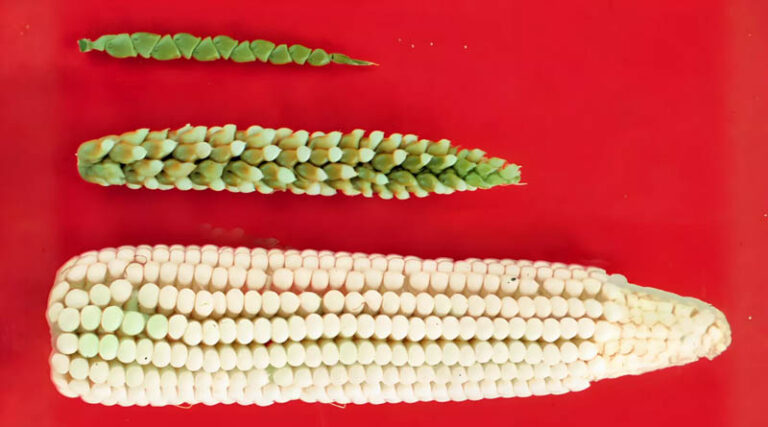
To understand the power of breeding, let’s look at maize. Around 10,000 years ago in what is now Mexico, its ancestor, teosinte, looked nothing like the corn we know today: small, hard grains, enclosed in resistant shells, dispersed along a thin stem – almost impossible to eat. Over thousands of years, farmers observed, saved, and replanted the best seeds. That tedious work, generation after generation, slowly transformed teosinte into maize.
Live Newsroom
And it didn’t stop there.
A century ago, maize yielded a fraction of what it does today. If you compare a 100-year-old maize variety to modern hybrids, the difference is staggering, with productivity increasing over four times.
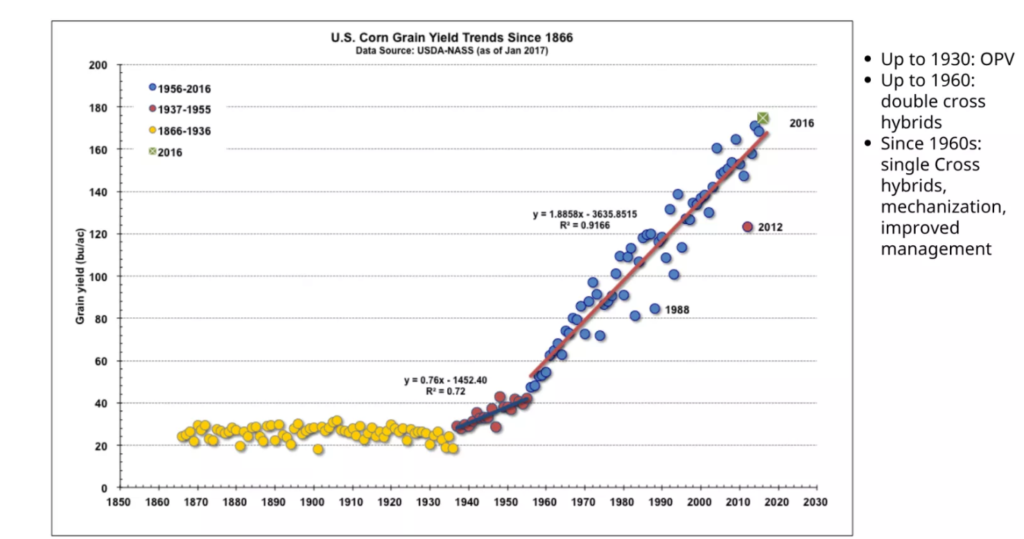
The math of this evolution is a matter of life and death. If we tried to feed today’s global population using the maize varieties of 100 years ago, we would need three times as much land to meet global demand – an additional 400 million hectares, the equivalent of the surface of the European Union – that would likely have come from deforestation and the clearing of the Amazon, the Congo Basin, and other vital ecosystems. Breeding allows us to produce more on less land, protecting our forests while filling our bellies.
And yield is only part of the story.
The deliberate design of convenience
Did you know carrots weren’t originally orange? They were purple and yellow until breeders selected the sweater orange versions we know today. Watermelons were once massive giants that needed cooking*; breeders resized them to make them easier to eat and ensure they were sweet to the center.
We bred tomatoes to have a longer shelf life so they don’t rot before they reach our kitchens, thus reducing waste and food loss. We bred wheat to have shorter stems, so the plants don’t fall over under the weight of their own grain. Every convenience we enjoy at the grocery store was a deliberate decision made by a breeder to make food more enjoyable and affordable.
And yet, the most important role of breeding is not convenience. It is protection.
Avoiding the silent famines
The most important work we do is about survival.
In the mid-19th century, the Irish Potato Famine devastated a nation. A single disease led to mass starvation and migration. About one million people died, and many left the island, significantly reduced Ireland’s population. At that time, there was no mechanism to fight back. Plant breeding didn’t yet exist as a science; Gregor Mendel was just beginning to cross-pollinate peas in his monastery. Ireland was left devasted, because people were helpless against the blight.
Today, we face famines every year that you never hear about – because we stop them before they start.
Take Maize Lethal Necrosis (MLN). This disease had the potential to cause up to 100% crop loss in Africa. The price of maize would have tripled, and millions would have faced food insecurity. But because of the collaboration between international institutes and CGIAR breeders, the crisis was contained. We developed resistant varieties and deployed them before it could become a global headline.
What it takes to keep feeding the world
In the Western world, private sector breeding receives significant investment because there is a clear commercial return. But in the Global South, the responsibility falls on public breeders and national breeding programs. They are often the only line of defense for the crops that feed the world’s poorest and most vulnerable populations.
And innovation does not flow in just one direction.
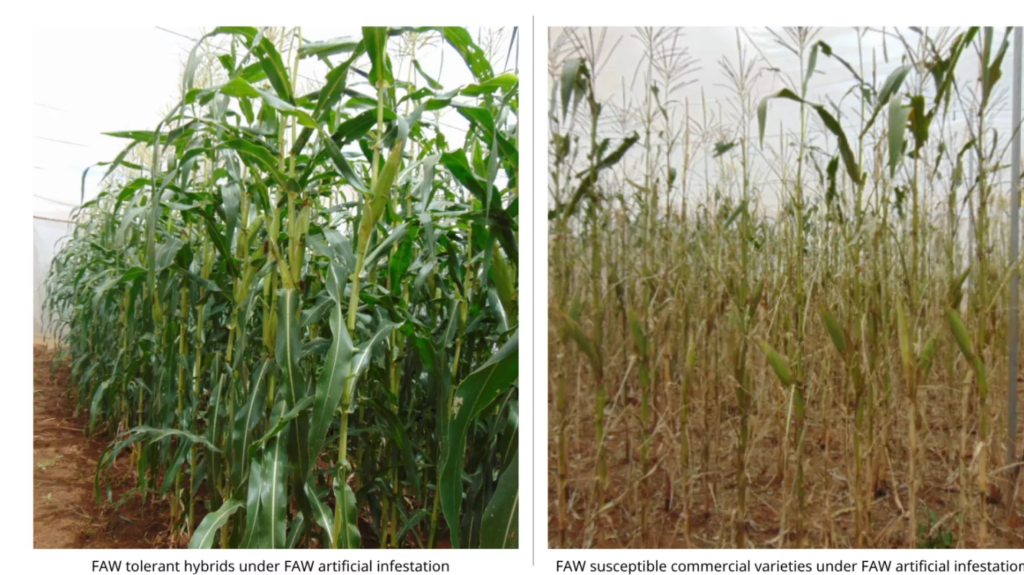
The Global North also needs the Global South. Pests like fall armyworm (FAW), originally from the Americas, have spread rapidly across the globe, now affecting Africa, Asia, and Europe.
In response, public breeding programs in the Global South are developing FAW-tolerant varieties that could offer valuable solutions for farmers in Europe and North America.
At the same time, Africa holds a rich reservoir of genetic diversity crops that are naturally more resilient and require fewer inputs, highlighting how stronger collaboration and investment in public breeding can deliver shared benefits across regions.
Yet, investment in public breeding is declining.
When we lose it, we lose the ability to protect the banana, the cassava, and the highland maize that millions depend on. For many staple crops and vulnerable regions, public breeders are the first – and sometimes only – line of defense.
They work to anticipate crises before they happen and to ensure that food systems can withstand disease, climate shocks, and growing demand.
The breeders’ joint call to action
Next time you eat, remember: that meal wasn’t an accident. It was a choice made by generations of breeders who believed that no one should go hungry.
We are trying to avoid the next catastrophe. Help us keep this engine running.
Plant breeding is a humble craft, where quiet hands sow unseen change. Yet from those small seeds, harvests that sustain the world.
Without crop breeding, we would not just eat differently.
We might not eat enough at all.
Also Read: DCM Shriram Ltd. Reports ₹14,264 Crore Revenue and ₹856 Crore Profit for FY26
Global Agriculture is an independent international media platform covering agri-business, policy, technology, and sustainability. For editorial collaborations, thought leadership, and strategic communications, write