Canada Funds AI Camera Upgrade to Catch Vineyard Disease Before It Spreads
28 September 2026, Ontario: The Canadian government is putting up to CA$1.7 million (about US$1.25 million) into adapting an orchard monitoring camera system for use in vineyards, in a bid to help grape growers spot disease and manage yield before problems become visible to the naked eye.
The funding, announced September 10, 2026 by Agriculture and Agri-Food Canada (AAFC) under the AgriScience Program’s Projects Component, goes to Vivid Machines Inc., an agtech company founded in Ontario in 2020 by Jenny Lemieux and Jonathan Binas. The company’s existing product, called Vivid XV, is already used in apple orchards; the new funding lets the firm re-engineer the same hardware and software for the very different canopy structure, growth pattern, and disease pressures of wine and table grapes.
How the system works
Vivid XV is a sensor package that bolts onto a tractor, sprayer, or other equipment already moving through the rows, rather than a standalone robot. It combines high-speed optics with a multispectral camera, which captures image data across visible and near-infrared light bands, the same principle used in many crop health sensors because plant tissue reflects near-infrared light differently depending on its health and hydration. An onboard processing unit analyzes this imagery immediately as the equipment drives at typical field speeds of up to 10 miles per hour, rather than requiring growers to upload data later for offline processing.
According to the company, the system can scan around 15,000 trees an hour in orchard use and track individual plants from blossom through harvest, counting fruit, estimating size, and flagging early disease symptoms at the level of a single tree or a specific block of the farm. A positioning system tags each reading to a precise location in the field, so a grower can return to the exact vine or row that triggered an alert rather than searching a whole block by eye. The company states the system’s predictions run at around 90% accuracy, though this figure comes from the company itself rather than an independent peer-reviewed trial, and outside verification would strengthen that claim.
Live Newsroom
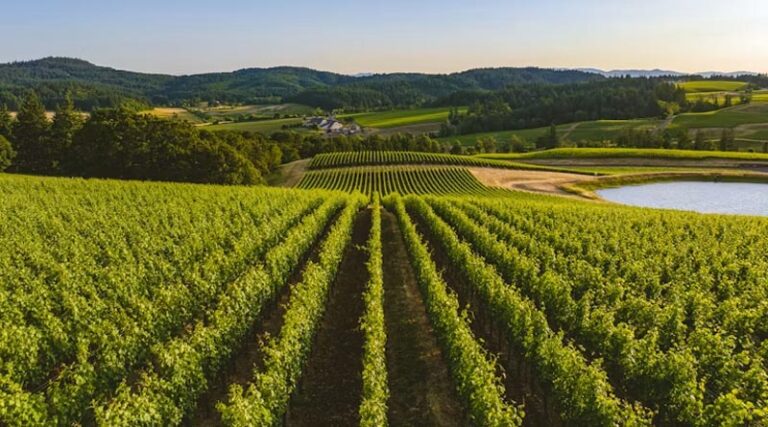
Adapting the system for grapes is not a simple relabeling exercise. Grapevines are trained onto trellises in a flatter, denser canopy than free-standing apple trees, and grape diseases such as downy mildew or botrytis bunch rot often show early symptoms on leaf undersides or in dense fruit clusters that are harder for a moving camera to see clearly. The three-year project includes collaboration with AAFC’s own researchers, who will help validate the AI model’s readings against ground-truth data collected by hand in real vineyards, a standard step needed before growers can trust an automated system’s disease calls over their own scouting.
Why this funding round matters
Canada’s agriculture minister, Heath MacDonald, framed the investment as part of a broader push to get precision tools into growers’ hands faster, saying supporting the right technology helps protect crops and the rural economies that depend on them. The AgriScience Program that funded this project is a cost-shared federal mechanism under the Sustainable Canadian Agricultural Partnership, meaning it typically requires the recipient company to contribute matching funds and deliverables rather than receiving a pure grant, which is one reason funding announcements like this are treated as a meaningful commercial milestone rather than early-stage science funding.
Also Read: New US Tariffs on Chinese Drones Raise Costs for Spray-Drone Farmers
Global Agriculture is an independent international media platform covering agri-business, policy, technology, and sustainability. For editorial collaborations, thought leadership, and strategic communications, write to pr@global-agriculture.com