Designing AI with women, not for them. Reflections from Africa Food Systems Forum 2026
26 September 2026, Africa: The growing integration of AI into agriculture is a given. In research, the conversation is moving beyond what technology can do to explore who gets to shape it, whose realities are reflected in it, and whether it is actually improving people’s choices and opportunities.
Women farmers and leaders remain under‑represented in the design, governance, and investment decisions that shape digital agriculture. Without deliberate action, digitalisation risks reinforcing existing inequalities rather than enabling more inclusive food systems.
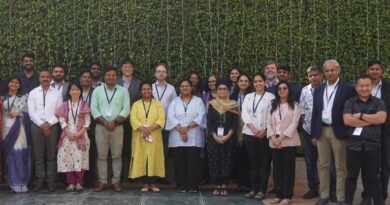
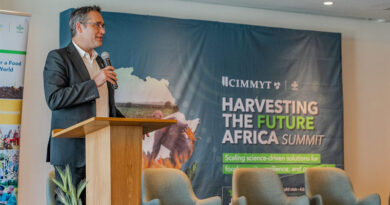
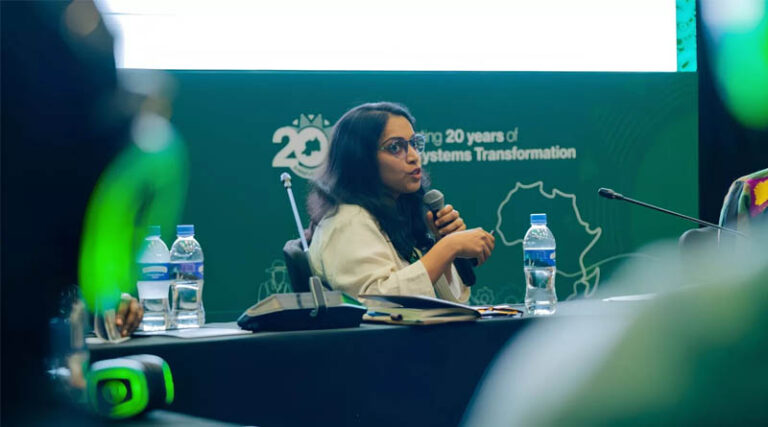
At Africa Food Systems Forum in Kigali, the CGIAR Gender Equality and Inclusion Accelerator and Emerging Ag convened a session on “Gender and AI: Women Shaping Africa’s Digital Agrifood Futures”. Following a keynote by Rwanda’s Minister of ICT and Innovation, researchers, technology developers, policymakers, investors and practitioners discussed what it would take to make AI-enabled agrifood systems genuinely inclusive.
The discussion focused on three connected questions: How do we design AI with women rather than for women? How do we govern data and algorithms responsibly? And how do we measure success beyond adoption, productivity and profit?
A few ideas stood out.
Access is only the beginning
Digital inclusion is often measured by whether women have access to phones, connectivity and digital services. But access alone tells us little about who has influence over the technology.
A stronger measure of inclusion is agency – which means whether women can understand, question, adapt and shape digital tools, and whether their knowledge and feedback influence design, governance and investment decisions.
This also means looking beyond the individual user to the wider systems that shape digital inclusion: policies and data governance, infrastructure, social norms, community networks, digital skills and trusted intermediaries.
Technology creates value for women farmers when they can act on the information it provides, connect to finance and markets, and gain greater control over decisions affecting their livelihoods.
For example, CGIAR researchers are working with partners in Kenya and India, on a picture-based insurance solution that uses smartphone photos to assess crop damage when conventional insurance indices do not trigger a payout. Uptake increased a lot, especially among women, who can claim settlement and repay credit digitally, from home, instead of having to walk long distance to the cities on their own.
Women involved report much higher mental health, much less stress in the groups where we were offering the solution.
“Personalized” AI still needs to understand people
AI advisory can combine information on crops, soils, climate and markets to provide increasingly specific recommendations. But personalized for whom?
Advice may still be difficult to act on if it ignores women’s time constraints, care responsibilities, mobility, access to cash, control over devices or influence over farming decisions. Language and localization matter, but so does understanding the social context in which advice is received and acted upon.
That’s why we are working with Farm Radio International and IFPRI to develop Longa, an automatic speech recognition tool that analyzes thousands of voice messages left by farmers to the radio programmes.
By converting voice messages into text that can be analysed systematically, Longa creates opportunities to bring voices that may otherwise be overlooked, particularly those of women and young people with limited digital literacy, into agricultural research and programming, so that agricultural advisory is really tailored to their needs.
Usage is not the same as impact
Downloads, registrations and adoption rates are easy to count. They do not necessarily tell us whether a technology has increased someone’s agency.
At AFSF, the discussion highlighted the need to ask different questions: Can women make or influence decisions? Can they question or reject a recommendation? Do they control how their data are used? Can they adapt a tool to solve problems that matter to them?
These outcomes are more difficult to measure, but they tell us much more about whether digital transformation is genuinely inclusive.
Making responsible AI practical
Concepts such as fairness, transparency and responsible AI only become meaningful when they translate into everyday practices: understandable consent, clarity over who owns and uses data, ways to correct or withdraw information, bias audits, grievance mechanisms and meaningful routes for redress.
For now, GenAI policies fall sort in protecting user and empowerment. As Katarzyna Kosior argues in a recent op-ed, privacy risks become harder to anticipate as external AI services are integrated into systems and models are trained using personal farmers’ data, while control mechanisms fall short in protecting farmers’ data.
Trust also depends on relationships, including the extension workers, women’s groups, cooperatives and other intermediaries who help people interpret technologies and assess their risks.
As Nomsa Daniels, Heifer International Board Member, nicely summarized the question of how we can govern women farmers’ data responsibly during the event, women should have a say in how their data are used and benefit from it; their privacy must be protected; and researchers need to consider how the findings they publish could affect women and their communities.
The broader takeaway from AFSF was simple: inclusive AI is not just about reaching more women with technology. It is about giving women greater influence over the technologies, data and decisions that increasingly shape agrifood systems.
We need to design AI with women, not for them, and measure progress by the agency and opportunities that technology enables.
Learn more about the CGIAR Digital Transformation projects mentioned by the author:
- Gender and AI: Women Shaping Africa’s Digital Agrifood Futures [AFS Forum 2026 Side Event]
- Scaling digital financial services for smallholder farmers in Kenya: A stakeholder consultation on challenges, opportunities, and action pathways
- Listening at scale: advancing women’s participation in agricultural advisory through AI speech technologies
- Building control and trust for farmers in agriculture’s generative AI transition
Also Read: New US Tariffs on Chinese Drones Raise Costs for Spray-Drone Farmers
Global Agriculture is an independent international media platform covering agri-business, policy, technology, and sustainability. For editorial collaborations, thought leadership, and strategic communications, write to pr@global-agriculture.com