06 July 2026, USA: Researchers at North Carolina State University (NC State) are accelerating efforts to combat Neopestalotiopsis (Neo-P), an emerging fungal pathogen that has become one of the most serious threats to strawberry production in the United States. Through a combination of disease management research, resistance breeding, artificial intelligence (AI)-enabled diagnostics and grower collaborations, scientists aim to develop sustainable solutions to protect one of North Carolina’s most valuable horticultural crops.
Neo-P, once regarded as a minor opportunistic fungus, gained widespread attention after causing severe outbreaks in Florida’s strawberry fields in 2017. By 2022, the pathogen had been confirmed in North Carolina, where it has rapidly emerged as a major production challenge. One of the disease’s most concerning characteristics is its ability to remain hidden in infected nursery plants. Growers often transplant seemingly healthy plants into production fields, only to witness sudden disease outbreaks several weeks later when plants begin collapsing.
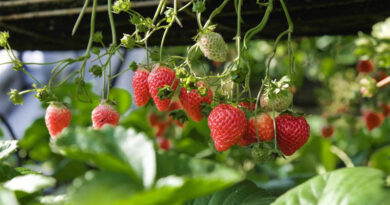
The fungus attacks multiple parts of the strawberry plant, including the crown, foliage and fruit. Infected plants develop brown, yellow and reddish lesions on leaves, while fruit becomes discoloured, soft and unmarketable. As infections progress, entire plants can collapse, allowing the disease to spread quickly through fields via rain splash, wind, contaminated equipment and workers moving between production blocks.
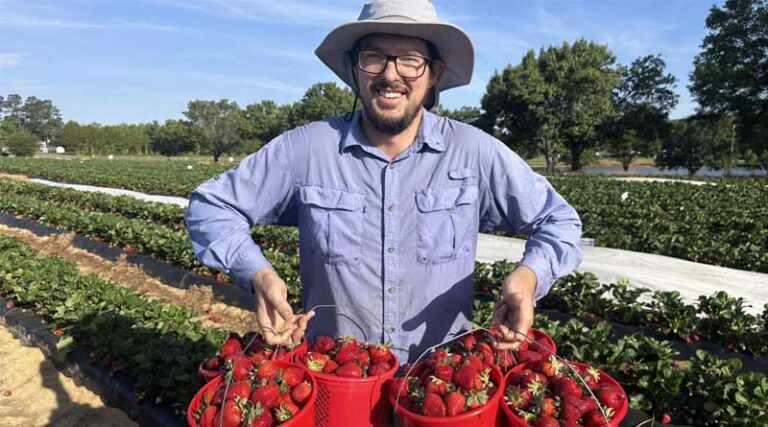
For growers, the economic consequences can be severe. According to Austin Wrenn, President of the North American Strawberry Growers Association and a North Carolina strawberry producer, growers typically invest between US$20,000 and US$30,000 per acre before harvesting begins. Since much of this investment occurs months before fruit sales generate revenue, widespread Neo-P outbreaks can eliminate significant portions of a crop almost overnight, placing considerable financial pressure on growers, particularly small family-owned farms that depend heavily on strawberry production for their livelihoods.
Recognising the urgency of the issue, NC State has assembled a multidisciplinary team involving plant pathologists, horticultural scientists, microbiologists and extension specialists to better understand the pathogen and develop practical management strategies.
Mark Hoffmann, Associate Professor of Horticultural Science and NC State Extension Strawberry Specialist, believes the industry can successfully manage Neo-P by applying lessons learned from previous disease outbreaks, particularly anthracnose, which severely affected strawberry production during the 1990s before integrated pest management (IPM) practices significantly reduced its impact. Hoffmann emphasises that while Neo-P is a serious disease, growers, nurseries and breeding programmes are already adapting management practices based on research findings.
Current IPM recommendations focus on intensive field scouting, timely fungicide applications, improved sanitation, crop rotation and careful management of nursery stock to minimise pathogen introduction into commercial production systems. However, researchers acknowledge that these measures require increased labour, more frequent monitoring and additional production costs, creating particular challenges for small-scale growers who often balance farming with off-farm employment and may struggle to apply fungicides or monitor fields during critical infection periods.
Alongside immediate disease management, NC State scientists are pursuing longer-term solutions through breeding and pathogen research. A comprehensive review published in Frontiers in Plant Science by researchers Susmita Gaire, Frank Louws, Tika Adhikari and collaborators outlines an integrated strategy for managing Neo-P across the entire strawberry production chain. The researchers highlight advances in molecular diagnostic tools that improve early pathogen detection while also identifying promising sources of genetic resistance that could support future strawberry breeding programmes. At the same time, they note that significant knowledge gaps remain regarding the pathogen’s infection mechanisms, host defence responses and ecological behaviour, all of which are essential for developing durable resistance and sustainable disease management strategies.
Another major focus of NC State’s research is the development of AI-assisted disease detection technologies capable of identifying Neo-P before visible symptoms appear. Microbiologist Orlando Arguello-Miranda, working with plant pathologists Tika Adhikari and Susmita Gaire, has developed an innovative live-cell microscopy system powered by artificial intelligence. The platform combines portable microscopy with computer vision algorithms that track fungal growth and identify Neo-P spores in real time, even when infection levels are extremely low or samples contain plant debris and soil contaminants.
Unlike conventional laboratory diagnostics that often require destructive sampling and lengthy processing, the AI-based system provides rapid, non-destructive analysis and can quantify complex fungal structures within milliseconds. Researchers envision a future in which portable microscopes connected to smartphones could enable nursery operators and growers to detect infections directly in the field, receive immediate alerts and take targeted actions such as selective fungicide applications or removal of infected planting material before disease outbreaks become widespread.
Complementing laboratory research, NC State continues to conduct extensive field evaluations through partnerships with commercial growers. Research teams are testing new strawberry cultivars for disease tolerance, evaluating improved production practices and validating management recommendations under commercial growing conditions. These collaborations allow researchers to refine practical solutions while ensuring that scientific findings can be readily adopted by the industry.
Researchers and growers agree that effective long-term management of Neo-P will require a comprehensive approach rather than reliance on chemical control alone. Continued investment in resistance breeding, pathogen-free nursery systems, improved diagnostic technologies, integrated disease management and collaborative research across the strawberry supply chain will be essential to safeguarding strawberry production against this emerging pathogen.
Global Agriculture is an independent international media platform covering agri-business, policy, technology, and sustainability. For editorial collaborations, thought leadership, and strategic communications, write to pr@global-agriculture.com