Root Bacterium Lifts Drought Survival to 85% in New Göttingen Study
29 September 2026, Göttingen, Germany: A bacterium that lives inside plant roots without causing disease has been shown to sharply improve drought survival across five plant species, including wheat, rapeseed and tomato, according to research published online August 14 in Nature Plants. The study, led by Salma Balazadeh at the University of Göttingen’s Albrecht-von-Haller-Institute for Plant Sciences, traces the effect to a specific hormone signaling pathway that the bacterium switches on inside the plant’s roots.
The organism at the center of the study is an endophyte, a term for a microbe that colonizes plant tissue internally and typically benefits its host rather than harming it, unlike a pathogen. The Göttingen-led team, working with more than two dozen co-authors from institutions across Europe, Asia and South America, isolated a strain they call Flavo98 from a bacterial collection contributed by Jos Raaijmakers, a microbiologist previously at Leiden University in the Netherlands who worked on the project.
How the Bacterium Works
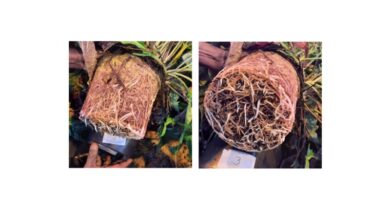
The researchers first tested Flavo98 in Arabidopsis thaliana, the small mustard-family plant widely used as a model organism in plant biology because its genetics are well mapped and it grows quickly. Plants were exposed to drought stress in two ways: treatment with polyethylene glycol, a compound routinely used in labs to mimic water scarcity without needing an actual soil drought, and growth on low-moisture agar media. In both setups, plants inoculated with Flavo98 developed markedly more root hairs, the microscopic hair-like extensions that grow from cells on the root surface and substantially increase the root’s ability to take up water and nutrients from the surrounding soil.
Genetic analysis of the treated plants pointed to a two-step signaling chain. The bacterium triggers a pair of ethylene-related genes called ERF115 and ERF114, which in turn activate a small signaling protein called CEP5. Together, this ERF-CEP5 pathway instructs root cells to produce more and longer root hairs specifically under water-limited conditions, effectively giving the plant a larger effective root surface exactly when it needs to scavenge for scarce soil moisture.
Live Newsroom
The performance numbers were substantial for a single-microbe intervention: Arabidopsis plants treated with Flavo98 survived drought and subsequent rewatering at around 85%, compared with minimal survival among untreated control plants. Surviving treated plants also went on to produce significantly higher seed yields than the few untreated survivors, suggesting the benefit carries through to reproduction rather than just short-term stress tolerance. In the most affected root zones, the proportion of cells producing root hairs roughly doubled compared with untreated plants under the same drought stress.
Beyond the Model Plant
Because a finding confined to Arabidopsis has limited direct value to agriculture, the team extended its tests to wheat, rapeseed, camelina and tomato, and found the same ERF-CEP5 mechanism activated and produced comparable drought-mitigation effects across all four crops. That cross-species consistency is the part of the study most relevant to plant breeders and biological input developers, since it suggests the pathway is conserved widely enough across flowering plants to be a realistic target rather than a quirk of one species.
The authors are explicit that drought tolerance in the field is governed by many genes and mechanisms working together, and this single pathway will not by itself make a crop drought-proof. Their stated next step is to explore whether breeding programs can fine-tune the ERF-CEP5 module directly, or whether the Flavo98 bacterium itself could be developed into a seed or soil-applied biological product that delivers the same effect without genetic modification of the crop.
For biological input manufacturers and biostimulant companies, a microbe with a mapped mechanism of action is considerably more valuable than one identified only by field performance, because it opens a path to more consistent formulation, regulatory dossiers and combination products. India and other markets with large rainfed wheat, oilseed and vegetable acreages, where erratic monsoon timing already drives strong demand for drought-mitigation inputs, are natural early markets for any Flavo98-derived seed treatment or in-furrow product, and Indian public breeding programs working on climate-resilient wheat and Brassica varieties may also find the ERF-CEP5 pathway a useful marker to screen for in existing germplasm. The fact that the mechanism held up across four unrelated crop species, not just the lab’s usual test plant, is what separates this from the steady stream of microbiome papers that never make it past a greenhouse trial.
Also Read: India Bans Paraquat, Cancels Existing Certificates
Global Agriculture is an independent international media platform covering agri-business, policy, technology, and sustainability. For editorial collaborations, thought leadership, and strategic communications, write to pr@global-agriculture.com