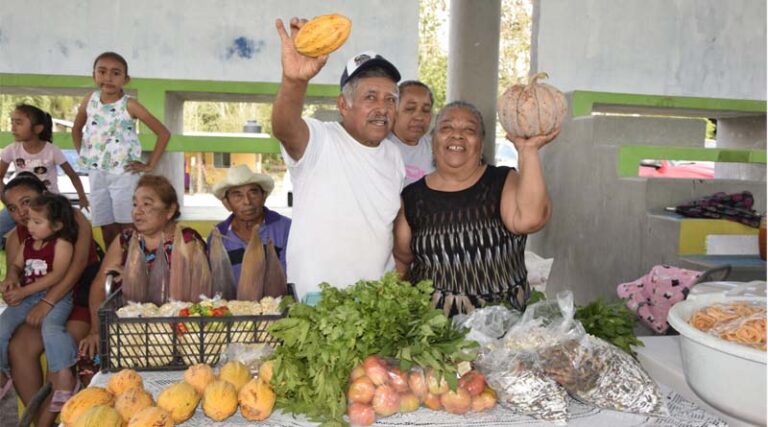
03 April 2026, US: “A seed fair is a space where rural communities can exchange, gift, or sell seeds, but also share other products from the milpa and build community,” explains Meliza Peña, research associate in seed systems and value chains at CIMMYT.
This collaboration is grounded in solutions based on agronomic science and co-designed innovations with communities, aimed at promoting sustainable development that responds to local challenges and strengthens the resilience of production systems.
Seeds that preserve history and build community
Seed fairs are much more than a place for exchange: they are spaces where ancestral knowledge, cultural identity, and sustainable agricultural practices come together. Each seed shared represents generations of care, adaptation, and learning.
In these spaces, communities share not only varieties of maize, beans, or squash, but also knowledge on how to plant, conserve, and improve seed quality. At the same time, they strengthen relationships among producers, build trust networks, and reinforce a sense of belonging.
For CIMMYT researchers, one of the most valuable outcomes of these fairs is the shift in perception among rural communities.
These experiences show how seed fairs not only enable exchange but also open the door to new forms of collaboration, strengthen farmer networks, and create opportunities for accessing local markets, ultimately generating additional income for families by recognizing the value of their seeds and knowledge.
Closely linked to seed fairs are seed houses, community spaces where local varieties are stored, preserved, and distributed. They act as living seed banks, ensuring access to quality seeds adapted to local agroecological conditions.
These spaces not only preserve genetic diversity but also strengthen community autonomy by allowing families to decide what to plant, how to produce, and what to consume.
They also serve as a safety net against crop losses, promote exchange between communities, encourage sustainable practices, and reinforce collective organization.
Seed guardians: living knowledge
Within this ecosystem, seed custodians, individuals who have dedicated their lives to preserving traditional varieties, play a key role in keeping agricultural knowledge alive and strengthening local networks.
Connecting these custodians with seed houses and fairs expands the reach of these initiatives and further supports the conservation of biocultural heritage.
Why these spaces matter more than ever
At a time when many traditional varieties are at risk of disappearing, seed fairs are essential tools for protecting agricultural biodiversity and promoting more resilient food systems. They also create a space for dialogue between scientific and traditional knowledge, leading to more integrated and sustainable solutions.
The goal is not dependency, but strengthening local capacity, so communities can grow, sustain themselves, and continue expanding their impact.
Global Agriculture is an independent international media platform covering agri-business, policy, technology, and sustainability. For editorial collaborations, thought leadership, and strategic communications, write to pr@global-agriculture.com