Transformative System Change Driving The Sorghum Value Chain
08 April 2026, Zimbabwe: Isolated interventions do not deliver lasting change. Farm-level challenges are shaped by multiple, interconnected domains;ecological, economic, institutional, and social, that operate simultaneously. Addressing one constraint in a domain at a time fragments effort and limits impact. A systems approach recognizes that different elements within and across domains move together, aligned toward an outcome. This principle underpins CIMMYT’s transition toward integrated solutions for current and future agrifood system challenges.
Promoted through the CGIAR Multifunctional Landscapes Science Program by CIMMYT and partners, including IWMI, ICRISAT, and ILRI, the sorghum innovation bundle brings together mutually reinforcing technologies, services, institutional arrangements, and social practices to address constraints that cut across food system actors along the value chain. Innovation bundles are not static packages, rather,they are adaptive, co-designed socio-technical systems.
The sorghum innovation bundle is positioned not merely as a collection of integrated interventions, but as a strategic enabler of agroecological transition. It functions as an entry point through which agroecological principles, including diversity, resilience, recycling, co-creation of knowledge, and responsible governance; are operationalised in tandem and in practice. The bundle lowers the barriers to adoption by ensuring that ecological practices are supported by enabling services, market linkages, and decision-making structures. In this way, productivity, resilience, and equity emerge from the deliberate integration of ecological processes with economic and institutional arrangements, advancing agroecology from principle to system-wide transformation.
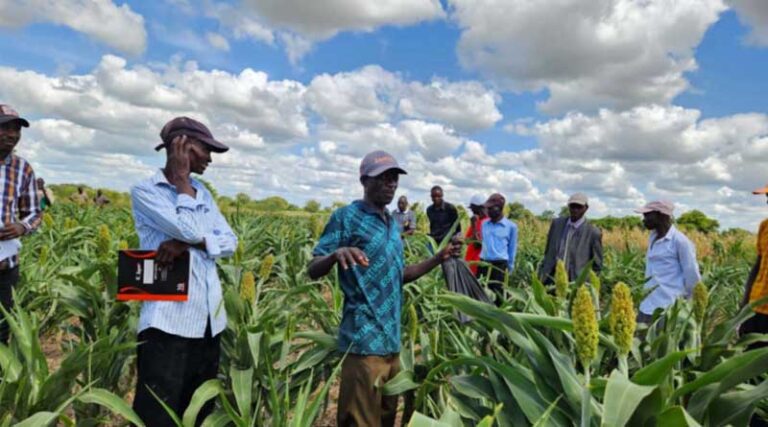
On the technology front, farmers and researchers co-design and select drought-tolerant, locally preferred sorghum varieties through seed-fair processes that reflect varietal preferences under recurrent drought and erratic rainfall. These are paired with agroecological practices, including intercropping, conservation agriculture, and push–pull systems, demonstrated through participatory trials to address pest pressure (including fall armyworm), soil moisture stress, and declining soil fertility. Crop–livestock integration further strengthens the system, as crop residues provide fodder in contexts of chronic feed shortages, while manure contributes to rebuilding soil health.
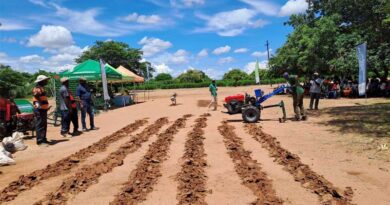
Mechanization is deliberately integrated through service-provider models that introduce tools such as basin diggers, rippers, and threshers. These reduce labour drudgery, improve grain quality, and ease work burdens that are often disproportionately borne by women. Improved post-harvest handling and threshing protect returns, while risk reduction is strengthened through diversification, residue utilisation, and yield stabilisation—features aligned with farmers’ preference for low-risk options.
Contract farming forms a critical institutional mechanism within the sorghum innovation bundle, linking production to structured markets while reinforcing the agroecological transition. Through subcontracting arrangements, farmers are supported to produce grain and certified or quality-declared seed using the technologies, management practices, and mechanisation services introduced through the bundle. These agreements reduce market uncertainty, provide clearer quality standards, and create incentives for sustained adoption of improved varieties, soil health practices, and post-harvest handling protocols.
Equity is integral to the bundle’s design. It explicitly addresses gender and power dynamics in land use, technology access, and decision-making, and creates opportunities for women and youth to participate as mechanisation service providers and innovation actors. Scaling depends on ensuring that those expected to drive change have access to the tools, services, and decision-making platforms that make adoption viable.
To date, the sorghum innovation bundle has engaged more than 500 farmers, collectively covering approximately 200 hectares under coordinated production of grain and seed. Beyond these initial sites, the institutional and market architecture, anchored in mechanisation service models, contract farming arrangements, and participatory technology deployment, creates a clear pathway for expansion. With established partnerships and growing demand for drought-resilient crops, the model has the potential to extend across at least five districts in Zimbabwe, positioning the bundle not as a localised pilot, but as a scalable platform for agroecological transition and inclusive value chain development.
Also Read: India’s Designer Rice Innovation: High-Protein Breakthrough to Tackle Diabetes and Malnutrition
Global Agriculture is an independent international media platform covering agri-business, policy, technology, and sustainability. For editorial collaborations, thought leadership, and strategic communications, write to pr@global-agriculture.com