2026 Potato Blight Season Review – With Andy Cunningham
21 September 2026, UK: Syngenta Potato Technical Manager, Andy Cunningham, answers questions from potato growers and agronomists with his insights into the 2026 potato blight season, and some of the implications for next year and into the future.
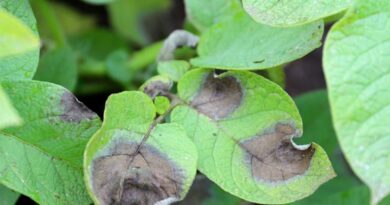
- How has the 2026 season fared for potato late blight?
The 2026 season has shown a clear North–South divide. Prolonged dry weather across much of England and Wales has resulted in relatively limited late-blight pressure in those areas to date, while higher rainfall in Scotland has led to considerably more disease activity. Of all the outbreaks recorded by the Fight Against Blight monitoring network, approximately half have occurred in Scotland.
As we’ve seen in recent seasons, EU_36 remains the dominant genotype, accounting for around three-quarters of the samples genotype-tested in England, over half of those in Scotland and 100% in both Wales and Northern Ireland. Scotland, however, has shown greater diversity of genotypes present, including EU_6 and EU_41.
The blight strain EU_46, which has shown resistance to OSBPI chemistry, has been identified in two outbreaks in England so far. However, importantly EU_43, which is the strain that is associated with resistance to both OSBPI and CAA chemistry, has not been detected to date.
These results are encouraging in terms of the current UK situation, but they should be viewed as a snapshot of the season rather than a true reflection of the UK clonal population. Growers and agronomists should continue to monitor crops, protect clean growth and maintain appropriate programme intervals according to local risk, crop development and current technical guidance.
- Have there been any updates or observations from Europe on potato blight strains?
As in the UK, blight pressure has been low this season. The final EuroBlight results for the 2025 season confirmed that EU_36 remained the dominant genotype in Europe. Unlike the invaluable Fight Against Blight, run by the James Hutton Institute for the UK, there’s no in-season monitoring programme across Europe on which to gauge shifts in blight strains – so the blight situation will only be known at the end of the season.
To ensure these problematic resistant strains remain low in the population we need to reinforce the need for continued vigilance, but should be reassured by experiences across Europe that demonstrates problematic resistant populations can be suppressed, and even reversed, through programmes based on mixing and alternation of effective fungicide groups.
- Are we seeing any effects from the loss of mancozeb on potato blight control and Alternaria?
It is too early to attribute individual disease outcomes directly to the loss of mancozeb. The relatively dry 2026 season may also have reduced the immediate impact of its withdrawal in many crops, because overall late-blight pressure has been fairly low across much of England and Wales.
However, mancozeb’s withdrawal has removed an important multi-site protectant and resistance-management partner from the potato fungicide toolbox. This places greater responsibility on the remaining chemistry and makes programme design more important. Growers need to avoid repeated use of the same mode of action, maintain appropriate spray intervals and use effective partners, to protect the performance of single-site fungicides.
The loss of Mancozeb also poses the added risk of increased Alternaria, this is disease which needs to monitored going forward to ensure that crops remain protected. Currently chemistry available to control this disease is best applied preventively, so vigilance of any outbreaks, risk assessment and integrating appropriate fungicide chemistry in the blight programme will be essential.
- How should growers and agronomists plan programmes in light of EU_43 and other changing potato blight populations?
The current FAB results show that EU_43 has not been sampled in the 2026 monitoring programme, while EU_46 has been detected in two English outbreaks. Nevertheless, the presence of EU_43 in the wider European population, including its detection in England in 2025, means that resistance management remains important. It is hugely positive that the actions of UK agronomists and growers in recent seasons to follow best practice has, to date, been successful in averting the rise of these more problematic populations.
Programmes should continue to be be planned to take account of the whole spray sequence for resistance management, rather than selecting each application in isolation. Growers should use robust mixtures and alternate effective modes of action, which should still include OSBPI and CAA – while avoiding unnecessary reliance on the same fungicide group.
Applications should follow current product labels, FRAC guidance and local technical recommendations. Timing should reflect crop growth, weather, disease pressure and irrigation, with programmes maintaining protection of new growth through periods of risk. Spray intervals should not be extended simply because symptoms are not visible, particularly where the canopy is developing rapidly or local conditions favour infection.
Good field hygiene is also important. Volunteers, groundkeepers and outgrade piles can provide sources of early infection, so their control should form part of the wider late-blight strategy. Continued submission of samples through Fight Against Blight will help establish how the UK population develops during the remainder of the season.
- How do Syngenta’s products fit into potato blight programmes?
Syngenta’s potato fungicides form part of a strong programme-based approach to late-blight management.
For 2027, Syngenta will launch a new development for REVUS, that retains all the exceptional benefits of strong protective and translaminar activity against sensitive late-blight populations, along with an enhanced formulation that significantly improves disease control.
Trials have already shown it offers a significant uplift in performance and should continue to be applied preventatively as part of a programme that includes effective partners and alternates modes of action in line with current resistance-management guidance.
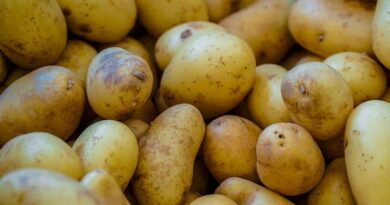
Additionally, EVAGIO FORTE combines mandipropamid, as in REVUS, in combination with amisulbrom. It provides a valuable role where both foliar and tuber-blight protection are important, particularly later in the season. The addition of amisulbrom gives the product a key position where the programme needs to address the risk of spores reaching and infecting tubers.
Furthermore, where increased the increased risk of Alternaria now occurs while late-blight protection still needs to be maintained, AMPHORE PLUS combines mandipropamid with difenoconazole. This combination can help address late blight alongside Alternaria risk. With the loss of Mancozeb, AMPHORE PLUS is an excellent addition to any planned blight programme.
- What are the lessons for next season’s potato blight strategy?
Late-blight management for 2027 is increasingly about complete programme stewardship, rather than the selection of one particular product. Starting early, protecting new growth, maintaining appropriate intervals, responding to local weather and disease risk, and mixing and alternating fungicide modes of action are all important.
Variety resistance, volunteer control, accurate weather and disease monitoring, good application technique and maintaining spray coverage across the full canopy also contribute to programme performance. Including the new REVUS product in the programme will give all the strengths and benefits, in a faster acting formulation.
The continued monitoring of the UK and European late blight population will be important. As potential new genotypes are identified, growers and agronomists will need to remain adaptable and use the available chemistry carefully to maintain effective late-blight control.
Also Read: CropLife India Flags Narrowing Crop Protection Options for Farmers
Global Agriculture is an independent international media platform covering agri-business, policy, technology, and sustainability. For editorial collaborations, thought leadership, and strategic communications, write to pr@global-agriculture.com