American Chemical Society Honors Syngenta’s Camilla Corsi with 2026 International Award for Research in Agrochemicals
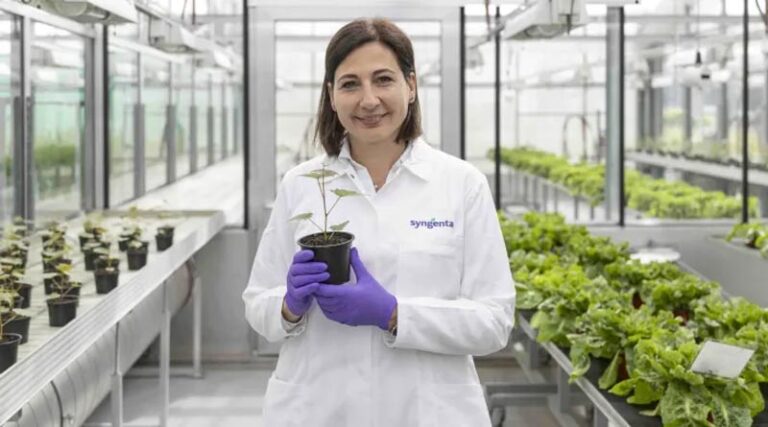
24 August 2026, Switzerland: Camilla Corsi, Head of Crop Protection Research & Development at Syngenta, has been named the recipient of the 2026 American Chemical Society (ACS) International Award for Research in Agrochemicals, recognizing her contributions to crop protection research and the discovery of new active ingredients.
The award will be recognized during the ACS Fall Meeting, which begins today, with a symposium dedicated to Corsi’s work and scientific contributions. Her research leadership has been associated with the discovery and development of several crop protection technologies, including the fungicide pydiflumetofen, marketed through ADEPIDYN® technology; the insecticides isocycloseram and spiropidion, associated with PLINAZOLIN® and TINIVION® technologies; and the SDHI nematicide cyclobutrifluram, developed under TYMIRIUM® technology.
These technologies represent a new generation of crop protection solutions targeting diseases, insect pests and nematodes across multiple crops and agricultural regions.
Corsi’s Leadership in Crop Protection R&D
A chemist by training, Corsi joined Syngenta in 2004 and has held several leadership positions across the company’s research and development organization. She became Head of Crop Protection Research & Development in January 2025.
Her organization comprises more than 3,000 scientists, technologists and regulatory experts working across 51 countries, supported by four major research sites. She also joined Syngenta Group’s extended Global Leadership Team in 2025 and serves on the company’s Innovation Board.
“This is a very proud moment for me,” Corsi said. “As a company, we continuously invest in key technologies to ensure agriculture becomes more productive, sustainable and resilient in the face of climate and resource pressures. I would like to thank the American Chemical Society for both recognizing the work we do at Syngenta and honoring me with this award.”
AI Enters Crop Protection R&D
The crop protection industry is also increasingly applying artificial intelligence and digital technologies across research, product development and farm operations.
Machine learning can help researchers screen large chemical spaces and identify potential active ingredients more efficiently, while generative design tools can support the development of new molecules and product candidates.
Beyond the laboratory, AI is being applied to crop monitoring, precision agriculture, demand forecasting and supply chain management. The combination of data, artificial intelligence and agronomic expertise is creating new approaches to identifying crop stresses, optimizing input use and improving farm decision-making.
For crop protection R&D, these technologies could shorten parts of the discovery process while helping researchers evaluate a wider range of potential solutions.
Supporting the Next Generation of Scientists
Originally from Italy, Corsi holds a degree in Chemistry from the University of Florence and a PhD from University College London.
She also co-sponsors Syngenta’s Women Leading in Science network and advocates for greater participation of women and girls in science, technology, engineering and mathematics, as well as the development of the next generation of female scientific leaders.
Also Read: UPL’s Advanta to Acquire Egyptian Seed Company Hytech Egypt for $110 Million
Global Agriculture is an independent international media platform covering agri-business, policy, technology, and sustainability. For editorial collaborations, thought leadership, and strategic communications, write to pr@global-agriculture.com