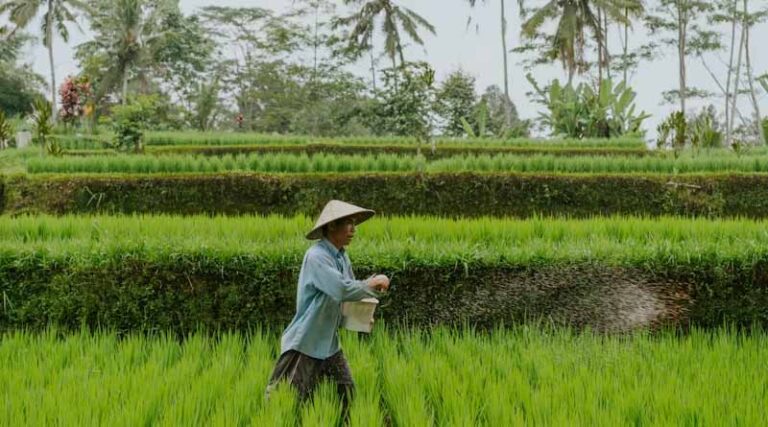
Asia Produces 54% of Global Farm Output, Yet 44% of World’s Food Insecure Live in the Region
22 April 2026, Brunei Darussalam: The Asia and the Pacific region is showing encouraging progress in the fight against hunger, but major structural threats such as land degradation, climate volatility, rising food costs and unequal access to nutrition continue to cloud the future of agriculture. That is the central message emerging from the latest regional assessment presented at the 38th Session of the FAO Regional Conference for Asia and the Pacific in Brunei Darussalam.
For a region that produces more than half of the world’s agricultural and fish output, the stakes are enormous. Asia is home to billions of consumers, millions of smallholder farmers and some of the fastest-growing food markets on the planet. Yet despite production strength, millions still struggle to access affordable and nutritious food.
Hunger Declines, But Millions Remain Food Insecure
One of the strongest signals in the report is that undernourishment has declined across the region. In 2024, around 25 million people moved out of hunger, reducing the prevalence of undernourishment to 6.4 percent from 7.0 percent a year earlier. This marks real progress after years of economic disruption, supply chain stress and climate shocks.
However, the broader picture remains serious. Nearly 44 percent of the world’s moderately or severely food insecure population still lives in Asia and the Pacific. Southern Asia continues to carry the heaviest burden, with 227 million people undernourished in 2024 despite recent improvement.
This means that while fewer people are starving, a far larger number still live with uncertainty over their next meal, poor diet quality or reduced food access due to inflation and poverty.
Malnutrition Remains a Silent Crisis
The region is not only fighting hunger, but multiple forms of malnutrition.
Child stunting remains above the global average at 24.4 percent, while wasting stands at 8.9 percent. Anaemia affects 33.8 percent of women aged 15 to 49 across the region. At the same time, obesity is rising steadily, particularly in urban economies undergoing rapid dietary change.
This dual burden of undernutrition and overnutrition presents a major policy challenge. Governments must improve calorie availability while also ensuring access to diverse, healthy and affordable diets.
Healthy Diets Are Becoming More Expensive
The average cost of a healthy diet in Asia and the Pacific rose to 4.77 purchasing power parity dollars per person per day in 2024, higher than the global average of 4.46. Eastern Asia recorded the highest costs among subregions.
Although the share of people unable to afford healthy diets has declined overall, affordability remains a major concern in Southern Asia, where more than 41 percent of the population still cannot afford a healthy diet.
This highlights a critical reality: food security is no longer only about production. It is increasingly about affordability, nutrition and purchasing power.
Land Degradation Emerges as a Defining Threat
If one issue dominates the long-term agricultural outlook, it is land degradation.
The report identifies Asia and the Pacific as a global hotspot for degraded farmland, driven by decades of intensification, monocropping, nutrient depletion, poor irrigation, deforestation and climate stress. In several regions, farmers have maintained yields through higher input use, but that often masks deeper soil damage rather than solving it.
Grasslands turning barren, declining soil organic carbon and falling productivity are visible warning signs. Some of the most affected zones are in Southeast Asia, where degraded land overlaps with poverty, food insecurity and child malnutrition.
For agriculture businesses, policymakers and input suppliers, this is a defining opportunity. The future market will increasingly favour soil health solutions, regenerative agriculture, precision nutrient management, biologicals and climate-smart farming systems.
Smallholders Hold the Key
The report strongly emphasizes that smallholder farmers are central to both the challenge and the solution.
Asia has one of the world’s largest concentrations of small farms, and holdings of 2 to 50 hectares manage about half of agricultural land in the region. Yet many of these farmers face barriers such as weak access to finance, modern technology, land tenure security and extension support.
At the same time, targeted investment in small farms can deliver some of the highest gains in restoration, resilience and productivity.
This makes farmer-focused innovation essential. Whether it is digital advisory platforms, affordable mechanization, improved seeds, biological inputs or market linkages, the next phase of agricultural growth will depend on empowering producers at the grassroots level.
Strong Production Outlook Through 2034
Despite these challenges, the production outlook remains positive.
The OECD-FAO projections cited in the report show that Asia and the Pacific contributed 54 percent of global agriculture and fish production during 2022 to 2024. Total regional output is expected to rise 14.5 percent by 2034.
Crop production is projected to grow by 11 percent, supported by better seed technologies, fertilizer efficiency and expanded double cropping systems. India is expected to be the biggest driver of future cereal growth, contributing 40 percent of additional output, including much of the increase in wheat and rice production.
Livestock output is forecast to grow even faster at 22.4 percent, led by poultry, dairy and productivity gains. Fisheries and aquaculture will remain vital, with Asia maintaining more than 70 percent of global fish production.
Risks Still Threaten Growth
The optimistic production outlook comes with major caveats.
Freight disruptions, geopolitical tensions, volatile fuel prices, animal disease outbreaks and domestic inflation all remain active risks. Import-dependent island nations are particularly vulnerable, while South Asia continues to face pressure from hunger, climate shocks and price volatility.
The report also notes that weather patterns linked to El Niño and possible La Niña conditions could bring drought to parts of Afghanistan and Pakistan, while increasing flood risks in Bangladesh and Myanmar.
For agribusinesses, this underlines the need for resilient supply chains, diversified sourcing, better storage systems and climate forecasting tools.
Asia’s Food Crisis Hotspots
The Global Report on Food Crises 2025, referenced in the paper, estimates that around 65.9 million people in selected Asian countries including Afghanistan, Bangladesh, Myanmar, Pakistan and Sri Lanka faced high levels of acute food insecurity in 2024.
The causes vary by country:
Conflict and insecurity in Afghanistan and Myanmar
Inflation and economic shocks in Pakistan and Sri Lanka
Flood and cyclone risks in Bangladesh
Reduced purchasing power and weak recovery in fragile economies
These examples show that food insecurity is no longer a single issue. It is increasingly shaped by overlapping pressures from conflict, economics and climate.
What Needs to Happen Next
The report calls for accelerated agrifood systems transformation built around five priorities:
Climate-smart and nature-positive production systems
Sustainable land restoration and soil management
Stronger value chains and reduced food loss
Better access to innovation, finance and markets
Policies that improve diet affordability and social protection
Regional cooperation on trade, food safety, market intelligence and crisis response will also be critical.
A Defining Decade for Global Agriculture
Asia and the Pacific is entering a decisive decade. The region has the productive capacity, technological momentum and market scale to lead the next era of global agriculture. But future success will depend on whether growth can become more sustainable, inclusive and nutrition-focused.
The message from the FAO assessment is clear: progress is real, but fragile. Hunger may be falling, yet the deeper battle for resilient food systems is only beginning.
Global Agriculture is an independent international media platform covering agri-business, policy, technology, and sustainability. For editorial collaborations, thought leadership, and strategic communications, write to pr@global-agriculture.com