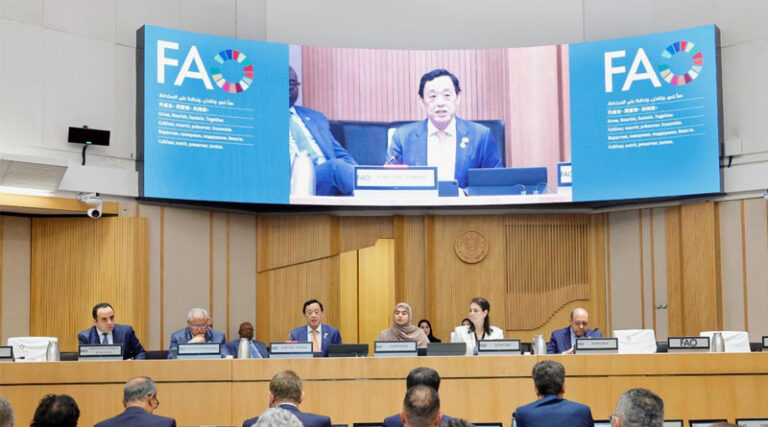
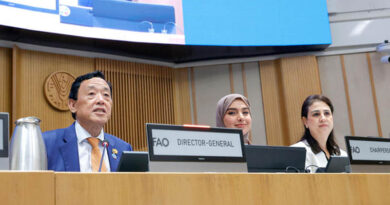
21 April 2026, Rome: The ongoing 2026 conflict in the Middle East is placing additional strain on fragile agrifood systems and global supply chains, threatening the availability, accessibility, and affordability of food, FAO Director-General QU Dongyu said during the 38th Session of the FAO Regional Conference for the Near East (NERC38) in Rome.
Addressing delegates at FAO headquarters, Qu said the region is facing a critical moment and stressed the importance of maintaining trade flows while ensuring access to adequate food for all, especially in countries heavily dependent on imports. The conference was chaired by the United Arab Emirates, represented by Minister of Climate Change and Environment Amna bint Abdullah Al Dahak Al Shamsi, and brought together ministers and policymakers from across the region.
FAO said it is closely assessing the impact of ongoing global conflicts, including the Middle East crisis, on food security and agrifood supply chains in order to provide technical expertise, evidence-based analysis, and policy support to member nations.
Qu warned that disruptions to food production, trade, and distribution systems across the region are being worsened by rising energy prices and disturbances in fertilizer markets. These developments are increasing production costs and reducing agricultural productivity both within the region and globally. He added that the crisis is affecting all agricultural inputs, including chemicals and machinery, and could have long-term consequences for agriculture even if the conflict ended immediately.
The FAO chief also highlighted that farmers, producers, and value chain actors are already facing severe impacts, with livelihoods increasingly under threat. He reiterated that peace remains essential for food security and said resilient, inclusive, and sustainable agrifood systems are vital for recovery, reducing vulnerabilities, and promoting long-term regional stability.
Speaking on behalf of the UAE, Minister Al Dahak said the country’s chairing of the session aims to help shift the region’s agrifood systems from reactive crisis management to proactive innovation. She said stronger logistics networks and strategic partnerships can help the region convert environmental and geopolitical challenges into sustainable development opportunities while keeping global supply chains secure.
During the conference, ministers discussed four major priorities for the region: strengthening food supply chains and logistics while reducing food loss and waste; diversifying food sources and boosting local production capacity; investing in infrastructure, agrifood enterprises, and rural development; and building partnerships that can deliver practical results.
Separate ministerial roundtables also examined coordinated policy responses to disruptions in energy markets and maritime trade routes, sustainable agricultural production and circular solutions, and financing resilient climate-smart agrifood systems through public, private, development, and climate finance.
Global Agriculture is an independent international media platform covering agri-business, policy, technology, and sustainability. For editorial collaborations, thought leadership, and strategic communications, write to pr@global-agriculture.com