Understanding How the Strait of Hormuz Conflict Is Disrupting Global Fertilizer Supply Chains
15 April 2026, New Delhi: The 2026 conflict in the Middle East has created serious concerns for global agriculture, with fertilizer markets facing immediate disruption. According to the FAO’s Global Agrifood Implications of the 2026 Conflict in the Middle East, the Gulf region’s central role in fertilizer production and exports means any instability can quickly affect farmers, crop production, and food prices across the world.
Gulf Region Critical for Fertilizer Supply
Beyond oil, the Gulf region is a key hub of the global fertilizer market, supplying a substantial share of nitrogen and phosphate fertilizers used in agriculture worldwide. Supported by abundant natural gas resources, Gulf countries produce fertilizers at competitive costs, making them essential suppliers for many import-dependent nations in Asia, Africa, and beyond.
Any disruption to Gulf fertilizer exports caused by conflict, infrastructure attacks, or shipping bottlenecks can rapidly lead to higher fertilizer prices, lower crop yields, and wider risks to food security.
One-Third of Global Fertilizer Trade at Risk
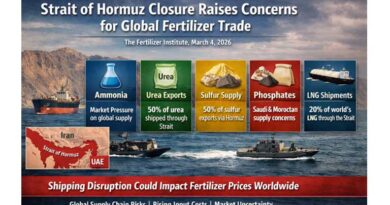
FAO notes that Gulf countries are among the world’s top exporters of nitrogen fertilizers such as urea and ammonia, as well as phosphate fertilizers. Up to 30 percent of globally traded fertilizer products, or around 16 million tonnes annually of nitrogenous, phosphates, and sulphur products, transit through the Strait of Hormuz.
The Persian Gulf region alone provides an estimated 30–35 percent of global urea exports and 20–30 percent of ammonia exports. Qatar plays a particularly major role, with its QAFCO complex accounting for 14 percent of global urea trade. Saudi Arabia and Iran also rank among leading suppliers of nitrogen and phosphate fertilizers.
Supply Shock With No Quick Substitute
The report warns that if Gulf exports are lost, the world faces an immediate fertilizer shortfall with no quick replacement. There are no strategic fertilizer stockpiles internationally, while production elsewhere remains limited due to high energy costs and previous export restrictions.
FAO says the conflict has created not only an energy crisis, but also a fertilizer supply crisis, increasing the risk of lower agricultural yields and food price spikes in the months ahead if disruptions continue.
Plants Hit, Output Reduced
With the outbreak of conflict, fertilizer flows have been severely disrupted. Key facilities have reportedly been damaged or shut down. Qatar’s Ras Laffan LNG and fertilizer operations were struck on 2 March, halting output of 112 billion cubic metres of LNG and associated ammonia production.
Major fertilizer plants in Qatar, United Arab Emirates, Saudi Arabia, Iran, and Jordan have reduced or suspended production due to attacks and insecurity.
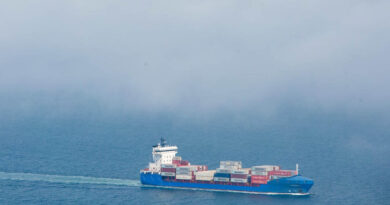
The effective closure of the Strait of Hormuz has stalled an estimated one-third of all fertilizer trade, leaving 3–4 million tonnes per month unable to reach markets.
Prices Surge Across Global Markets
The fertilizer market has also experienced an immediate price shock because of its close link to energy markets. Natural gas is the key feedstock for nitrogen fertilizers, and the rise in gas and oil prices, combined with disrupted Gulf production and shipping, has sharply increased costs.
In the first week of March, Middle East granular urea prices rose above USD 590 per tonne, up USD 90 or 19 percentfrom late February. US Gulf DAP increased to USD 655 per tonne, around 5 percent higher over the same period.
Some markets saw steeper increases. In Egypt, urea prices jumped 28 percent within days to reach USD 625 per tonne.
Previously negotiated contracts have also been cancelled under force majeure, pushing buyers into spot markets and increasing demand pressure. Global fertilizer prices are projected to average 15–20 percent higher in the first half of 2026 than a year earlier if the crisis continues.
Also Read: Corteva Names Luke Kissam as CEO of Future Crop Protection Company Ahead of Planned 2026 Separation
Global Agriculture is an independent international media platform covering agri-business, policy, technology, and sustainability. For editorial collaborations, thought leadership, and strategic communications, write to pr@global-agriculture.com