Momentum Builds For On-farm Task Automation
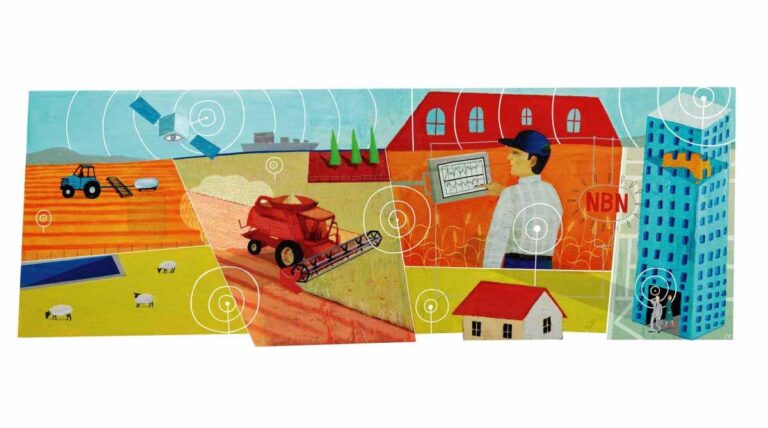
19 May 2026, AU: National research is building a clearer picture of how real-time autonomous systems can support on-farm decision-making and efficiency.
An accumulating body of evidence shows that real-time deployment of artificial intelligence (AI) and automation can improve in-season decision-making.
For the past decade, GRDC has partnered with CSIRO, universities and growers to test how AI and automation can better support real-time decision-making.
The GRDC and CSIRO co-investment called Future Farm, launched in 2016, explored whether machine learning and on-farm experiments could lift growers’ confidence in making more optimal nitrogen decisions.
The project was initially led by former CSIRO Agriculture and Food Senior Principal Research Scientist (Precision Agriculture) Dr Rob Bramley, who is now an independent consultant. Today, the project is overseen by CSIRO Spatial Temporal Decisions Team Leader and Senior Principal Research Scientist Dr Roger Lawes.
Dr Bramley says Future Farm’s aim was to investigate whether researchers could automate data acquisition, analysis and decision-making.
“Growers wanted us to focus on mid-season nitrogen management as the use case,” he says. “Optimal nitrogen decisions depend on soil fertility, crop growth, seasonal conditions and paddock history – something that is difficult to judge with a single test or sensor.”
An optimal nitrogen decision has a small amount of error, he says, but even a decision made by a highly experienced grower or agronomist using conventional approaches can be off by 40 to 50 kg/ha of nitrogen.
The project brought together CSIRO, the University of Sydney, the University of Southern Queensland, the Queensland University of Technology, Agriculture Victoria and 7 leading growers.
Single sensors
No single sensor or measurement could reliably predict optimal nitrogen rates across seasons and environments. Crop canopy sensors, soil tests or grain yield estimates alone fell short.
Performance improved when data from multiple sources were integrated into a unified framework, combining satellite-based crop biomass, soil moisture, soil nitrogen supply, soil types, on-farm strip trials, rainfall, paddock history and weather forecasts.
Across multiple regions and seasons, Dr Bramley says this data-driven approach led to reduced nitrogen rates in low-yielding areas and increased rates where yield potential justified the investment.
Other outcomes included:
- improved nitrogen use efficiencies
- maintained or increased gross margins relative to blanket recommendations and rules of thumb.
Most importantly, he says, the approach promoted greater confidence in the decision.
On-farm experiments
Another lesson was the value of grower-led on-farm experimentation. Nitrogen-rich and nitrogen-zero strips accelerated learning, improved the interpretation of sensor data and strengthened growers’ confidence in digital tools.
Nitrogen-zero strips fertilised later in the season provided an early warning of when the crop was likely to encounter stress.
Dr Bramley says sensor data collected from nitrogen-rich and nitrogen-zero strips were invaluable inputs to growers’ nitrogen decisions.
“For automated tools to help better target in-season nitrogen to zone, on-farm experimentation needs to be routine across multiple zones and paddocks,” he says.
By reducing the time and labour required to gather and interpret information, the tools and the ‘how-to’ that were developed supported more timely and informed nitrogen decisions.
Real-world database
These insights shaped the next research phase. During Future Farm 2, CSIRO and the University of Sydney refined the algorithms and deployed them via PCT Agcloud across 13 farms.
“We rebuilt the algorithm based on the practical realities of using satellite sensing and fertiliser decisions,” Dr Lawes says.
“Then, we built a system that piped the data straight into PCT Agcloud so variable-rate recommendations could be sent directly to growers’ tractors.”
The next step is to deploy and validate a final, commercialised version nationwide, building a comprehensive real-world database of on-farm experiments to support growers’ in-season nitrogen applications.
Planning for autonomy
While Future Farm focused on improving agronomic decisions through data integration and analysis, GRDC’s Grain Automate is helping drive increased on-farm adoption of autonomy.
CSIRO has investigated how farm business owners can prepare for automation. Social scientists, economists and agricultural scientists surveyed growers, advisers and service providers to understand expectations and concerns.
“Growers want to learn about intelligent technology so they can make the transition, but there are concerns,” Dr Lawes says. Reliability, maintenance, connectivity and security all feature.
Advisers and service people also expressed interest, alongside uncertainty about what widespread automation might mean for their roles.
To inform the pathway forward, the team examined adoption in industries including mining, horticulture, dairy and health services to learn how they facilitated automation uptake.
Common threads emerged. Each sector relied on a ‘champion’ supported by strong teams, clear change management strategies and sustained technology investment.
To set up an automated rotary dairy, for instance, requirements included capital investment, technical support and people upskilled to operate it.
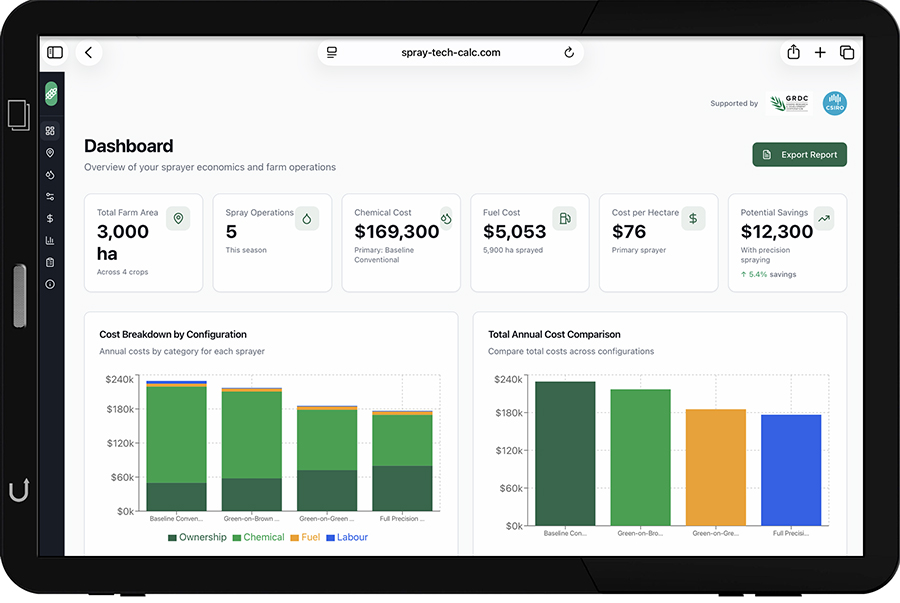
Calculator and planner
Building on these lessons, the CSIRO team developed an interactive web-based Sprayer Calculator. The calculator is a beta product for industry evaluation.
It aims to help individuals compare the likely savings from moving from conventional spraying to precision agriculture technologies, such as green-on-brown and green-on-green autonomous spraying.
The CSIRO team has also developed a more extensive web-based whole-farm planning tool called farmcalculator.com.au.
It enables users to evaluate every possible autonomous configuration for a farm (including multiple tractors, sprayers, seeders and harvesters). It aims to assist farm business owners in mapping their pathway to automation across their entire machinery fleet.
If automation is a part of the future, the planning tool is there to help.
“It is built on the premise that everybody’s situation is different,” Dr Lawes says.
Also Read: Insecticides (India) Limited Launches New Paddy Insecticide ‘Granuvia’
Global Agriculture is an independent international media platform covering agri-business, policy, technology, and sustainability. For editorial collaborations, thought leadership, and strategic communications, write to pr@global-agriculture.com