10 March 2026, London: As the world grapples with the rapid integration of Artificial Intelligence into the workplace, a new and comprehensive report from the Anthropic Economic Index offers a sobering look at which jobs are actually being affected—and which remain firmly in the human domain. The March 2026 study, “Labor market impacts of AI: A new measure and early evidence,” introduces a novel framework for measuring AI’s impact, moving beyond theoretical speculation to analyze real-world usage data. While the findings confirm that AI is beginning to reshape white-collar professions, they also reveal a stark reality for the agricultural sector: the physical nature of farm work places it almost entirely beyond the current reach of the AI revolution.
A New Yardstick: From Theory to Practice
Previous attempts to forecast AI’s impact on jobs have often relied on theoretical measures of what the technology could do. The new study refines this by creating an “observed exposure” metric. This combines a task’s theoretical feasibility for an AI with actual usage data from millions of conversations on Anthropic’s Claude platform. The measure prioritizes tasks that are fully automated and work-related, providing a more accurate picture of where AI is displacing or augmenting human labor today.
The gap between theory and practice is significant. While a theoretical model might suggest that a large language model (LLM) could speed up a vast array of tasks, the data shows that actual “coverage” is still a fraction of what’s possible. For instance, in the heavily impacted Computer & Mathematical occupations, AI is theoretically capable of handling 94% of tasks, but current usage covers only 33%.
Agriculture: The Uncovered Ground
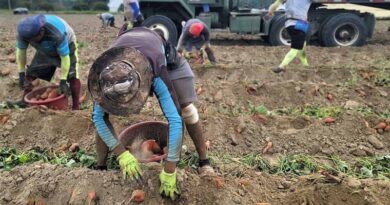
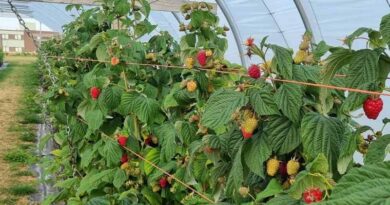
It is in this context that the agricultural sector stands out. The report explicitly cites “physical agricultural work like pruning trees and operating farm machinery” as quintessential examples of tasks that remain beyond AI’s reach. When the researchers applied their new measure across the economy, they found that approximately 30% of all workers have “zero coverage”—meaning their occupations appear too infrequently in AI usage data to register.
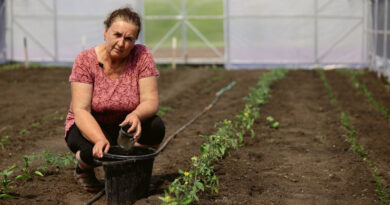
This group is a who’s who of hands-on, physical roles, including Cooks, Motorcycle Mechanics, Bartenders, and Dishwashers. But at the very top of this list of unaffected professions are the jobs that form the backbone of agriculture: farmworkers, ranchers, and other agricultural laborers.
The reasons are intuitive. AI, particularly in its current generative form, excels at manipulating data, language, and code. It struggles profoundly with the non-standardized, physically demanding, and situationally variable tasks required in the field. Pruning a tree requires fine motor skills and visual judgment that a robotic arm powered by AI is only beginning to approach. Operating a combine harvester demands navigating a complex, dynamic physical environment. These are problems of robotics and embodied intelligence, not just language processing.
This distinction highlights a key finding from the report: occupations with higher observed exposure are projected by the Bureau of Labor Statistics (BLS) to grow less through 2034.Conversely, occupations with little to no exposure—like those in agriculture—are likely to see their demand sustained or even increased, as they cannot be easily automated or augmented by the current wave of AI tools.
The Diverging Fortunes of Labor
The report paints a picture of a labor market bifurcated by AI. On one side are the most exposed professions, which the study identifies as Computer Programmers, Customer Service Representatives, and Data Entry Keyers. Workers in these roles are disproportionately likely to be older, female, more educated, and higher-paid.
On the other side are the “unexposed” workers, who are more likely to be male, younger, and in lower-paid, hands-on roles. This group includes the agricultural workers who tend the land, as well as those in maintenance, food service, and personal care.
The demographic differences are stark. The report finds that workers in the top quartile of AI exposure earn 47% more on average than those with no exposure and are nearly four times more likely to hold a graduate degree.
Early Evidence: A Slowdown in Hiring, Not a Wave of Layoffs
Despite the clear demarcation of exposed and unexposed jobs, the study finds no evidence of a systematic increase in unemployment for highly exposed workers since the launch of ChatGPT in late 2022. The unemployment rates for both groups have largely moved in tandem.
However, the researchers found a more subtle and concerning signal that could hint at the future. For younger workers (ages 22-25), hiring into the most exposed occupations has slowed significantly. Since 2024, the rate at which young workers start new jobs in highly exposed fields has dropped by an estimated 14%. This finding suggests that AI’s first major impact on the labor market may not be mass layoffs, but a “quiet” contraction of opportunity for new entrants.
Global Agriculture is an independent international media platform covering agri-business, policy, technology, and sustainability. For editorial collaborations, thought leadership, and strategic communications, write to pr@global-agriculture.com