Argentina’s SENASA Streamlines Pesticide Approvals for Minor Crops and Drone Application
30 September 2026, Argentina: Argentina’s agricultural health authority, SENASA, has created a fast-track administrative process to authorize already-registered pesticides for new uses on minor crops, without forcing companies through a full re-registration, under Resolution 869/2026, published in the Official Gazette on September 24, 2026 and effective the following day.
The resolution addresses a persistent gap in Argentina’s pesticide framework: crops such as legumes, vegetables, fruits, aromatic plants and spices are often grown on too small a scale to justify the cost of a manufacturer applying to add them to an existing product’s label. SENASA’s own reasoning, stated in the measure, is that registrant companies frequently lack the “commercial incentives” to pursue label expansions for these lower-volume crops, leaving growers without a legally authorized product for specific pests even when an effective, already-registered chemistry exists on the market for other crops.
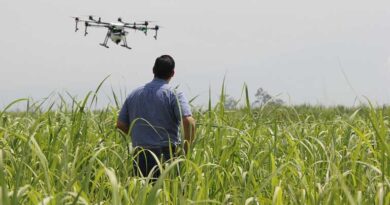
The new procedure covers three distinct situations. First, minor crops and uses where no registered alternative exists and where a company has no commercial reason to expand its own label. Second, officially declared pest or disease emergencies involving products that have no prior record of use in the country. Third, new application methods, most notably drone-based spraying, which SENASA can now approve on an exceptional basis outside the standard product-by-product review. Requests can be filed not only by agrochemical companies but by producer associations, cooperatives, public agencies and universities, submitted by email rather than through the standard paper-based registration channel. SENASA has committed to responding within a maximum of 90 days, and for minor crops it can grant temporary authorizations lasting up to two years while any outstanding technical documentation is completed in parallel. Approved products are to be published across three lists maintained by Argentina’s National Plant Protection Directorate, giving growers and agronomists a single reference point for what has been cleared under the new pathway.
Authorizations issued this way are explicitly temporary, subsidiary to full registration, and subject to review, so this is not a permanent loosening of Argentina’s approval standards but a bridge mechanism for cases where the standard commercial registration process was leaving gaps. A company’s already-registered product does not need new safety data to be approved for an additional minor crop under this process, so long as efficacy for the new use can be demonstrated, which should shorten the practical time between a proven off-label use and a legally authorized one.
Global Agriculture is an independent international media platform covering agri-business, policy, technology, and sustainability. For editorial collaborations, thought leadership, and strategic communications, write to pr@global-agriculture.com