Indian Researchers Map an AI Path to Climate-Resilient, Nutrient-Rich Crops
28 September 2026, Tamil Nadu, India: A review published in the journal Frontiers in Sustainable Food Systems has laid out a detailed framework for combining artificial intelligence with multi-omics data, genomics, transcriptomics, proteomics and metabolomics together, to speed up the breeding of crops that can withstand climate stress while delivering better nutrition. The paper, by Surasreeta Paul and corresponding author Sandeep Singh Rana of the School of Biosciences and Technology at Vellore Institute of Technology in India, was posted online on August 27 and formally published on September 16, making it one of the more current academic contributions to a fast-moving research area.
The paper is a synthesis of existing research rather than a report of new experimental results, but it pulls together a wide range of recent techniques into a single roadmap. The authors argue that machine learning models, particularly convolutional neural networks and transformer-based architectures similar to those used in large language models, can meaningfully improve predictions of which genetic traits will translate into real stress tolerance or nutritional gains in the field, a task that has historically required years of trial-and-error breeding trials. They also highlight how AI is being used to improve CRISPR-Cas9 gene editing for biofortification, specifically by helping researchers choose better genetic targets and design more precise guide RNA sequences, reducing the off-target effects that have slowed regulatory approval of some earlier gene-edited crops.
From Genetic Data to the Field
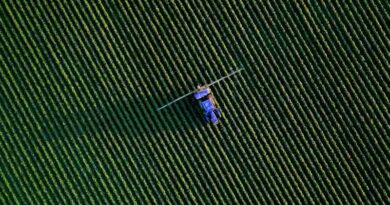
The review cites concrete examples already achieved through genome editing in various studies worldwide, including wheat varieties enhanced for iron and zinc content, soybean lines modified to reduce phytic acid (a compound that can block the body’s absorption of nutrients from grain-based diets), and vitamin-enriched versions of cassava and maize. Beyond the lab, the authors point to precision agriculture tools, satellite imagery, Internet of Things soil and weather sensors, and predictive modeling, as the layer that connects better-bred seeds to better on-farm outcomes. They also describe high-throughput phenotyping using drone-based remote sensing, which lets researchers measure plant traits like height, canopy temperature and stress response across thousands of field plots at once, dramatically faster than manual measurement.
The authors frame all of this as necessary groundwork for meeting global food security targets tied to 2050, when the world’s population is projected to approach 10 billion. Notably absent from the review, at least in the material examined, is a detailed discussion of the regulatory hurdles that gene-edited crops still face in many countries, including India, where rules for genome-edited plants have been evolving but remain more cautious than the approach recently taken by regulators in the European Union and United States. That gap is worth flagging for readers, since the technical roadmap the paper describes will only translate into farmer-ready crops as quickly as national biosafety regulators allow.
Global Agriculture is an independent international media platform covering agri-business, policy, technology, and sustainability. For editorial collaborations, thought leadership, and strategic communications, write to pr@global-agriculture.com