ICRISAT and University of Queensland Partner to Advance Climate-Resilient Breeding for Dryland Crops
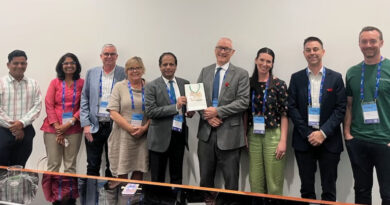
11 March 2026, Australia: The International Crops Research Institute for the Semi-Arid Tropics (ICRISAT) and The University of Queensland (UQ), Australia, have announced a strategic partnership aimed at accelerating the development of climate-resilient crop varieties for dryland farming regions across Asia and Africa.
The collaboration will deploy advanced predictive breeding technologies to strengthen breeding programs for key dryland crops, helping farmers cope with increasing climate stress, emerging pests and diseases, and rising global food demand.
The partnership was formalized through a Memorandum of Understanding under which ICRISAT will work with the ARC Training Centre in Predictive Breeding for Agricultural Futures to integrate genomic prediction tools and simulation-based breeding strategies into its crop improvement pipelines.
By combining predictive breeding technologies with ICRISAT’s extensive global breeding networks, the initiative aims to optimize breeding strategies, accelerate genetic gains, and significantly reduce the time and cost required to develop improved crop varieties.
“Dryland agriculture is on the frontline of climate change,” said Dr. Himanshu Pathak, Director General of ICRISAT. “Farmers in these regions cannot wait decades for improved crop varieties. Predictive breeding enables us to identify promising genetic combinations even before field testing. By collaborating with one of the world’s leading centres for predictive breeding at the University of Queensland, we can accelerate the delivery of climate-resilient crops that farmers urgently need to sustain productivity, nutrition, and livelihoods.”
Working closely with national agricultural research systems, ICRISAT has contributed to the release of more than 1,200 improved cultivars of dryland crops across over 40 countries.
Building on this legacy, the institute is modernizing its breeding programs to develop next-generation varieties capable of achieving 20–25% yield gains while improving resilience to drought, heat, and other climate stresses.
ICRISAT has already implemented rapid breeding cycle protocols for crops such as chickpea and pigeonpea, and more recently finger millet, significantly shortening breeding timelines. The new collaboration is expected to further strengthen these efforts by integrating genomic prediction into breeding pipelines.
“This partnership represents an important milestone in our commitment to continuously improving ICRISAT’s breeding programs,” said Dr. Stanford Blade, Deputy Director General – Research and Innovation at ICRISAT. “Over the past decade, we have invested heavily in enhancing breeding efficiency. Integrating genomic prediction, one of the key recommendations of the 2024 Breeding Program Assessment Tool review, will enable our scientists to deliver improved varieties faster and with greater precision.”
The ARC Training Centre in Predictive Breeding for Agricultural Futures, supported by the Australian Research Council and led by the University of Queensland, focuses on advancing next-generation predictive breeding technologies for plant and animal improvement.
“This partnership is a great opportunity to put cutting-edge predictive breeding tools into the hands of ICRISAT breeders,” said Professor Lee Hickey, Director of the ARC Training Centre. “Beyond the technology itself, building local capacity to implement and adapt these approaches will be critical to ensuring long-term impact for farmers across India and Africa.”
The collaboration, coordinated by Dr. Janila Pasupuleti, will develop a transition strategy to implement rapid-cycle genomic prediction across ICRISAT’s dryland crop breeding programs, marking a significant step toward faster and more efficient delivery of improved crop varieties for farmers in climate-vulnerable regions.
Also Read: From Rust Threat to Wheat Expansion in Ethiopia
Global Agriculture is an independent international media platform covering agri-business, policy, technology, and sustainability. For editorial collaborations, thought leadership, and strategic communications, write to pr@global-agriculture.com