CORRA Webinar Explores Collaborative Breeding Model To Accelerate Climate-Resilient Rice Breeding Across Asia
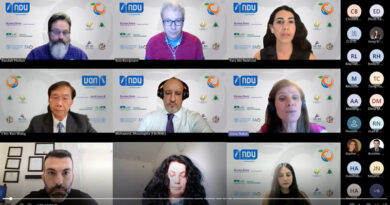
16 July 2026, Laguna: A proposed collaborative breeding model that would enable national breeding programs to jointly develop improved rice varieties was presented at the latest Council for Partnership on Rice Research in Asia (CORRA) webinar. The model offers a new approach to accelerating the delivery of climate-resilient rice across Asia.
Opening the webinar, IRRI Director General Dr. Yvonne Pinto said the increasingly complex challenges facing agriculture demand stronger collaboration between international research organizations and national breeding programs.
“The challenges we face are becoming increasingly complex. Climate change, evolving pests and diseases, resource constraints, and changing consumer demands require us to accelerate the pace of innovation while ensuring that new technologies reach farmers faster than ever before.”
Dr. Pinto said future progress in rice breeding will depend not only on scientific advances, but also on how effectively research institutions work alongside national agricultural research systems to co-create solutions, strengthen capacity, and ensure innovation reaches farmers.
“Our role at IRRI is not simply to develop new technologies, but to work alongside national agricultural research systems to co-create solutions, strengthen capacity, and ensure that scientific innovation translates into tangible benefits for farming communities across the region.”
Building on that message, Dr. Michael Quinn, IRRI Research Director for Rice Breeding Innovations and speaker for the CORRA webinar, presented a vision for a collaborative breeding network that would enable countries to share breeding materials, field trial data, research findings, and technical expertise while jointly evaluating promising rice lines across diverse environments. Although national breeding programs respond to country-specific needs, Dr. Quinn emphasized that many breeding priorities are shared across Asia, creating opportunities to pool expertise and resources.
“There are common breeding objectives across countries in Southeast Asia, and we can come together to leverage one another’s efforts. At the same time, resources are limited, and almost every national breeding program is increasingly challenged in this space,” he said.
Collaboration, Dr. Quinn stressed, is no longer simply advantageous, but is becoming a must.
Dr. Quinn further discussed that IRRI is well-positioned to coordinate regional collaboration by connecting partners, supporting breeding activities, and addressing technical gaps that individual national programs cannot overcome alone.
As an example of how collaboration could accelerate varietal improvement, Dr. Quinn highlighted the Trait Factory, a breeding approach that brings genebank diversity into popular rice varieties.
“It would rapidly introduce high-value traits into popular rice varieties while retaining 99% or more of the original variety’s genetic makeup, preserving the performance farmers already trust while adding multiple really high-value traits.”
The Philippines provides one example of the approach in practice. Through the OneRicePH Project, a collaboration among the Department of Agriculture (DA), DA-Philippine Rice Research Institute (DA-PhilRice), IRRI, and and the University of the Philippines, supported by the DA’s National Rice Program through the DA-Bureau of Agricultural Research, researchers used the Trait Factory to improve the widely grown variety NSIC Rc222. The result was NSIC Rc784, an upgraded variety with softer cooking quality and about four percent higher yield while retaining more than 99.8 percent of its genetic makeup.
Looking ahead, Dr. Quinn said expanding collaborative breeding across Asia could help countries identify shared breeding priorities, accelerate the deployment of valuable traits, and strengthen national breeding capacity through coordinated research and shared expertise.
Closing the webinar, CORRA Coordinator and Director at the National Agriculture and Forestry Research Institute (NAFRI) of Lao PDR, Phetmanyseng Xangsayasane, affirmed the country’s commitment to regional collaboration.
“As the host country [for the upcoming CORRA annual meeting], we are proud to provide a platform for meaningful dialogue, knowledge sharing, and the development of new collaborative initiatives that benefit our farmers and future generations.”
He added that stronger partnerships can deliver broader benefits beyond breeding.
“By working together, we can develop shared platform solutions, enhance productivity, improve nutrition, conserve natural resources, and contribute to the Sustainable Development Goals.”
Also Read: Crystal Crop Protection Launches Six New Products for Kharif 2026
Global Agriculture is an independent international media platform covering agri-business, policy, technology, and sustainability. For editorial collaborations, thought leadership, and strategic communications, write to pr@global-agriculture.com