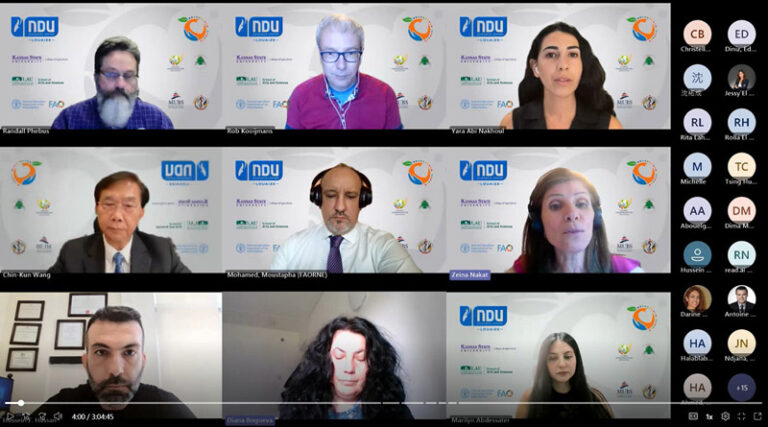
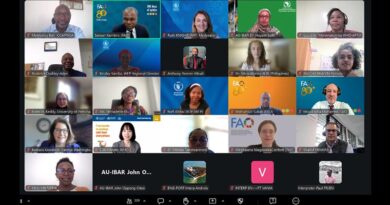
15 June 2026, US: On 8 June 2026, the Faculty of Nursing and Health Sciences (FNHS) at Notre Dame University-Louaize (NDU), hosted a webinar celebrating World Food Safety Day 2026, in collaboration with the Global Harmonization Initiative (GHI), the Food and Agriculture Organization of the United Nations Regional Office for the Near East and North Africa (FAO RNE), the Lebanese Association of Food Scientists and Technologists (LAFST), the Lebanese American University (LAU), the Modern University for Business and Science (MUBS), the International Society for Precision Health (ISPH), Rentokil Boecker, and AFNOR.
The event organization was led by Dr Christelle Bou-Mitri (Associate Professor of Food Science at Notre Dame Unviersity-Louaize Lebanon). It brought together researchers, academics, industry professionals, students, and public health experts from across the region and beyond to discuss current challenges and emerging solutions in food safety under the global theme of ensuring safer food for better health.
The webinar commenced with welcoming remarks from Dr Jessy El Hayek, Dean of the Faculty of Nursing and Health Sciences, who introduced FNHS and NDU’s commitment to advancing education, research, and community engagement in food safety and public health. Dr Diana Bogueva, President of the Global Harmonization Initiative (GHI), followed with an overview of GHI’s mission to foster international collaboration and evidence-based approaches to food and nutrition challenges.
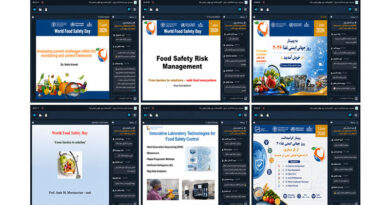
The scientific programme featured a distinguished panel of international and regional experts addressing some of the most pressing food safety issues of our time. Prof. Chin-Kun Wang, representing ISPH and GHI and serving as a United Nations Goodwill Ambassador, delivered a keynote presentation on “World Food Safety Issues: Lessons from Accumulated Cases and Experiences,” highlighting global food safety challenges and the lessons learned from past outbreaks and incidents.
Rob Kooijmans, M.Sc., from GHI presented an “Overview of the 2026 Cereulide in Infant Formula” incident, emphasizing the importance of vigilance, risk assessment, and preventive measures in protecting vulnerable populations.
Dr Moustapha Mohamed from FAO RNE discussed “Food Safety and Resilient Agrifood Systems: Emerging Priorities and Solutions for Lebanon and the NENA Region,” providing valuable insights into strengthening food safety systems while enhancing resilience across agrifood value chains.
Prof. Mahmoud Halablab, President of LAFST, presented on “The Chronic Pollution of the Litani River: Emerging Microbiological Threats to Food Safety and Public Health in Lebanon,” shedding light on the critical link between environmental contamination, water quality, and food safety.
Prof. Hussein Hassan from LAU shared findings from his research on “Unmasking Hidden Gluten: Evaluating the Compliance of Gluten-Free Products in Lebanon and the UAE,” highlighting the importance of regulatory compliance and accurate food labelling to protect consumers with gluten-related disorders.
Addressing dietary trends and public health implications, Dr Paula Hage Boutros from MUBS presented “Ultra-Processed Food Consumption in Lebanon: A Growing Food Safety and Public Health Concern,” discussing the increasing prevalence of ultra-processed foods and their potential impact on consumer health.
The webinar concluded with an inspiring presentation by Prof. Randall K. Phebus from Kansas State University entitled “Real Food Safety—Know, Understand, Execute: Insights from an Old Professor and New Graduate.” His presentation emphasized the importance of translating food safety knowledge into practice and fostering a culture of continuous learning and responsibility throughout the food chain.
The discussions emphasized the importance of collaboration within academia, industry, regulatory authorities, and international organizations to address food safety risks effectively. Participants engaged in a dynamic question-and-answer session, demonstrating strong interest in advancing research, education, and food safety practices throughout the region.
The webinar was moderated by Zeina Nakat, Marilyn Abdessater, and Yara Abi Nakhoul, who facilitated engaging discussions and interactions among speakers and attendees.
During the closing remarks, participants reflected on the need to move “from burden to solutions.” The presentations collectively highlighted the challenges posed by foodborne diseases, environmental contamination, emerging hazards, labelling compliance, and changing dietary patterns, while also offering practical pathways forward through science, innovation, education, and partnership.
The organizers extend their sincere gratitude to all speakers, moderators, partner organizations, and attendees whose contributions made this event a success. Their collective commitment to food safety continues to drive progress toward healthier communities and more sustainable food systems.
Global Agriculture is an independent international media platform covering agri-business, policy, technology, and sustainability. For editorial collaborations, thought leadership, and strategic communications, write to pr@global-agriculture.com