Home » Global Agriculture » World Food Safety Day / Africa Regional Webinar Emphasizes Turning Foodborne Disease Burden Evidence Into Sustainable Action
19 June 2026, US: Transforming evidence into action is essential to reducing the burden of foodborne diseases and building safer food systems across Africa. Following the release of new estimates on the burden of foodborne diseases in the African Region, key regional and international partners convened to examine how data can better inform policy, investment, and action.
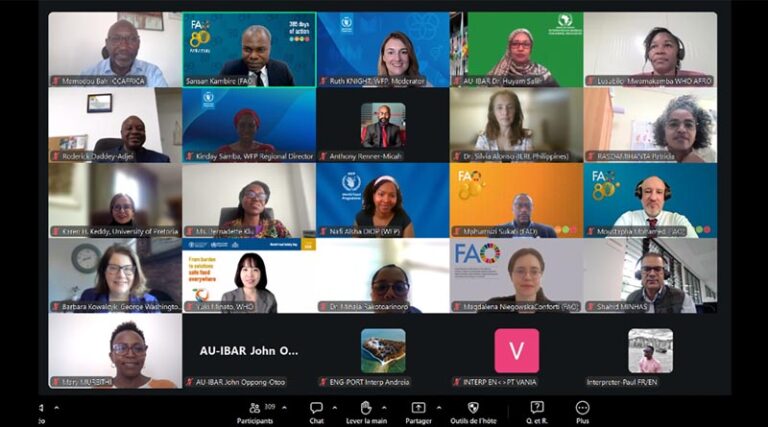
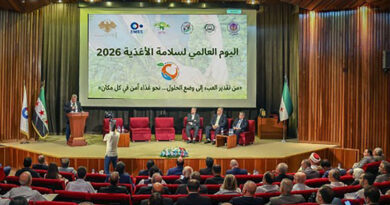
To mark World Food Safety Day 2026, the Regional Office for Africa of the Food and Agriculture Organization of the United Nations (FAO RAF), the World Health Organization Regional Office for Africa (WHO AFRO), the World Food Programme (WFP), the African Union–InterAfrican Bureau for Animal Resources (AU-IBAR), and the FAO/WHO Codex Coordinating Committee for Africa (CCAFRICA) jointly organized a regional webinar on 11 June 2026 under the theme “Building Africa’s Food Safety Future: From Evidence to Action.”
The webinar brought together more than 300 participants from government competent authorities, academia, research institutions, development partners and the private sector. Discussions focused on the newly released burden estimates and how to translate this evidence into targeted, effective, and sustainable solutions.
Opening the webinar, Mamodou Bah of CCAFRICA highlighted the importance of the new estimates in strengthening understanding of the public health and economic impact of unsafe food. He emphasized that evidence is most valuable when it informs policy, guide investment, and strengthens food control systems.
Echoing these remarks, Lusubilo Mwamakamba of WHO AFRO stressed the need to translate evidence into measurable improvements in public health, emphasizing the role of data in guiding decision-making and targeted interventions.
Dr Huyam Salih, Director of AU-IBAR, called for stronger investments and coordinated action to address food safety challenges, emphasizing that effective food safety systems must be grounded in the realities of food production, trade, and consumption across Africa. Dr Mphumuzi Sukati, Senior Food and Nutrition Officer at FAO RAF, reaffirmed the shared responsibility to implement coordinated, scalable actions that reduce foodborne risks and enhance consumer protection.
Kinday Samba, Regional Director of World Food Programme (WFP) for Western and Central Africa, underscored that food safety is not an added cost but a driver of efficiency and value creation. She highlighted the importance of collaboration among governments, the private sector, and development partners to build resilient food safety systems.
The webinar featured a keynote presentation by Professor Karen Keddy of the University of Pretoria, South Africa, who provided an overview of the burden of foodborne diseases and its health, economic, environmental and governance implications. She highlighted successful governance interventions that have reduced food safety risks and presented a framework to support countries in using burden-of-disease evidence to strengthen food safety systems.
Building on the keynote presentations, technical sessions provided deeper insights into the methodologies and findings underpinning the 2026 foodborne disease burden estimates. Yuki Minato, Technical Officer in the Monitoring and Surveillance Unit at WHO Headquarters, presented the computational framework and key findings from the 2026 estimates. The analysis revealed that 42 priority pathogens and chemical hazards were responsible for an estimated 263 million illnesses and 200 000 deaths in 2021, with biological pathogens accounting for 99 percent of the disease burden.
Complementing this global perspective, Dr Barbara Kowalcyk of the George Washington University Milken Institute School of Public Health shared lessons from Ethiopia on the use of national burden-of-disease data to rank and prioritize food safety risks. Her presentation demonstrated how evidence-based risk prioritization can support more targeted interventions, inform policy decisions, and strengthen national food safety systems.
A panel discussion explored the drivers of foodborne disease risks in African food systems, with particular attention to informal markets and emerging climate-related challenges. The panel featured Ms Doreen Sakala, Chief Environmental Health Officer at the Ministry of Health of Zambia; Dr Silvia Alvarez Alonso, Senior Scientist Epidemiologist at ILRI; and Dr Magdalena Niegowska Conforti from FAO’s Food Systems and Food Safety Division. Drawing on experiences from public health, research and food systems perspectives, panelists stressed that sustainable improvements in food safety depend on enabling policies, targeted capacity development and incentives that encourage compliance. They advocated supportive approaches that strengthen food safety practices without compromising livelihoods.
In addition, the webinar showcased country experiences in translating evidence into practical action. Dr Mihaja Rakotoarinoro, Technical Officer within the WHO Neglected Tropical Diseases Programme in Madagascar, presented efforts to control Taenia solium. Experience from Ghana in addressing Sudan IV dye adulteration in palm oil were presented by Roderick Kwabena Daddey-Adjei, Deputy Chief Executive of the Food Division of the Ghana Food and Drugs Authority. Bernadette Klu further highlighted the role of the private sector in reducing the burden of foodborne disease. These examples demonstrated the importance of coordinated, multisectoral approaches, political commitment and private sector engagement.
The webinar was widely as a valuable example of inter-agency collaboration, bringing together AU-IBAR, CCAFRICA, FAO, WFP and WHO to advance a shared food safety agenda for Africa. It provided a continental platform to share knowledge, exchange experiences, and reflect on how recent foodborne disease estimates can be translated into action. Participants emphasized that this transition requires not only robust data, but also strong institutions, sustained political commitment, and increased investment in food safety systems across the region.
The webinar concluded with a strong call to move beyond generating evidence towards accelerating action. While the latest estimates provide a clearer picture of the burden of foodborne diseases in Africa, participants emphasized that their true value lies in informing policies, investments and interventions that deliver measurable improvements in food safety. Strengthening food safety systems will require sustained political commitment, increased investment, effective partnerships and coordinated action across sectors. By harnessing science, fostering collaboration and translating knowledge into practice, African countries can build safer, more resilient food systems that protect public health, support livelihoods and contribute to sustainable development.
Global Agriculture is an independent international media platform covering agri-business, policy, technology, and sustainability. For editorial collaborations, thought leadership, and strategic communications, write to pr@global-agriculture.com