Securing The Future Through Smarter Resource Management
03 August 2026, New Delhi: Economic growth across the developing world depends on something that rarely makes headlines: healthy natural resources. While discussions on development often focus on roads, industries, cities and GDP, the long-term success of these investments ultimately rests on productive soils, reliable water resources and resilient ecosystems.
India’s recent Khet Bachao Abhiyan, a nationwide agricultural awareness campaign launched by the Ministry of Agriculture and Farmers Welfare and the Indian Council of Agricultural Research (ICAR), reflects this growing recognition. The month-long campaign promoted soil testing, balanced nutrient management, crop diversification, green manuring, biofertilizers, conservation agriculture and integrated farming systems. These interventions may appear technical, but together they address a much larger challenge how to sustain agricultural production while natural resources come under increasing pressure.
This challenge extends far beyond India. Across developing countries, rapid urbanisation, economic growth and climate change are placing unprecedented demands on land and water. According to the United Nations, nearly 68% of the world’s population will live in urban areas by 2050. As economies expand, demand for food, housing, infrastructure and energy will continue to grow.
The question is no longer whether developing countries should pursue growth. They must. The real challenge is ensuring that economic progress does not erode the natural systems that support it.
Water illustrates this dilemma clearly. Government estimates show that India’s annual per capita water availability has steadily declined over the past two decades and is projected to continue falling. Large sections of the country already experience high levels of water stress, while groundwater depletion threatens agricultural productivity in many regions. At the same time, agriculture continues to produce more food from virtually the same amount of cultivated land, placing additional pressure on already stressed soils.
Healthy soils are often overlooked because their benefits are largely invisible until they begin to deteriorate. They store water, cycle nutrients, support biodiversity below ground and improve crop resilience during droughts and floods. When soils degrade, farmers face declining productivity, higher input costs and greater vulnerability to climate extremes.
Salinity offers one example of this growing risk. Millions of hectares of agricultural land in India are already affected by salt accumulation, reducing crop yields and limiting farming options. Combined with erosion, waterlogging and declining soil organic matter, land degradation threatens the productivity gains needed to meet future food demand.
Conservation agriculture provides one pathway to address these challenges. Built around minimum soil disturbance, permanent soil cover and diversified cropping systems, it helps improve soil health, conserve moisture and increase resilience to climate variability. Research across South Asia has shown that these practices can improve water-use efficiency while reducing production risks, particularly in resource-constrained farming systems.
Yet conservation is not simply about adopting better farming practices. Equally important is deciding where limited investments should be directed.
Governments face finite budgets, extension services cannot reach every village simultaneously, and restoration programmes require significant technical and institutional capacity. This makes prioritisation essential.
Rather than spreading resources thinly across large areas, conservation efforts should focus first on locations where ecological degradation and human dependence intersect. Regions experiencing groundwater depletion, severe soil erosion, salinity, water scarcity or frequent climate shocks often coincide with areas where farming communities have few alternative livelihood options. Investments in these landscapes are likely to deliver the greatest social, economic and environmental returns.
Modern geospatial tools now make this increasingly feasible. By combining information on groundwater conditions, soil degradation, rainfall variability, irrigation dependence, cropping intensity and socioeconomic vulnerability, planners can identify conservation hotspots where interventions will have the greatest impact. Such spatial targeting enables governments to move beyond blanket approaches towards evidence-based investment strategies.
Equally important is recognising interventions that generate multiple benefits simultaneously. Practices such as improving soil organic matter, conserving soil moisture or restoring degraded watersheds not only enhance agricultural productivity but also improve groundwater recharge, reduce erosion, strengthen climate resilience and support ecosystem health. These multiple benefits make conservation one of the most cost-effective public investments available.
However, successful conservation ultimately depends on farmers adopting improved practices. Awareness campaigns such as Khet Bachao Abhiyan represent an important first step, but long-term success requires sustained technical support, field demonstrations and locally relevant advisory services. Farmers need practical solutions that fit their farming systems, local environments and economic realities.
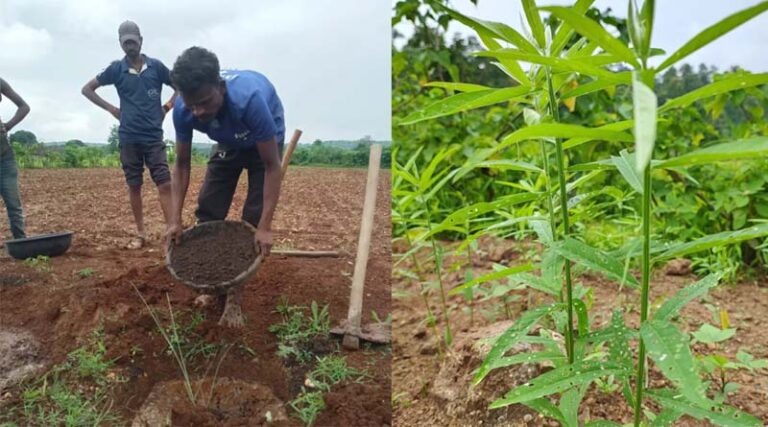
Research organisations have an important role to play in this process. By generating evidence, developing decision-support tools and evaluating landscape-level interventions, they help governments prioritise investments and design conservation strategies that maximise both productivity and resilience. At IWMI, this approach underpins research on sustainable water management, landscape restoration and climate-resilient agriculture across South Asia and beyond. Increasingly, integrated landscape approaches including those being advanced through CGIAR Multifunctional Landscapes program demonstrate that conservation, agricultural production and rural livelihoods need not compete with one another but can be strengthened together through coordinated planning. These practices include Microsite (Krishi Kund), which offers a resource-efficient alternative for restoring degraded lands by concentrating natural amendments within specific areas for improving agricultural diversity, soil health, and overall ecosystem services. Further activities include development of agroecological homestead model, which improves nutrition, soil health, and livelihood of tribal farmers in Central India.
In addition to that, digital tools were developed – assisting in landscape investment.
As developing countries continue their journey towards higher incomes and greater urbanisation, the measure of success cannot be economic growth alone. Prosperity will ultimately depend on whether natural resources remain productive enough to support future generations.
Conservation should therefore be viewed not as an environmental obligation, but as an investment in economic resilience. Protecting soils, restoring degraded landscapes and managing water sustainably are essential for maintaining food security, supporting rural livelihoods and reducing the risks posed by climate change.
The future of development lies not in choosing between economic growth and conservation, but in recognising that one cannot endure without the other.
Also Read: Western Sydney International Airport Strengthens Australia’s Trade And Biosecurity Future
Global Agriculture is an independent international media platform covering agri-business, policy, technology, and sustainability. For editorial collaborations, thought leadership, and strategic communications, write to pr@global-agriculture.com