From Paddy Fields to Carbon Markets: India’s Next Farmer-Income Opportunity
By Sayanta Ghosh, Associate Fellow, The Energy and Resources Institute (TERI),
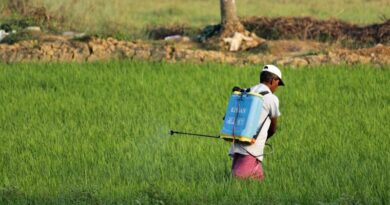
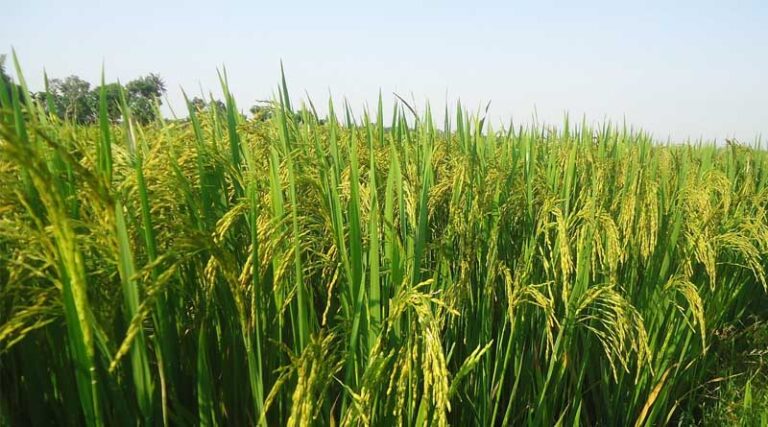
03 August 2026, New Delhi: India’s rice economy is entering a new phase. Rice production is estimated to reach 154.02 million tonnes in 2025 – 26, while nearly 47 million hectares were under the crop in 2024 – 25. In June 2026, the Bureau of Energy Efficiency published BM AG04.002 under the Indian Carbon Market, creating a formal pathway for crediting emission reductions from improved rice cultivation. The methodology recognises Alternate Wetting and Drying, intermittent flooding, aerobic cultivation and a shift from transplanted to direct-seeded rice. It also permits improved nitrogen management, avoided residue burning and other low-emission practices. India can now treat climate-smart rice cultivation not only as an environmental intervention, but as an agricultural asset capable of attracting private capital and generating value for farmers.
The economic case rests on three linked benefits. Alternate Wetting and Drying allows an irrigated paddy field to dry to a safe threshold before being flooded again. When implemented correctly, it can reduce irrigation demand without compromising yield and lower pumping costs. Carbon revenue can provide a second benefit because every tonne of verified greenhouse-gas reduction may generate a tradable credit. Sustainable Agricultural Land Management can add a third through better nutrient use, residue management, direct seeding and improved soil and water practices. These can reduce input costs, improve resource-use efficiency and strengthen resilience. Carbon credits alone are unlikely to double farmers’ income. Their value lies in combining lower production costs, more resilient output and an additional carbon dividend. This increase in net farm income can support the larger objective of doubling farmers’ income.
The scale is significant, but it must be assessed carefully. If one-tenth of India’s rice area were eventually found eligible and generated an average of two credits per hectare annually, it could create around 9.4 million credits each year. This is an illustration, not a forecast. Actual generation would depend on baseline water regimes, local emission factors, monitoring results and deductions. The methodology is mainly suited to irrigated areas where water inflow and drainage can be controlled. States should therefore map suitable clusters using irrigation data, crop calendars, groundwater information, satellite observations and field surveys. Projects should begin where farmers can manage wetting and drying without putting yields at risk.
The biggest barrier is institutional. Most Indian rice farms are small and fragmented, while water management is often collective. A farmer may depend on canal schedules, a shared pump or the drainage conditions of neighbouring plots. Effective AWD may therefore require coordination across a village or irrigation command. Carbon projects also involve costs for feasibility assessment, baseline studies, training, mapping, monitoring, verification, registration and credit marketing. An individual smallholder cannot undertake these functions economically. Aggregation is therefore the foundation of a viable rice carbon market.
Farmer Producer Organisations can become the backbone of this market. India has formed 10,000 FPOs covering more than 56 lakh farmers, providing an existing platform for aggregating small holdings. But FPOs should not be reduced to channels for collecting signatures and farm coordinates. They can organise farmers by village, irrigation source and cultivation pattern, coordinate water scheduling, arrange training, maintain records and support verification. They can also negotiate with project developers, investors and buyers, examine deductions and ensure transparent revenue distribution. FPOs should therefore become farmer-owned carbon service enterprises with trained personnel, digital systems and technical partnerships. Their compensation should be a disclosed service fee linked to defined activities or verified hectares, not an open-ended commission that reduces the farmer’s share.
A scalable institutional mechanism would involve five actors. Farmers would adopt and maintain the improved practice. The FPO would aggregate participants and represent their interests. A technical developer would assess feasibility, establish baselines, prepare documentation and manage monitoring. An investor or carbon buyer would provide upfront finance and bear development and market risks. An independent verification agency would assess whether claimed reductions are real and compliant. State governments should act as enablers by identifying suitable clusters, linking projects with agriculture and irrigation programmes, facilitating access to data and setting safeguards. Agricultural universities can support field protocols, training and quality assurance. State-level coordination among departments, FPO-promoting agencies and carbon-market participants would prevent isolated private initiatives.
The payment model must also change. Under the conventional approach, farmers alter their practices first, while payment generally comes only after credits are issued and sold. This may take several seasons. A small farmer cannot be expected to undertake additional effort today for an uncertain payment later. Rice carbon projects should instead use a three-stage payment model. An adoption payment should cover training, water-management tools, record-keeping and additional field effort. A seasonal performance payment should follow once the practice is verified. A final carbon dividend should be distributed after the credits are sold. Adoption and performance payments should be financed by investors, concessional climate capital, development institutions or convergence with public agriculture and water programmes. Only the final dividend should depend on the carbon price.
Transparent revenue sharing is equally important. A defined majority of net carbon revenue should reach participating farmers. A benchmark of at least 60 per cent could help build trust, although the final share may depend on project costs and risks. The remainder may support FPO services, technical development, monitoring, verification, registry charges, investment recovery and marketing. Every distribution should disclose credits sold, sale price, deductions, FPO fees and farmer-wise payments. Farmers should also share in any upside if carbon prices increase. A small fixed payment cannot be called fair benefit sharing if intermediaries retain the entire premium.
Digital MRV can reduce transaction costs. Geo-referenced village maps, crop-sown registries and farmer registries can support enrolment, while satellite imagery can help identify rice area, crop duration and water-related patterns. Mobile applications can record irrigation events, fertiliser use and geo-tagged evidence. Yet remote sensing cannot replace field verification. Water-level observations, farmer records, representative sampling and independent checks will remain essential. The appropriate model is digital-first but field-verified MRV, backed by consent and data safeguards.
India now has the principal building blocks: a dedicated rice methodology, a vast production base, 10,000 FPOs, research capacity and emerging digital infrastructure. What is missing is a coordinated market-building programme. The next step should be State-led pilots in scientifically selected irrigated clusters, bringing together FPOs, irrigation institutions, universities, technical developers, investors and responsible buyers. Their performance should be judged not only by credits issued, but by additional net income per farmer, water and energy savings, yield outcomes, monitoring costs, payment timelines and the share of revenue reaching villages.
India’s rice fields already generate food, employment and export earnings. With the right framework, they can also generate a credible climate asset. The opportunity is not simply to sell carbon from agriculture, but to make farmers co-owners of the environmental value created on their land.
Also Read: Western Sydney International Airport Strengthens Australia’s Trade And Biosecurity Future
Global Agriculture is an independent international media platform covering agri-business, policy, technology, and sustainability. For editorial collaborations, thought leadership, and strategic communications, write to pr@global-agriculture.com