16 September 2026, Limpopo, South Africa: Field research across ten commercial macadamia plantations in South Africa has produced some of the clearest evidence yet that bats, alongside patches of natural vegetation left standing near orchards, meaningfully reduce insect damage to the nut crop, an agroecology-based approach that growers could use alongside or instead of insecticide sprays. The study was led by Dr. Mina Anders of the Department of Functional Agrobiodiversity and Agroecology at the University of Göttingen in Germany, published in the journal Agriculture, Ecosystems and Environment, and publicized through a EurekAlert release on September 3, 2026.
Macadamia is a high-value tree nut crop and one of South Africa’s fastest-growing agricultural exports, with the Limpopo province, where this study was conducted, home to some of the country’s largest plantations. Like many orchard crops, macadamia is vulnerable to a range of insect pests that damage the nut husk and kernel, and growers have traditionally relied heavily on chemical insecticides to manage them. A growing body of agroecology research has looked at whether wildlife naturally present in and around farmland, rather than sprayed inputs, can do some of that pest-control work instead, but rigorous, quantified field evidence specific to macadamia has been limited until now.
Comparing Orchard Edges to Orchard Centers
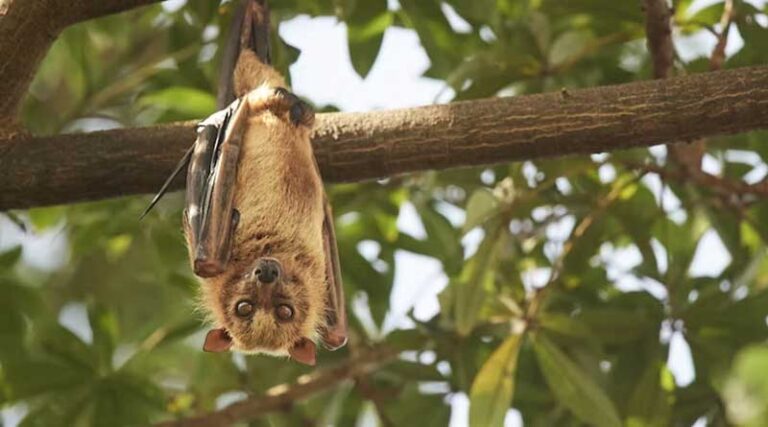
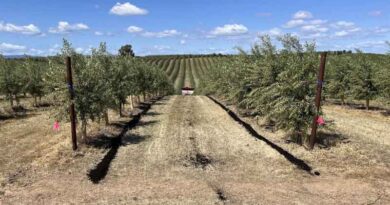
The research team worked across ten intensively managed macadamia plantations, comparing insect damage and wildlife activity at the edges of orchards, which sit closer to surrounding natural vegetation, against the interior of the same plantations, farther from any uncultivated habitat. To measure which animals were actually present and active, the researchers combined visual and audio surveys, documenting 111 bird species through direct observation and identifying 16 different bat species using echolocation recording equipment that captures and analyzes the ultrasonic calls bats use to navigate and hunt at night.
To isolate the actual pest-control contribution of birds and bats, rather than just their presence, the team ran exclusion trials. This involved fitting fine mesh netting around sample branches or trees to physically block birds and bats from reaching the macadamia nuts while allowing insects free access, then comparing nut damage on excluded branches against nearby unprotected ones. The results were substantial: nuts protected from birds and bats by exclusion netting suffered insect damage rates of 10.7 percent, compared with 6.2 percent damage on nuts left accessible to natural predators, an increase of roughly 70 percent in pest damage when these animals were kept out. When the researchers broke the data down further, bat activity showed a clear, direct statistical relationship with reduced pest damage, while bird numbers alone did not show a significant direct link, suggesting bats were doing much of the pest-suppression work, likely by hunting moths and other nocturnal insects whose larvae damage the nuts.
The study also examined how the surrounding landscape shaped these effects, finding that orchard yields and pest control benefits were strongest when natural, uncultivated habitat made up around 60 percent of the surrounding landscape. This points to a broader pattern in which the pest-control service that bats and birds provide is not fixed, but depends on plantations retaining or sitting near enough natural habitat, such as woodland, scrub or unmanaged field margins, to support healthy wildlife populations that can then forage in the adjacent crop.
Implications for Orchard Management
The authors frame the findings as practical guidance for how macadamia growers and land planners design and manage orchard landscapes, rather than as a call to abandon other pest-management tools. Their core recommendation is that natural habitat surrounding or interspersed within plantations should be treated as a working part of the farming system, not simply as unused land, because it functions as a refuge that sustains the bats and birds delivering measurable pest control. For growers, this could translate into decisions such as preserving or restoring hedgerows, woodland fragments or riparian buffers near orchard blocks, and factoring habitat retention into new plantation layouts, potentially reducing dependence on insecticide applications and their associated costs and residue concerns.
Global Agriculture is an independent international media platform covering agri-business, policy, technology, and sustainability. For editorial collaborations, thought leadership, and strategic communications, write to pr@global-agriculture.com