29 June 2026, Ethiopia: Ethiopia has emerged as one of Africa’s most remarkable agricultural success stories. Once heavily dependent on wheat imports, the country is now advancing toward wheat self-sufficiency while transforming its maize sector through science-driven innovation, strategic investments, and strong partnerships.
At the heart of this transformation lies a nearly four-decade partnership between Ethiopia and CIMMYT. Today, 90% of the wheat and 67% of the maize grown in Ethiopia are derived from CIMMYT germplasm. Against this backdrop, CIMMYT Director General Dr. Bram Govaerts undertook a high-level mission to Ethiopia on 12 June 2026 to reaffirm the organization’s commitment to supporting the country’s agricultural transformation agenda.The mission provided an opportunity to celebrate past achievements, deepen strategic alliances, and explore innovative solutions to emerging challenges facing Ethiopia’s food systems.
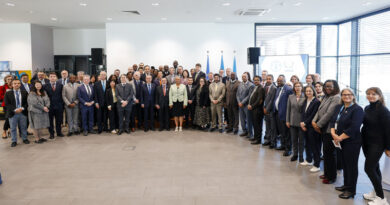
The mission brought together government leaders, researchers, development partners, and diplomatic representatives to celebrate achievements, strengthen strategic partnerships, and explore solutions to emerging agricultural challenges.
Deepening a strategic research partnership
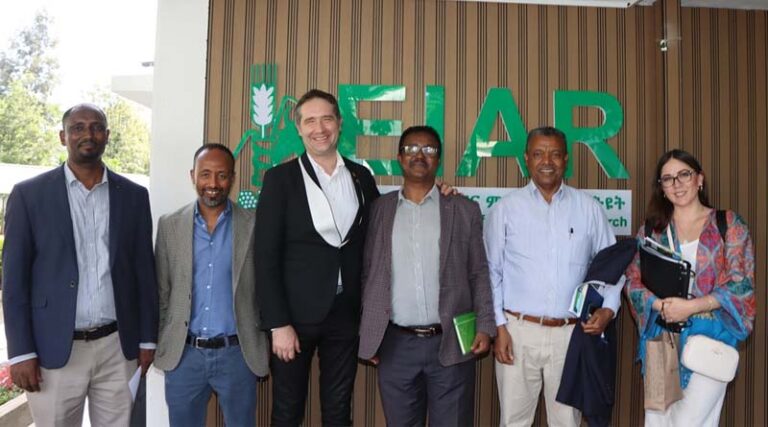
A key highlight of the mission was a meeting with Prof. Nigussie Dechassa, Director General of the Ethiopian Institute of Agricultural Research (EIAR), one of CIMMYT’s closest research partners in Africa.
Reflecting on the longstanding collaboration, Prof. Nigussie praised CIMMYT’s contribution to Ethiopia’s agricultural development.
“CIMMYT is the leading contributor to Ethiopia’s agricultural research, particularly in wheat and maize,” he said. “Many of the crop varieties released in Ethiopia have been developed through collaboration with CIMMYT.”
Discussions focused on crop improvement, hybrid wheat development, soil health, seed systems, and capacity strengthening. Both institutions emphasized the importance of jointly developing research initiatives and mobilizing resources to address emerging agricultural challenges.
“We have achieved remarkable results together in wheat, maize, and soil health because of the strong collaboration between CIMMYT and EIAR scientists,” said Dr. Govaerts. “As funding landscapes evolve, it becomes even more important for us to innovate together and pursue new opportunities that deliver greater impact for farmers.”
Both leaders reaffirmed their commitment to strengthening collaboration in science, innovation, and capacity development to advance Ethiopia’s food security and climate resilience.
Tackling soil health challenges and expanding innovation
Beyond crop productivity, soil health emerged as a central theme throughout the discussions. Particiapnts highlighted the urgent need to address soil acidity, salinity, nutrient depletion, and declining soil organic carbon—challenges that threaten agricultural productivity across millions of hectares of farmland.
“Soil fertility improvement remains one of the top priorities of the Ethiopian government,” said State Minister Prof. Eyasu Elias. “We are looking beyond conventional approaches and seeking integrated solutions that can sustainably restore soil health while supporting national food security goals.”
Participants explored science-based solutions including conservation agriculture, regenerative farming practices, climate-resilient crop varieties, and integrated soil fertility management. The discussions also examined opportunities to strengthen collaboration in digital agriculture, mechanization, artificial intelligence, and climate-smart technologies.
“We have achieved significant progress, but there is still enormous potential ahead,” said Dr. Govaerts. “The next chapter will require innovation, science-based decision-making, and stronger partnerships.”
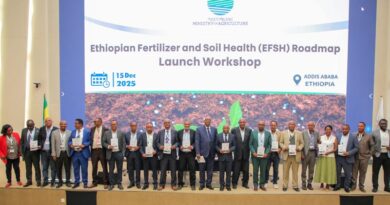
These efforts build on CIMMYT’s longstanding support for Ethiopia’s soil health agenda and the implementation of the country’s Fertilizer and Soil Health Roadmap, helping to strengthen resilience in the face of climate change and growing food demand.
Stregthening international cooperation
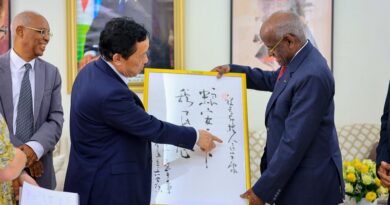
As part of the mission, Dr. Bram Govaerts paid a courtesy visit to the Embassy of Mexico in Addis Ababa, where he met with H.E. Alejandro Ives Estivill Castro, Ambassador of Mexico to Ethiopia. The meeting highlighted the strong relationship between Mexico and Ethiopia and explored opportunities to deepen cooperation in agricultural research, innovation, and sustainable development.
The Ambassador commended CIMMYT’s longstanding contribution to Ethiopia’s agricultural transformation and its role in strengthening ties between the two countries.
“The story of CIMMYT is an important part of the relationship between Mexico and Ethiopia,” he said. “It is a story that has been built step by step through impactful partnerships and meaningful results.”
Discussions also explored opportunities to strengthen engagement with African Union initiatives and leverage CIMMYT’s unique position as a Mexico-based global research organization to promote South-South cooperation, innovation, and knowledge exchange across regions. Both sides reaffirmed their commitment to advancing resilient and sustainable food systems through international collaboration.
Looking ahead
The Director General’s working visit concluded with renewed commitments from all partners to deepen collaboration and accelerate Ethiopia’s agricultural transformation agenda. Key priorities identified for future cooperation include wheat and maize improvement, hybrid wheat development, soil health management, climate resilience, seed system strengthening, capacity development, and joint resource mobilization.
Throughout the mission, a common message emerged: Ethiopia’s agricultural achievements are the result of scientific excellence, effective policies, and strong partnerships. As global challenges evolve and funding landscapes shift, the future of agricultural transformation will depend on greater co-creation, shared ownership, and collective action among research institutions, governments, and development partners.
As Ethiopia advances toward greater food security, agricultural competitiveness, and climate resilience, partnerships among CIMMYT, EIAR, the Ministry of Agriculture, development partners, and the international community will remain essential. The mission not only celebrated past achievements but also laid the foundation for the next phase of collaboration—one driven by innovation, shared responsibility, and a common vision of sustainable and resilient food systems for future generations.
Global Agriculture is an independent international media platform covering agri-business, policy, technology, and sustainability. For editorial collaborations, thought leadership, and strategic communications, write to pr@global-agriculture.com