CIMMYT And Partners Are Turning Farms Into Futures For Ethiopia’s Young People
18 March 2026, Ethiopia: Agriculture is Ethiopia’s dominant economic sector, contributing 31.8% to national GDP and growing at an annual rate of 6.9%. Yet farming communities face increasing pressure from climate variability, environmental degradation, limited access to appropriate technologies, and social challenges such as rural–urban migration. As young people move to towns and cities, rural areas are left with labor shortages and an increasingly aging farming population—threatening the continuity of agricultural production.
At the same time, Ethiopia’s rural youth are actively searching for opportunities that are profitable, modern, and future-oriented. Engaging young people across agricultural value chains is critical to transforming Ethiopia’s agri-food systems and achieving the Sustainable Development Goals (SDGs). However, for agriculture to become a genuine career choice, it must be competitive, dynamic, and responsive to the aspirations of the younger generation.
Through the Long-Term Experiment (LTE) initiative, CIMMYT and its partners are reshaping how farming is experienced and perceived—improving productivity and soil health while creating pathways for farming communities, especially rural youth, to engage in agriculture as a business.
Implementing Climate-Smart Innovations that make farming more rewarding
The LTE project tests and promotes climate-smart, productivity-enhancing practices over an extended period, focusing on cereal–legume rotation and nutrient management in agro-ecosystem. Key interventions include:
- Improved nutrient management, combining organic and inorganic fertilizer options
- Crop residue management practices to strengthen soil health
- Crop diversification (including crop rotation and intercropping) to enhance productivity and resilience
- Introduction and popularization of income-generating legumes such as soybean, haricot bean, and pigeon pea are largely new to the area, delivering tangible results that matter: higher yields, healthier soils, diversified and more nutritious foods, and inclusive income opportunities.
These practices enable farmers to produce more reliably under variable climate conditions while delivering tangible results that matter—higher yields, healthier soils, diversified and improved income opportunities.
Dr. Tesfaye Shiferaw, System Agronomist at CIMMYT, emphasizes the importance of youth-focused agricultural innovation.
“We have no choice but to build resilient, diverse and youth-oriented agricultural innovations. Young people need to see and experience a brighter future in agribusiness. Our main focus is to diversify crops and improve productivity and nutritional quality by introducing better technologies and practices that shift farming from subsistence to resilient, market- and nutrition-oriented business. Beyond achieving the primary goals, the project is redefining how young people perceive agriculture.”
He highlights practical pathways to attract youth, including:
- Supporting youth champions as demonstrators and role models
- Proactively promoting positive perceptions of farming as a career
- Introducing profitable modern technologies and market-oriented crops
- Creating opportunities across the entire value chain, beyond production
- Leveraging digital tools that match youth interests
Introducing income-generating legumes alongside cereals provides farmers with diversified food and income streams with stronger market opportunities.
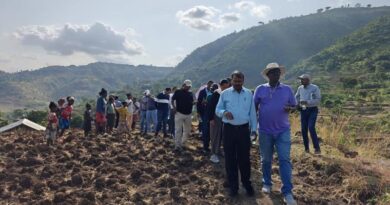
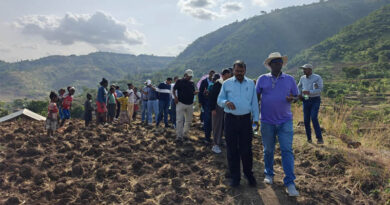
A recent experience-sharing visit—jointly organized by CIMMYT, Ambo University, at Abebech Gobena Agricultural Research Center, and local farmers—highlighted scalable approaches that successfully attract rural youth into farming.
Convincing practical demonstrations – A young farmer’s journey
Gutema Fekadu, a 26-year-old farmer from Kilinto village, Aba Gada Kebele, in Guder, Oromia region, is among the youth champions inspired by the LTE project.
For Gutema, farming once appeared to be hard work with limited returns. Growing up, he watched his father cultivate mainly teff and maize, with little diversification and low productivity.
“The yields were low due to several factors, and it didn’t draw my attention. I was thinking of moving to the city, “Gutema explains.”
In 2023, Gutema attended training and awareness sessions organized through the LTE initiative. After learning about crop rotation and the benefits of legumes, he and his family began planting common bean.
“We planted legumes and found they are very good in yields and market values. Now I see farming as a business—and I am fully engaged.”
Gutema reported that last year he harvested approximately 500 kgs of haricot bean from a 2,000 m² plot. This production generated meaningful income and strengthened his household’s confidence in farming as both a livelihood and a business. The economic difference compared to cereal crops is substantial.
To illustrate, even when compared with Ethiopia’s most valuable l and widely produced staple cereals, such as teff, maize and wheat, the income gap is striking. Current market prices in the central market are approximately: Teff – 130 ETB per kg; Wheat – 70 ETB per kg; Maize – 37 ETB per kg; and Haricot bean – around 400 ETB per kg.
At these prices, 500 kg of haricot bean can generate about 200,000 ETB, far exceeding the potential returns from cereals produced on a comparable plot of land. Beyond income, these legumes are rich in protein and essential micronutrients, making them important contributors to household diet quality.
These visible economic returns have transformed Gutema’s mindset. Farming is no longer viewed as mere subsistence work, but as a profitable and viable business opportunity capable of improving household income and resilience.
Dr. Niguse Bekele, Director of Guder campus at Ambo University, shares a similar perspective. He emphasizes the important contribution of higher education institutions in playing a transformative role in reshaping how agriculture is practiced and perceived—particularly among young people.
“As a university, our role goes beyond teaching,” he explains. “Through our collaboration with CIMMYT and partners, we are connecting research, innovation, and young farmers on the ground. Practical demonstrations are proving that modern, diversified farming systems can create income, build confidence, and inspire youth to stay in agriculture.”
Reflecting on the visible impact of the Long-Term Experiment (LTE) initiative, he underscores the power of tangible results in changing perceptions. “What we are witnessing through the LTE initiative is a real shift in mindset. When young farmers see clear economic returns from climate-smart and market-oriented crops, agriculture becomes more than a tradition—it becomes a viable and attractive business. This is how we secure the future of Ethiopian agriculture.”
His remarks reinforce the broader message that when universities actively link research, innovation, and community engagement, they help cultivate not only improved farming systems but also a new generation of confident and forward-looking agricultural entrepreneurs.
Inclusive engagement aligned with CIMMYT’s 2030 Strategy
Dr. Gizachew Kebede, Soil Scientist at CIMMYT, notes that youth are among the strongest adopters of new technologies and improved practices.
“Young farmers are more likely to adopt modern practices and position themselves as professional farmers. Our inclusive approach ensures youth and women are not left behind—aligned with CIMMYT’s 2030 Strategy.”
By integrating legumes such as faba bean, soybean, haricot bean, and pigeon pea into cereal-based systems, the project creates diversified income options that help retain young people in rural livelihoods.
Demonstration farms as hubs for learning and inspiration
Global Agriculture is an independent international media platform covering agri-business, policy, technology, and sustainability. For editorial collaborations, thought leadership, and strategic communications, write to pr@global-agriculture.com