FAO Director-general Highlights Role Of Science, Innovation And Partnerships During Visit To FAO/IAEA Laboratories
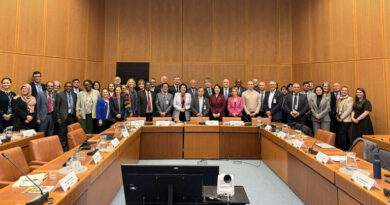
04 May 2026, Austria: Under the auspices of FAO Director-General QU Dongyu, FAO Council members have paid a first-ever visit to the FAO/IAEA Agriculture and Biotechnology Laboratories in Austria.
In his welcome remarks, the Director-General highlighted how science and innovation, such as nuclear technology, and strong partnerships deliver practical solutions to global challenges for agrifood systems transformation.
Based in Seibersdorf, the laboratories specialize in applied research under the Joint FAO/IAEA Centre of Nuclear Techniques in Food and Agriculture. Established in 1964, the Joint FAO/IAEA Centre advances the use of nuclear science to boost food security, agricultural productivity and environmental sustainability.
The Director-General highlighted how the Joint Centre stands out as one of the strongest and most unique examples of inter-agency cooperation within the UN system, and appreciated the strong support from Members over the years which had led to the upgrading of the joint division to a fully-fledged Joint Centre.
At the FAO/IAEA Agriculture and Biotechnology Laboratories, the FAO Council delegation, composed of 36 members, the Independent Chairperson, the chairs of the Programme Committee, Finance Committee and the Committee of Forestry, were welcomed by IAEA Director General Rafael Mariano Grossi, who highlighted the growing importance of innovation in tackling global food challenges.
“Your presence today shows that Member States recognize the rising role of science, technology and innovation, including nuclear techniques, in shaping the future of global food security. These challenges require solutions that are science-driven, field-ready and scalable,” Grossi said. “The IAEA and FAO are supporting Member States with groundbreaking solutions through the joint Atoms4Food initiative.”
The visit brought Members to the operational core of FAO’s work, with tours of the five laboratories covering plant breeding and genetics, animal production and health, soil and water management and crop nutrition, insect pest control, and food safety and control.
Across the laboratories, representatives of the FAO Council were presented with cutting-edge technologies applying nuclear and related techniques, as precise tools and natural solutions, to help countries increase productivity, protect natural resources and ensure food safety.
Visitors saw how improved crop varieties are developed to withstand climate stress, how animal diseases are surveyed and managed more effectively, and how environmentally friendly methods suppress and eradicate insect pests and diseases that threaten food security.
They were also shown how advanced analytical tools help ensure food safety and authenticity, and how soil and water management techniques support more sustainable agricultural practices.
Throughout the visit, the focus remained on impact and how innovations developed in the laboratories move beyond research settings and are applied on farms, in veterinary services, and in national food control systems around the world.
Qu noted that these first-class scientific laboratories – which host scientists from other agencies including the Consultative Group for International Agricultural Research (CGIAR), national institutes and from other UN agencies – represent true value added and will contribute to the prosperity of Members, and of the organizations.
The joint laboratories produce global public goods – from scientific knowledge, technologies, diagnostic tools, and standards for expertise, and reflect how relatively small, strategic investments can generate results of global significance.
Members appreciated the visit, which gave them a comprehensive understanding of FAO’s work in the field of science, technology, and innovation.
By bringing FAO Council Members to the laboratories, the visit aimed to deepen awareness of science and innovation as a core pillar of FAO’s work, demonstrating how long-standing cooperation between FAO and IAEA continues to deliver tangible benefits for people and the planet.
Also Read: Data Exclusivity in Agrochemicals Could Undermine ‘Make in India’ and Exports: CCFI
Global Agriculture is an independent international media platform covering agri-business, policy, technology, and sustainability. For editorial collaborations, thought leadership, and strategic communications, write to pr@global-agriculture.com