Healing the “Stifled” Soil: A New Agricultural Blueprint for Cleaner Air and Sturdier Yields
Guest Author: Dr. Pushplata Singh, Senior Fellow & Director, Sustainable Agriculture, TERI
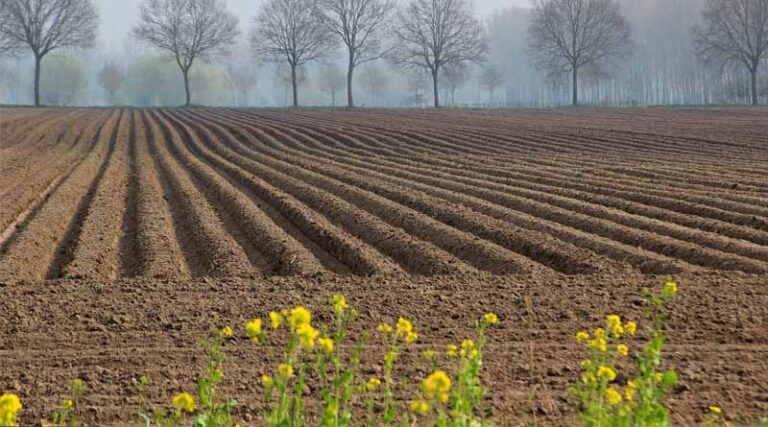
17 June 2026, New Delhi: The foundation of Indian agriculture is quietly crumbling, not from a lack of inputs, but from an excess of them. For decades, the Green Revolution’s promise was fueled by a simple equation: more chemical fertilizer equals more food. Today, that equation has broken. Indian farmers find themselves applying four to five times more fertilizer than they did thirty years ago, yet crop yields have hit a stubborn, stagnant plateau. This “Yield Plateau” is the result of a biological engine that has stalled. The soil, once a vibrant, living ecosystem, is effectively suffocating.

The Science of Suffocation
At the heart of this crisis is the depletion of Soil Organic Carbon (SOC). SOC is the lifeblood of soil health, supporting the vast microbial communities that act as “biological bridges” between raw nutrients and plant roots. However, the overt application of conventional chemical fertilizers—specifically urea and DAP—has turned the soil into a harsh, saline environment.
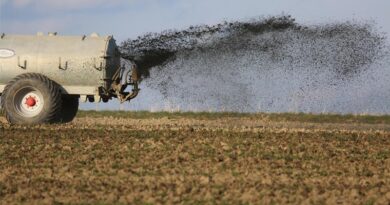
These chemicals essentially “burn” the soil’s microbiome. Our microbial friends—from nitrogen-fixing bacteria to phosphorus-solubilizing fungi—are unable to breathe or reproduce in these conditions. When these microbes die, the soil loses its ability to convert applied fertilizers into the soluble forms that plants can actually absorb. This leads to a catastrophic drop in Nutrient Use Efficiency (NUE). In the 1970s, the response ratio was roughly 1:10 (10 kg of grain for every 1 kg of fertilizer); today, that efficiency has crashed to nearly 1:2.7. Most of the applied fertilizer now sits in the soil as a pollutant or escapes into the atmosphere as toxic gas.
TERI’s “Living Soil” Solution
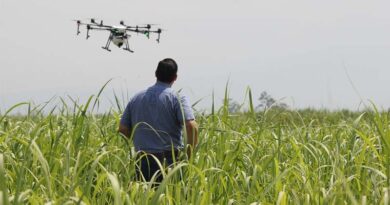
To break this cycle, researchers at The Energy and Resources Institute (TERI) have developed a sustainable “Package of Practice” that shifts the focus from chemical quantity to biological quality. This approach replaces bulky, conventional inputs with a triad of “smart” technologies: biofertilizers, biogenic nano-fertilizers, and slow-release smart nutrients.
- Biofertilizers: These are not just nutrients but “probiotics” for the earth. By reintroducing live microbial cultures, they jumpstart the soil’s natural nutrient-cycling engine.
- Biogenic Nano-Fertilizers: TERI’s breakthrough in nanotechnology allows nutrients to be delivered at a scale 10,000 times smaller than a human hair. These particles are absorbed directly by plant cells with an efficiency rate of 90-95%, compared to the measly 30-50% of conventional urea.
- Slow-Release Technology: Unlike standard fertilizers that “flood” the soil and shock the microbiome, slow-release formulations also containing lignin and biochar sync nutrient delivery with the plant’s actual growth stages. And improve soil organic carbon.
In TERI’s field experiments, this package has demonstrated that soil can become living and breathable again. Farmers using these practices are not only seeing a 15-20% gain in yield but are also cutting their chemical use by half, saving significantly on input costs.
Clearing the Skies of Delhi-NCR
The impact of this agricultural shift extends far beyond the farm gate; it offers a critical solution to the seasonal air pollution crisis in Delhi-NCR. During the winter months, when the air is stagnant, agricultural emissions become a dominant driver of toxic smog.
Conventional nitrogen fertilizers are notorious for volatilization—the process where nitrogen escapes into the air as ammonia gas (NH3). In the atmosphere, this ammonia reacts with industrial and vehicular emissions (SOx and NOx) to form secondary particulate matter (PM2.5). Studies indicate that these secondary aerosols can constitute up to 60% of Delhi’s winter PM2.5 levels.
By adopting TERI’s biogenic nano-fertilizers and slow-release inputs, the volatilization of ammonia is drastically curtailed. Because the nutrients are encased or delivered in “smart” forms, they stay in the soil or the plant rather than leaching into the air. Implementing these practices in the agricultural belts of Haryana, Punjab, and Western Uttar Pradesh could lead to a dramatic reduction in the chemical precursors of smog.
Conclusion: A Double Dividend
The transition to a sustainable agricultural package is no longer just an environmental ideal; it is an economic and public health necessity. By restoring Soil Organic Carbon, we provide farmers with a path out of stagnating yields and rising debts. Simultaneously, by fixing the nitrogen in the soil where it belongs, we can significantly lower the GHGs and particulate matter that choke our cities every winter.
TERI’s research proves that when the soil is allowed to breathe, so can the farmer and the city-dweller. This is the new blueprint for Indian agriculture: a system where high yields and clean air are not in conflict, but are the dual results of a healthy, living earth.
Also Read: Corteva Plans Exit from Spain Manufacturing Site, Raises Restructuring Cost
Global Agriculture is an independent international media platform covering agri-business, policy, technology, and sustainability. For editorial collaborations, thought leadership, and strategic communications, write to pr@global-agriculture.com